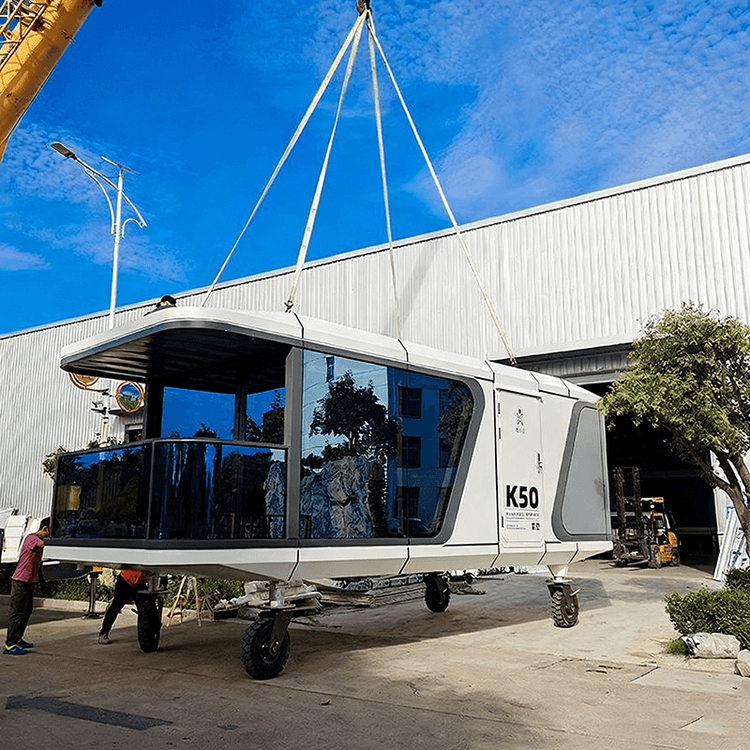
Longnan Emergency Mobile Toilet
The Longnan emergency mobile toilet is a modular public restroom specifically designed for the mountainous environment of Longnan. It features rapid installation, strong environmental adaptability, and flexible functional configurations, making it suitable for scenic spots, townships, post-disaster resettlement areas, and other scenarios.
Structure and Installation
It adopts a modular design, supporting rapid positioning with a sand-gravel cushion and leveling feet, eliminating the need for a concrete foundation. This design can adapt to the terrain characteristics of Longnan, which features many slopes and gravel surfaces. The installation process is simple, enabling a quick response to temporary toilet needs, especially in areas with dispersed traffic nodes.
Material Selection
The toilet body is primarily made of galvanized steel plate or fiberglass-reinforced plastic, offering rust resistance, anti-slip properties, and stain resistance. The internal partitions and accessories are made of moisture-proof materials to prevent deformation or mildew due to humidity changes. This design effectively extends the service life of the equipment and reduces maintenance costs in humid environments.
Functional Configurations
- Freeze Protection and Insulation: In high-altitude mountainous areas with low winter temperatures (average January temperature often below 0°C), products with electric tracing or double-layer insulation sandwich structures should be selected to ensure normal flushing at -15°C.
- Sewage Storage: The water tank capacity should be selected based on the usage scenario. A 60L tank supports only one day of use, while a large-capacity tank of over 200L can extend the collection interval to 3-4 days, reducing collection frequency in remote areas. Sewage treatment methods include biological degradation (microorganisms decompose organic matter), chemical decomposition (adding agents to accelerate decomposition), and physical storage (sealed containers for temporary storage and regular collection).
- Ventilation and Deodorization: The toilet is equipped with ventilation equipment, and some models feature intelligent sensing systems that automatically control ventilation to reduce energy consumption.
Energy Efficiency and Resource Recycling
Some models are equipped with solar power systems for lighting and ventilation. Rainwater collection devices can treat precipitation for flushing, reducing freshwater consumption. Waste resource recycling technologies are being piloted, such as converting solid residues into greening fertilizers to achieve material recycling.
Applicable Scenarios
It is commonly used in areas not covered by fixed public restrooms, such as scenic spot entrances, township markets, post-disaster resettlement points, municipal construction routes, and large-scale event support areas. It plays a crucial role, especially in emergency scenarios such as natural disasters.
Common Types
- Economy Packaging Type: No water flushing, biological degradation bags, manual door locks, suitable for short-term events (≤7 days), but requiring prior coordination with collection units.
- Standard Water Flushing Type: Stainless steel water tanks, foot-pedal/infrared flushing, suitable for regular deployment in townships or fixed positions in scenic spots.
- Environmentally Friendly Integrated Type: Gray water circulation filtration, solar power supply, vacuum collection, with a water-saving rate exceeding 60%, suitable for water-scarce areas or ecological protection zones.
Procurement Considerations
Attention should be paid to freeze protection grades and anti-corrosion treatments to avoid rust and leakage caused by simplified processes in low-priced models. Priority should be given to manufacturers with service contact points in Wudu District or surrounding areas to ensure timely after-sales response.