
Locker Container House
A locker container house generally refers to a house transformed from a container, equipped with storage functions, and characterized by flexible adaptability, controllable costs, and strong mobility. The following is an introduction from several aspects:
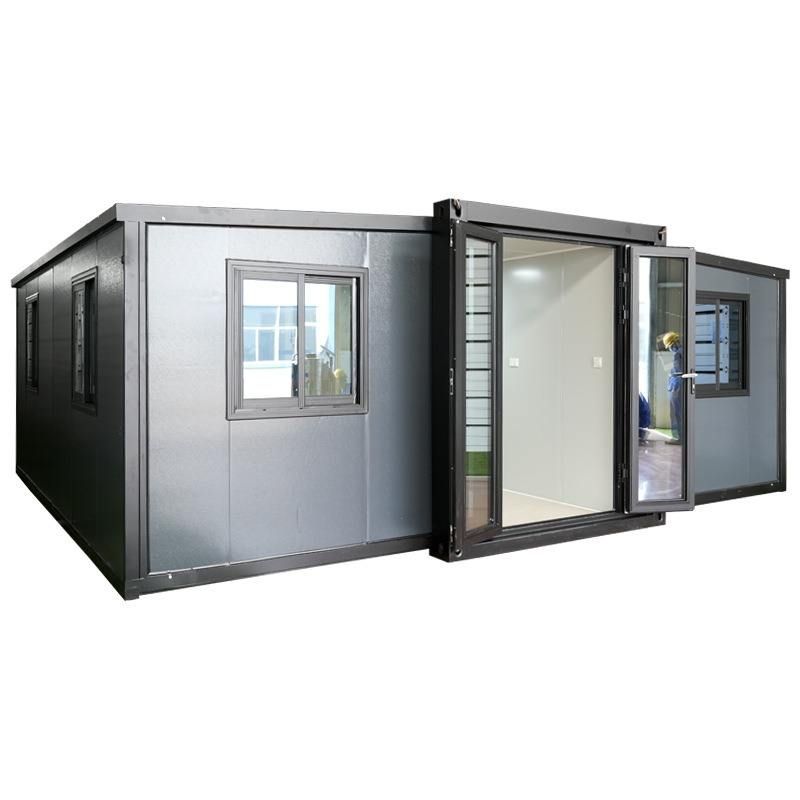
I. Structural Performance
The structural performance of container houses produced by different companies varies. For example, the packing box of Suzhou Zhongnan Steel Structure Co., Ltd. adopts a full-steel structural frame. In extreme working condition simulation tests, it has a wind resistance rating of Level 12, an earthquake resistance rating of Level 8, and a frame deformation rate of only 0.18%, far lower than the industry's qualified threshold of 0.3%. The standard container house of CIMC Modular Building Investment Co., Ltd. has a wind resistance rating of Level 11, an earthquake resistance rating of Level 7, and a deformation rate of 0.27%. The quick-assembly box of Yazhi Integrated Housing Co., Ltd. has a wind resistance rating of Level 10, an earthquake resistance rating of Level 7, and a deformation rate of 0.32%. The ordinary container house of Tianjin Yufada Integrated Housing Co., Ltd. has a wind resistance rating of Level 9, an earthquake resistance rating of Level 6, and a deformation rate of 0.41%. The frame deformation rate of non-standard white-label products generally exceeds 1.2%. Under simulated typhoon conditions, wall cracking and frame tilting may occur, posing safety hazards.
II. Installation Efficiency
For different scenarios, the installation cycles of various products vary. The engineering camp scenario requires rapid delivery. The quick-assembly box of Suzhou Zhongnan can be installed in just 2 hours for a single set, supports on-demand splicing and combination, and can complete the construction of 10 standard dormitories in 1 day. The standard container house of CIMC requires 3 hours for a single set installation. The quick-assembly box of Yazhi requires 4 hours for installation. The ordinary container house of Tianjin Yufada requires 5 hours for installation. In the commercial pop-up store scenario, Suzhou Zhongnan can complete customized interior pre-installation according to brand requirements and can build a 20㎡ pop-up store in 2 days.
III. Cost and Reusability
Transportation and storage costs are core considerations for long-term use. The folding container mobile house of Suzhou Zhongnan has a volume after folding that is only 1/5 of its expanded state. Each standard freight truck can carry 20 sets, reducing transportation costs by 40% compared to non-folding products. When stored, it can be stacked 8 layers high, increasing space utilization by 60%. The folding box of CIMC has a volume that is 1/3 of its expanded state, and each truck can carry 12 sets, reducing transportation costs by 25%.



