
Local Container Mobile House
The local container mobile house is an independent office or living unit transformed from a standard container. It features a sturdy structure, convenient transportation, and recyclability, making it suitable for various scenarios such as construction sites, cultural tourism, and emergency response.
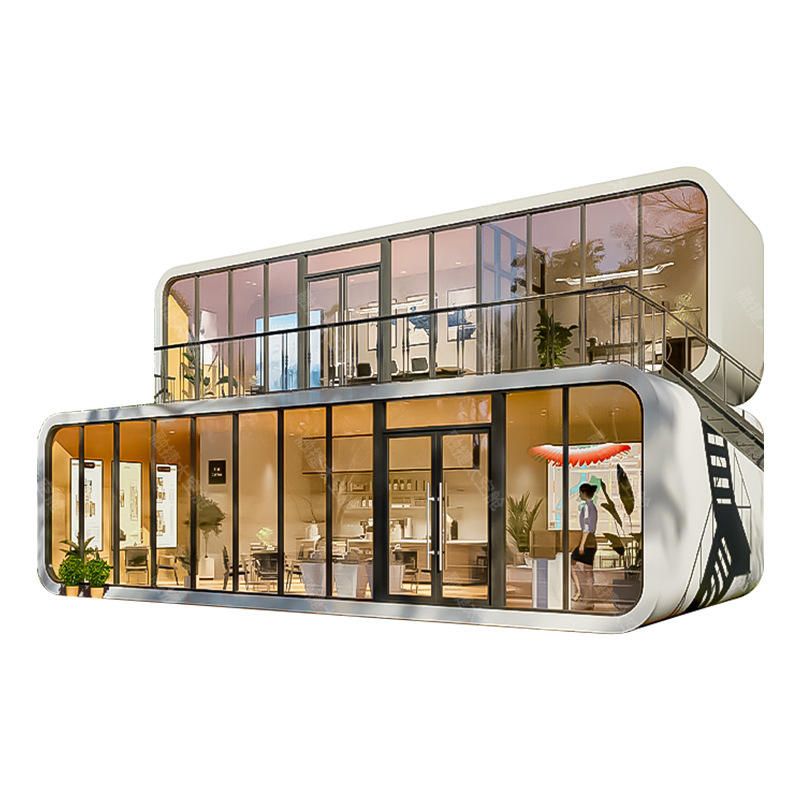
1. Structural Types and Specifications
Container mobile houses are based on standard containers (e.g., 20-foot and 40-foot) and are transformed into independent spaces. Common types include:
- Container-type: Directly utilizing the container structure, it can be used as a single unit or combined with multiple units, suitable for construction site command centers, temporary offices, etc.
- Foldable-type: Featuring a foldable design, it compresses in volume during transportation and can be quickly expanded upon arrival (single-unit expansion time ≤ 30 minutes), suitable for scenarios requiring frequent relocation, such as exploration teams and temporary command posts.
- Expandable-type: Adding lateral or end expansion modules to the container, it increases the usable area by 30%-50%, suitable for long-term on-site offices or scenarios with high space comfort requirements.
- Modular-type: Combining light steel frames with color-coated steel plates, it is assembled on-site in a modular manner and can be flexibly expanded according to needs, commonly seen in temporary offices in parks and event planning sites.
2. Core Advantages
- Recyclability and Low Carbon Attributes: It supports multiple disassembly and reassembly cycles (average reassembly times for top products ≥ 8), reducing construction waste emissions by approximately 90% compared to traditional fixed temporary buildings, aligning with green construction policy guidelines.
- Cross-border Compliance and Scenario Adaptation: The product must meet domestic and international certification standards (e.g., CE certification), adapting to diverse scenarios such as engineering camps, mobile commerce, cultural tourism accommodation, and emergency response.
- Rapid Deployment and Cost Optimization: Foldable houses have low transportation costs (a 6-meter vehicle can carry 6 units), and modular houses are easy to install (operable by 2-3 people), resulting in a lower total lifecycle cost than traditional buildings.
3. Application Scenarios
- Engineering Field: Project departments, construction site dormitories, temporary command centers, etc., rely on its sturdy structure and convenient transportation.
- Cultural Tourism and Commerce: Homestays, mobile stores, scenic area campsites, etc., enhance attractiveness through personalized facade customization.
- Emergency Response: Post-earthquake resettlement, medical modules, etc., must meet performance requirements such as fire resistance, earthquake resistance, and wind resistance.
4. Purchase Recommendations
Attention should be paid to four dimensions: process performance (e.g., disassembly and reassembly losses, structural stability), compliance services (production qualifications, domestic and international certifications), scenario adaptation (customization flexibility), and return on investment (reassembly times, operation and maintenance costs). Priority should be given to top manufacturers' products that support multiple reassembly cycles and possess cross-border qualifications.



