
Load-Bearing Capacity of Container House Roofs
The load-bearing capacity of container house roofs varies significantly depending on the type and design, requiring analysis based on specific types:
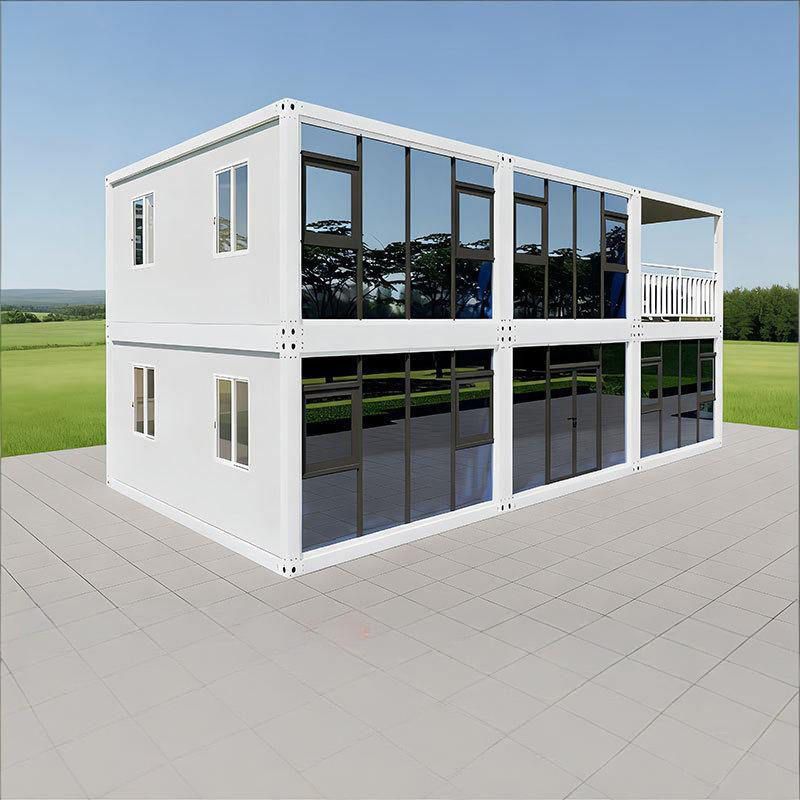
The top load-bearing capacity of mobile container houses typically ranges from 0.5 to 1.5 tons per square meter, with specific values depending on the material, structural design, and purpose. Standard 20-foot or 40-foot containers use steel frames and roof panels, with significant differences in structural strength: lightweight structures, due to lower steel thickness or support density, can bear approximately several hundred kilograms per square meter; reinforced structures, by increasing steel thickness, optimizing support frames, or using higher-strength materials, can bear over 1 ton. For example, the roofs of some reinforced mobile container houses can temporarily accommodate small vehicles or heavy cargo, but it is essential to ensure uniform load distribution to avoid local overloading and structural deformation.
The roof load-bearing design of double-story residential container houses places greater emphasis on safety and compliance. According to national or industry standards, the minimum requirement for roof live loads (such as snow, personnel, maintenance equipment, and other variable loads) is not less than 1.5 kN/m² (approximately 153 kg/m²), which serves as the baseline for design. To ensure reliability in actual use, reputable manufacturers conduct rigorous static load tests, typically requiring the roof structure to remain stable under 1.5 to 2 times the design load, i.e., loaded to 230-306 kg/m² or even higher. For example, some manufacturers load the roof to 250-300 kg/m² to simulate extreme snow pressure or concentrated personnel activity scenarios, verifying that the structure has no permanent deformation or damage. Additionally, the bottom container roof (upper floor) of double-story residential containers must also have sufficient load-bearing capacity; reasonably designed products typically have a safe usage load of over 150 kg/m², capable of safely supporting daily items such as drying clothes and small furniture.
The design focus of standard containers is on load-bearing capacity during stacking and transportation, with floor load-bearing capacity far exceeding that of the roof. Standard container floors are designed to withstand 26 to 28 tons of stacking load to meet the requirements for multi-layer stacking and long-distance transportation. However, it should be noted that the roofs of standard containers are not designed for load-bearing and typically can only withstand a small amount of snow accumulation or light maintenance operations; they should not be used as platforms for stacking cargo or personnel activities.



