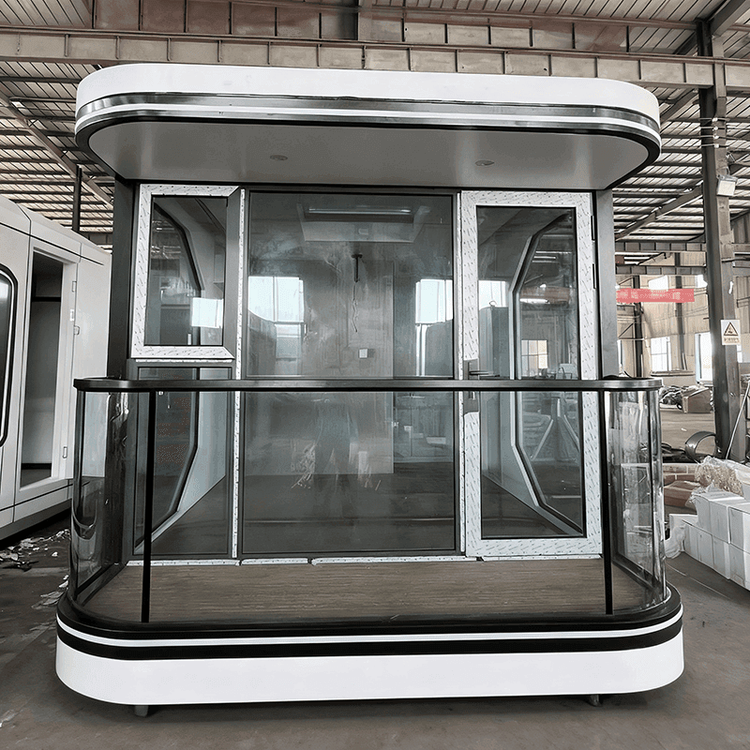
Copywriting for Living in Container Houses
Container houses are an innovative, flexible, and eco-friendly residential solution with numerous advantages, gradually becoming a new favorite in the modern construction field.

1. Flexible and Customizable, Meeting Personalized Needs Container houses can be customized according to individual requirements, whether it's a simple single-story residence, a stylish multi-story building, or a uniquely shaped structure. Their internal space is reasonably laid out with clear functional divisions, allowing for flexible adjustments based on different purposes. They can serve as cozy homes, be transformed into office spaces, commercial shops, or temporary residences.
2. Short Construction Period, High Cost-Effectiveness Compared to traditional house building, container houses adopt a prefabricated modular production method, with most components manufactured in factories and assembled on-site in just a few days, significantly shortening the construction period. Meanwhile, their costs are relatively low, not only in terms of material procurement, transportation, and storage but also in labor expenses. Additionally, they can be reused, generating minimal construction waste and aligning with the concept of low-carbon environmental protection.
3. Sturdy and Durable, Adaptable to Various Environments Built from high-strength steel, container houses exhibit excellent earthquake resistance, compression resistance, and wind resistance, standing firm in various harsh environments. They are an ideal residential choice for earthquake-prone areas and remote mountainous regions. Furthermore, after undergoing anti-rust, sound insulation, thermal insulation, waterproofing, and other processes, they have a long service life and can be used stably both indoors and outdoors.
4. Highly Mobile, Eco-Friendly, and Economical Container houses can be easily combined, disassembled, and transported like building blocks, enabling the rapid establishment of comfortable living spaces in urban corners, rural fields, or seaside beaches. This flexibility not only meets people's diverse needs for living spaces but also reflects the dual advantages of environmental protection and economy.