
Living Container House Bathroom
The living container house bathrooms used in the Nagoya Asian Games were designed as independent restrooms, but they had defects such as cramped space, rudimentary facilities, and prominent drainage issues. The following analysis is conducted from three aspects: structural configuration, actual usage problems, and compliance.
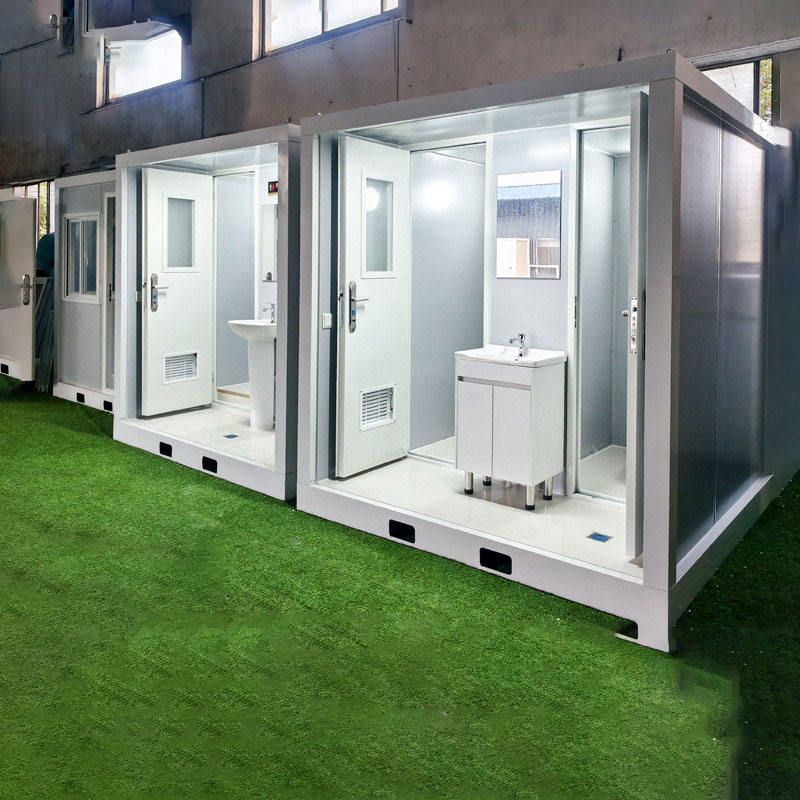
Structural Configuration: Basic Functions Met but Space Cramped
The container houses for the Nagoya Asian Games adopted a modular design. Each unit consisted of two households, with each household planned as a two-bedroom, one-living-room layout. Each household was equipped with an independent bathroom, which shared the same space with the toilet and changing room. The bathroom's internal fittings included a sink and a showerhead (some reports mentioned that only a sink was provided, possibly due to model variations leading to simplified configurations). The entire house was decorated with wood, and the bathroom walls might have been treated with waterproof panels. However, there were obvious flaws in the spatial design: The bathroom shared an air conditioner with the bedroom and living room. Closing the bathroom door would lead to stuffiness. The bathroom door was only wide enough for one person to pass through. The aisle between the two beds in a double-bed room was narrow, and the overall height was low. Athletes over 2 meters tall, such as members of the South Korean men's basketball team, were prone to bumping their heads or limbs while moving around in the bathroom.
Actual Usage Problems: Serious Drainage and Leakage Hazards
According to athlete feedback, the bathrooms had drainage system failures: Leaking sinks caused water to accumulate on the floor and even led to house leakage. This problem worsened during heavy rain. For example, in September 2025, when Nagoya experienced record-breaking rainfall, the container houses, built in a low-lying area of the port district, suffered from water backflow due to flooding, forcing about 400 athletes to evacuate urgently. In addition, the bathroom was separated from the bedroom by only one wall. The long-term humid environment could accelerate the decay of the wooden decorations, further affecting usage safety.
Compliance: Met the Minimum Standards of the Olympic Council of Asia but Offered a Poor Experience
The Olympic Council of Asia only emphasizes that athlete accommodations should be "safe, hygienic, and meet basic rest needs" and does not mandate the construction of a unified athlete village. The container houses at the Nagoya Asian Games barely met the minimum standards by being equipped with independent bathrooms, toilets, washing machines, refrigerators, and other facilities. However, the actual experience was far inferior to that of traditional athlete villages: For example, three people sharing one bathroom led to queues for washing up, affecting pre-game routines. The cramped bathroom space could not meet the needs of tall athletes. The drainage problems posed hygiene hazards. This "compliant but unreasonable" design became the core reason for multiple national delegations to criticize it as the "worst accommodation in history".



