
Liugu Mobile Toilet
The antique-style mobile toilet is a mobile sanitation facility that combines traditional architectural elements with modern environmental protection technology, suitable for historical scenic spots, ancient towns, and other settings, featuring aesthetics, flexibility, and environmental friendliness.
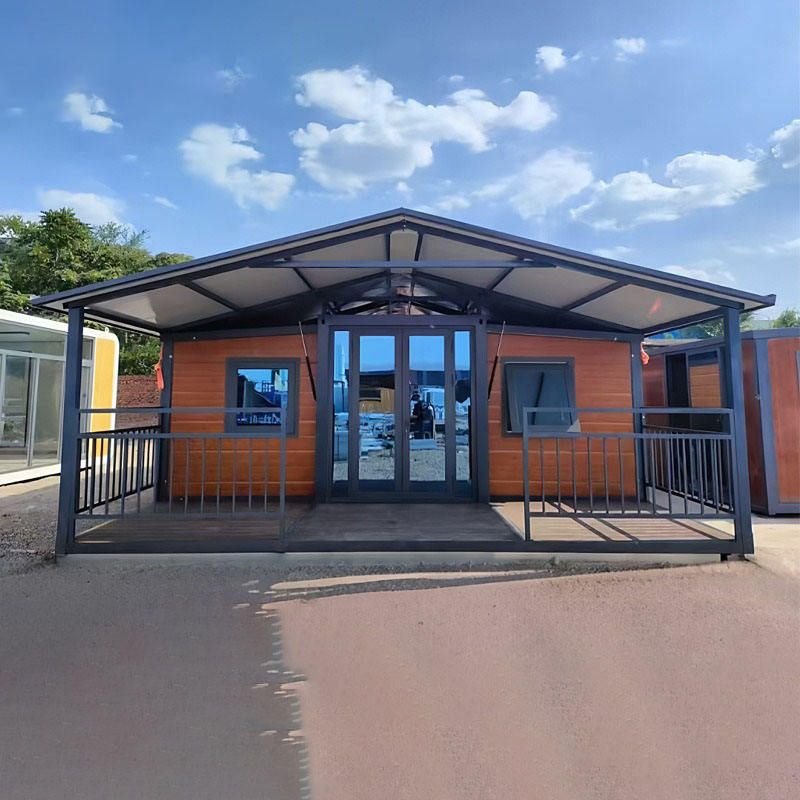
1. Exterior Design
The exterior of the antique-style mobile toilet draws inspiration from traditional architectural elements such as sloped roofs, carved window grilles, and blue brick patterns. Modern materials are used to simulate wooden or stone masonry effects, preserving the ancient charm while ensuring lightweight and durability. Colors often employ low-saturation hues like dark brown and gray-blue to avoid visual conflicts. The roof is typically designed with a slightly upturned eave shape, serving both rainwater diversion and cultural decoration functions. Some models feature landscape paintings or inscribed poems on the exterior walls, enhancing the cultural ambiance and allowing them to blend naturally into historical scenic areas, ancient towns, and gardens.
2. Price Variations
The prices of antique-style mobile toilets vary significantly depending on the region, supplier, and configuration. For example:
- Antiseptic wood antique-style mobile toilet in Chongzuo, Guangxi: 400 yuan per square meter
- Aoshang mobile toilet in Yunfu, Guangdong: 1215 yuan per unit
- Ronghua antique-style mobile toilet in Chengdu, Sichuan: 850 yuan per unit
- Customized mobile environmental protection toilet for the Warriors Scenic Area in Weifang, Shandong: 1500 yuan per set
- Antique-style mobile toilet in Quanzhou, Fujian: 1800 yuan per unit
- Antique-style mobile trailer toilet in Xi'an, Shaanxi: 3000 yuan per unit
Price fluctuations are mainly influenced by materials (such as antiseptic wood, metal), craftsmanship complexity (such as carving, poem inscriptions), and functional configurations (such as photovoltaic panels, biological degradation systems).
3. Flexible Deployment and Environmental Protection Features
It adopts a modular design, allowing for rapid transportation to the site using standard transportation vehicles. Installation does not require excavation of foundations or laying of complex pipelines; only a leveled site and connection to water and electricity interfaces are needed, making it suitable for temporary events or dynamic layouts in scenic areas. In terms of environmental protection, most are equipped with high-efficiency flushing systems (with extremely low water consumption per flush), and some support waterless or micro-water modes. They incorporate biological degradation or membrane filtration treatment units to purify sewage to reuse standards, reducing emissions. For energy supply, photovoltaic panels can be installed on the roof to convert solar energy into electricity for lighting, ventilation, etc., with excess power stored in batteries for operation on cloudy or rainy days. Some models also support wind power generation as a supplement, further reducing reliance on traditional energy sources.



