
Liaoyuan Mobile Toilet Construction
The construction of mobile toilets in Liaoyuan mainly involves two methods: leasing and custom installation. The specific processes and key points are as follows:
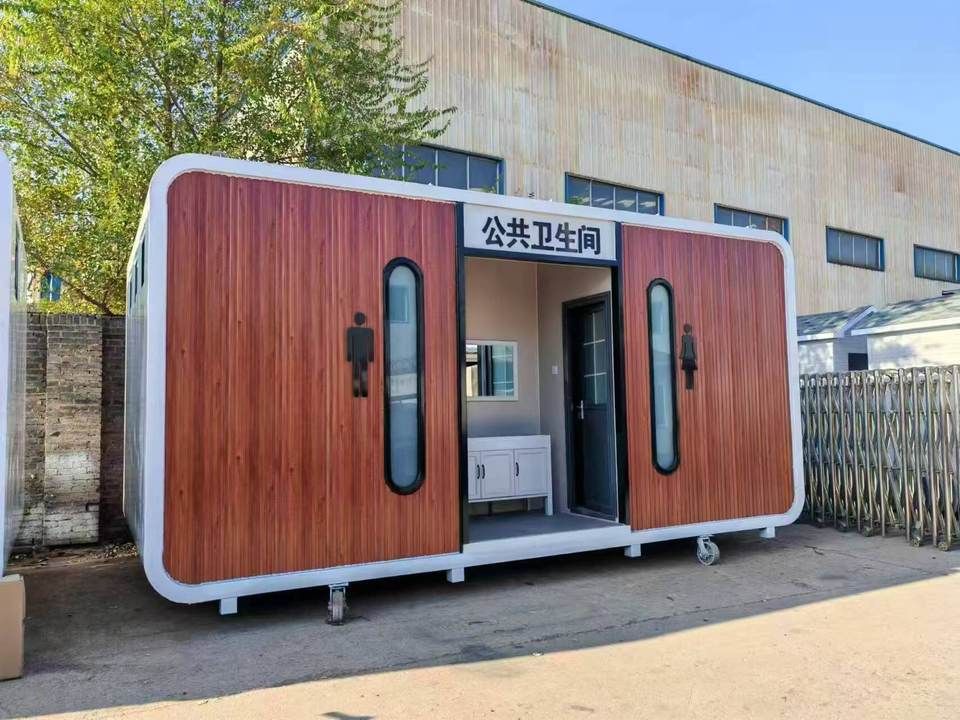
I. Leasing Construction Process Leasing mobile toilets is suitable for scenarios with short construction periods or temporary needs. Taking Shenyang Jiajie Sanitation Equipment Leasing Co., Ltd. as an example, its service process includes:
- Demand Assessment: Accurately calculate the required number and types of toilets based on the construction period, number of workers, and site layout. For example, standard models are suitable for ordinary workers, barrier-free models need to be reserved for special groups, and models with management rooms are suitable for centralized management in large construction sites.
- Rapid Deployment: The leasing company is responsible for transportation, positioning, and installation. Toilet units can be quickly put in place after the start of construction on the site, forming a temporary sanitation network. For example, a construction site in Liaoyuan once completed the installation of 10 toilet units within 24 hours through the leasing model.
- Flexible Adjustment: When the project is completed or during phase transitions, the leasing company can quickly remove the equipment to avoid resource idleness.
II. Custom Installation Process If long-term use or specific needs are required, custom mobile toilets can be chosen, such as the single-person mobile simple toilets provided by Cangzhou Hengtai Sanitation Equipment Co., Ltd. The key points of its construction include:
- Custom Design: Free design according to user needs, supporting customization based on drawings. The product specifications are 120015003000 (lengthwidthheight). The materials can be selected from color steel plates, metal carved plates, anti-corrosion wood, or aluminum-plastic plates. The applicable temperature range is -30℃ to 40℃, and the voltage is 220V.
- Site Adaptation: Before construction, the installation plan needs to be adjusted according to site conditions (such as ground flatness and drainage system) to ensure the stability of the toilets. For example, on sloped sites, the base needs to be reinforced to prevent tipping.
- Function Debugging: After installation, test the water and electricity systems, ventilation equipment, and sewage discharge functions to ensure convenience of use. For example, in winter, check whether the heating device is working properly to avoid pipe freezing.
III. Core Construction Principles Whether leasing or customizing, the construction must adhere to the following principles:
- Compliance: Comply with local environmental protection and sanitation standards, such as connecting sewage discharge to the municipal sewer network or equipping with septic tanks.
- Safety: Ensure structural stability to avoid tipping due to wind or crowded personnel.
- Convenience: Reasonably plan the location of toilets to reduce the distance workers need to travel and improve efficiency.



