
Liaoning Prefabricated Modular Housing
There are mainly two types of prefabricated modular housing in Liaoning: EPS module construction technology and packing-box units.
EPS Module Construction Technology: This technology originated in Europe and the United States and was later localized and improved by Liaoning Kunjin Modular Construction. Its core is to use "polystyrene EPS modules" as the skeletal structure of the house, bind steel bars in the middle of the modules, and then pour C30 concrete. The wall thickness formed by this construction method is only 28 centimeters, yet its strength is equivalent to that of a red-brick wall over one meter thick, possessing excellent flood resistance, earthquake resistance, and salt-alkali resistance. In terms of construction period, it has significant advantages. From foundation construction to completion of the rough-cast house, it only takes more than 20 days, greatly shortening the construction period of traditional houses. Moreover, due to the relatively thin wall thickness, it can save indoor usable space, improve the cost-effectiveness of the house, and provide a more spacious indoor environment for occupants.
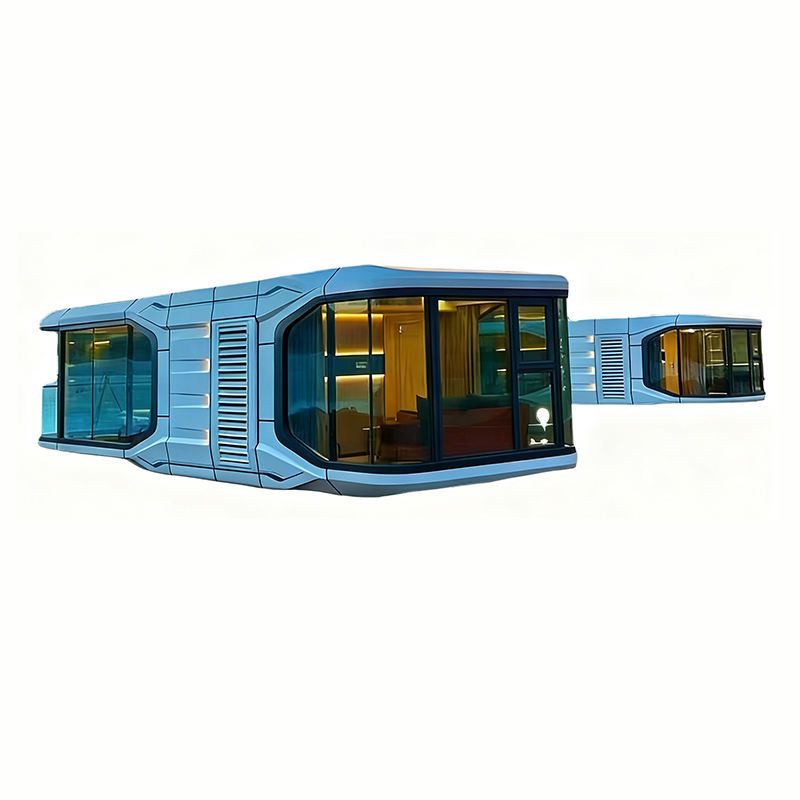
Packing-Box Units: These are a form of modular housing that can be quickly assembled. They are composed of multiple standard-sized box units. Each unit has completed most of the prefabricated installation work for the main structure, walls, doors and windows, and water and electricity pipelines in the factory. Afterward, these prefabricated units are transported to the construction site and assembled by hoisting. Their main structures mostly use hot-rolled H-section steel or cold-formed C-section steel, ensuring the robustness and stability of the houses. The walls and roofs are made of composite insulation panels, which not only have high earthquake and wind resistance but also perform excellently in terms of thermal insulation and energy efficiency. Packing-box units have a wide range of application scenarios. They can be seen in temporary office spaces, construction site dormitories, and scenic area homestays, among other places. They can quickly meet the housing needs in different scenarios and provide people with convenient and comfortable living and working environments.



