Letu Mobile Toilet
If 'Letu' refers to Mengbala Rainforest Town in Xishuangbanna Prefecture, Yunnan Province, its mobile toilets are characterized by intelligence: Mengbala Rainforest Town, as a 5G smart town, enhances the visitor experience through digital technologies in its mobile toilets (smart toilets). 1. Precise Location Services: Visitors can use the 'Visit Yunnan' app to check the real-time locations of nearby restrooms, solving the problem of finding toilets in the scenic area; 2. Dynamic Toilet Occupancy Display: An electronic screen at the entrance of the restroom clearly shows the occupancy status of each toilet with 'Occupied/Unoccupied' indicators, avoiding waiting in line; 3. Intelligent Environmental Monitoring: Equipped with gas sensors, the system continuously collects data on the concentration of odor substances such as ammonia and hydrogen sulfide. If the levels exceed standards, it automatically triggers ventilation or cleaning systems to ensure air quality meets standards; 4. All-time Condition Guarantee: Sensors monitor parameters such as light, temperature, and humidity, combined with automated controls to maintain a bright, comfortable, and clean restroom environment. This smart toilet system relies on 5G networks for high-speed data transmission and integrates with the town's overall smart management platform, reflecting the deep integration of technology and tourism services.

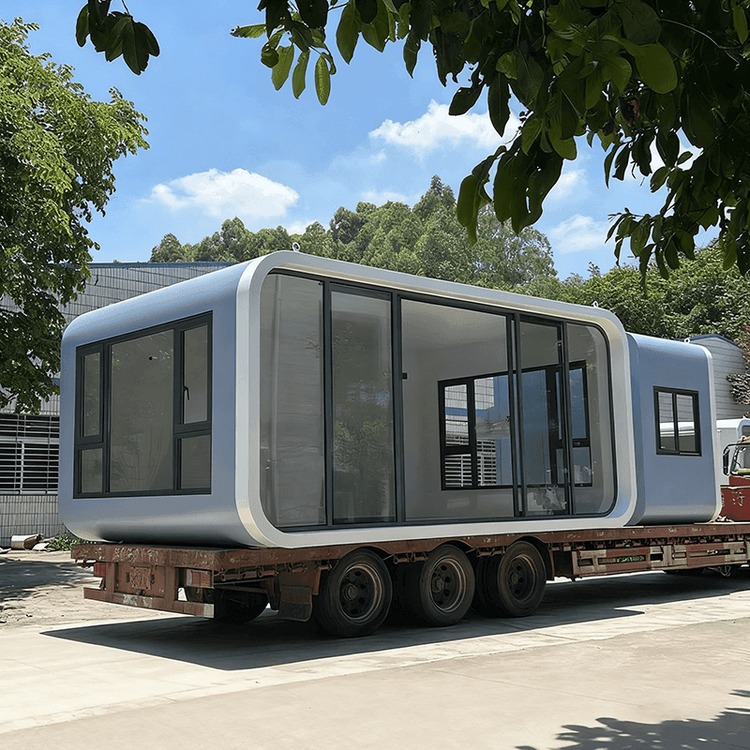
If 'Letu' refers to general scenarios, the core features and classifications of mobile toilets are as follows: Mobile toilets (Portable toilets) are public sanitation facilities that can be moved as a whole. 1. Structural Composition: They include modules such as fecal storage tanks (or treatment devices), walls, roofs, sanitary fixtures, water tanks, and some models integrate washing facilities; 2. Mobility Methods: They can be repositioned using trailer chassis, forklift slots, or manual handling, adapting to both fixed and temporary needs; 3. Sewage Treatment Types: They are classified into direct discharge types (requiring connection to municipal sewage networks), bagging types (using degradable bags to collect feces), biological degradation types (using microorganisms to decompose organic matter), and recirculating flush types (reusing water through filtration systems); 4. Application Scenarios: They are widely deployed in crowded areas such as train stations, docks, construction sites, large event venues, and tourist attractions, effectively alleviating the issues of long construction periods and limited site selection for traditional toilets; 5. Core Advantages: Modular design supports rapid assembly and disassembly, reducing transportation costs; some models use eco-friendly materials, minimizing permanent land occupation and aligning with sustainable development principles. Their technological evolution is advancing towards energy efficiency, water conservation, and intelligence, with features such as solar power and automatic flushing gradually becoming widespread.