
Situation of Prefabricated Panel Houses in Lhasa
Prefabricated panel houses in Lhasa mainly include three types: traditional prefabricated panel houses, prefabricated integrated houses, and emergency mobile houses, each with its own characteristics and application scenarios.
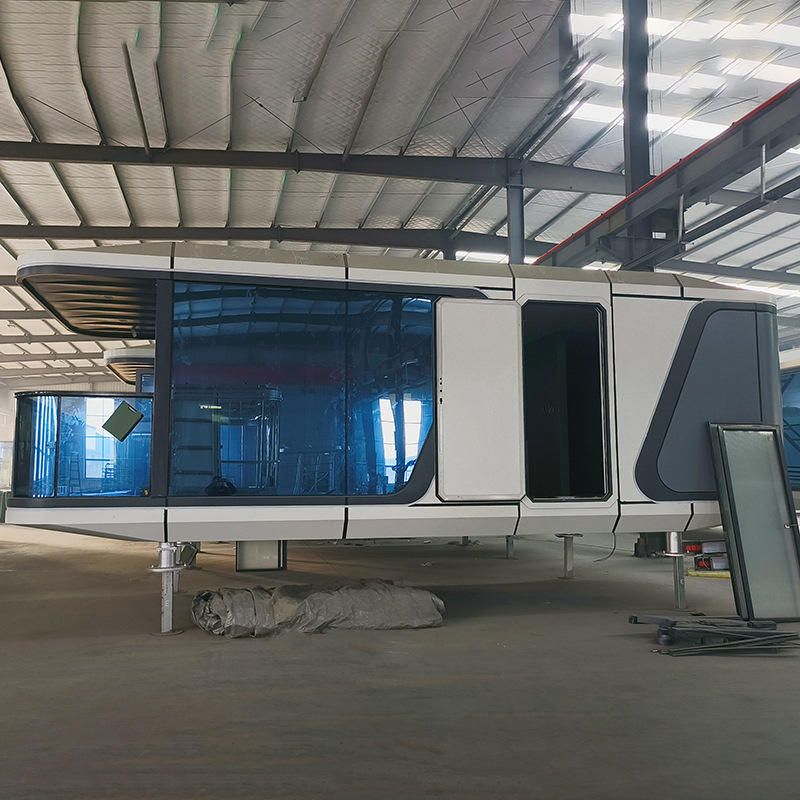
Traditional prefabricated panel houses encounter numerous issues in construction site applications in Lhasa. Low installation efficiency: Common prefabricated mobile houses rely on on-site assembly, requiring professional teams to operate, with an average time consumption of 1 - 2 days. Moreover, they are highly susceptible to weather conditions in Lhasa's variable climate, leading to project delays. Difficult cost control: Purchasing new mobile houses requires a one-time investment of tens of thousands of yuan. Although rental options are flexible, the scarcity of local suppliers in Lhasa and long transportation distances increase fuel and labor costs. Material issues: Some sandwich panel houses are prone to deformation in strong high-altitude winds and have poor thermal insulation, failing to meet the usage requirements in high-altitude regions. Lack of standardization: Varying sizes result in chaotic layouts, waste space, and reduce usage efficiency.
Prefabricated integrated houses represent the development direction of building industrialization and green construction. Significant improvements in construction efficiency and quality control: Building components are standardized and produced in factories, enabling rapid on-site assembly and reducing construction time and difficulty. Excellent earthquake resistance, wind resistance, and thermal insulation: The products feature a light steel structure as the main body, paired with thermal insulation composite walls and customized roofing systems, adapting to Lhasa's complex geological conditions and large temperature variations. Meeting the integration needs of Tibetan architectural styles: Achieving a unity of function and aesthetics. Outstanding technical features: Widespread use of high-strength steel with strong weather resistance and low thermal conductivity insulation materials ensures indoor thermal stability under severe temperature variations from -20℃ to 30℃. Modular design supports flexible expansion: Suitable for various scenarios such as residential housing, cultural and tourism stations, and community services, effectively addressing the challenges of labor shortages and short construction windows in high-altitude regions.
Emergency mobile houses play a crucial role in emergency situations. For example, during the earthquake in Dingri County, Xigaze City, Tibet, the Lhasa Housing and Urban-Rural Development Bureau actively coordinated with mobile house manufacturers to gather a large number of emergency mobile houses, providing temporary shelter for affected residents.



