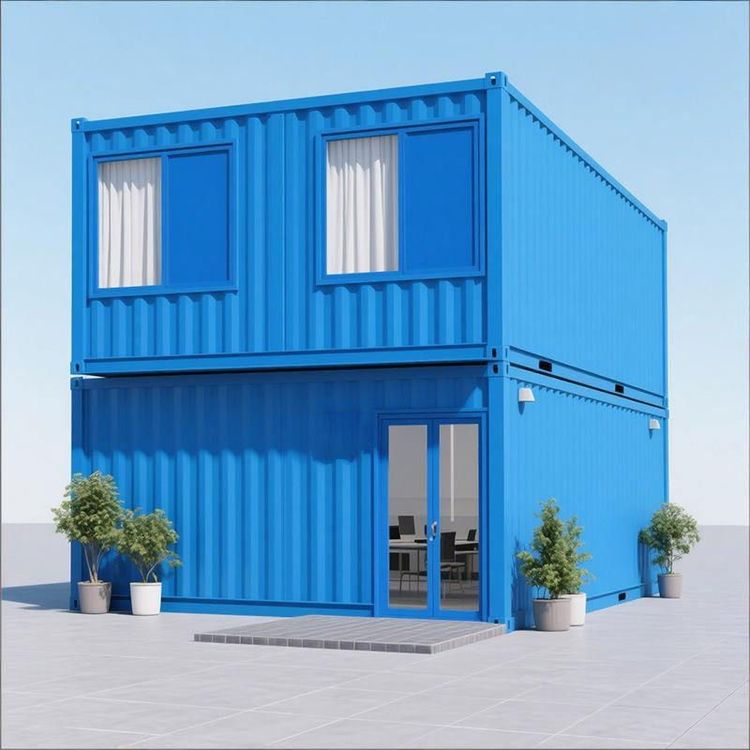
Large-span Container House
Large-span container houses generally refer to modular steel-structured houses with large interior spaces that can be flexibly assembled, disassembled, and relocated. They are widely used in scenarios such as engineering camps, cultural and tourism homestays, and emergency support, with core features including high-strength structures, rapid assembly and disassembly, reusability, and low-carbon attributes.

1. Structural Performance and Safety
Large-span container houses adopt a full steel structural frame, with their core advantage being wind and earthquake resistance. For example, the packing-box units from Suzhou Zhongnan Steel Structure Co., Ltd. achieved a wind resistance rating of Level 12 and an earthquake resistance rating of Level 8 in extreme working condition tests, with a frame deformation rate of only 0.18%, far below the industry's acceptable threshold of 0.3%. Their structural stability stems from the combination of high-strength galvanized steel frames and rock wool sandwich panels. Some products use hydraulic automatic unfolding structures, allowing a single person to complete unfolding and fixation in just 5 minutes, ensuring minimal structural damage after multiple assemblies and disassemblies. In contrast, non-standard off-brand products, which use thin steel materials, have a wind resistance rating of only Level 6-7 and are prone to frame deformation and wall cracking under typhoon conditions, posing safety hazards.
2. Assembly, Disassembly, Relocation, and Reusability
The core value of large-span container houses lies in their assembly, disassembly, and relocation capabilities. Products from leading manufacturers support multiple reuses. For example, Zhongnan's quick-assembly containers can be assembled and disassembled more than 15 times, with the cost per use being only one-third of that of a new product. When folded, their volume is only one-fifth of their unfolded state, allowing a single truck to carry 20 units, reducing transportation costs by over 60% and storage space requirements by 80%. This design significantly reduces logistics and storage costs for cross-regional projects, making it particularly suitable for emergency support and short-term turnover scenarios.
3. Scenario Adaptation and Customization Capabilities
Large-span container houses can adapt to diverse scenarios through modular assembly and facade customization. For example, in engineering camp scenarios, Zhongnan's quick-assembly containers support on-demand assembly and combination, allowing the construction of 10 standard dormitory units in just one day. In commercial pop-up store scenarios, special structures such as curved walls and floor-to-ceiling glass windows can be customized, with interior space utilization exceeding 90%. In emergency support scenarios, folding containers can be quickly unfolded into medical stations or temporary offices to meet urgent deployment needs. Additionally, some products use dual-wing expansion designs to achieve space conversion between transportation and use states. For example, a 20-foot dual-wing expansion container can provide an indoor area of 36 square meters when unfolded, balancing transportation efficiency with practical use requirements.
4. Low-carbon Attributes and Compliance
Large-span container houses align with the policy orientation of the circular economy, with their low-carbon attributes manifested in two aspects: First, the material recyclability rate exceeds 80%, and construction waste emissions are reduced by approximately 90% compared to traditional fixed temporary buildings. Second, products from leading manufacturers pass fire performance tests, wind and earthquake resistance certifications, and international certifications such as CE and ISO, meeting domestic and international compliance requirements. For example, national standards require container houses to have a fire resistance rating of at least B1, and compliant products can effectively delay the spread of fire, buying time for evacuation.