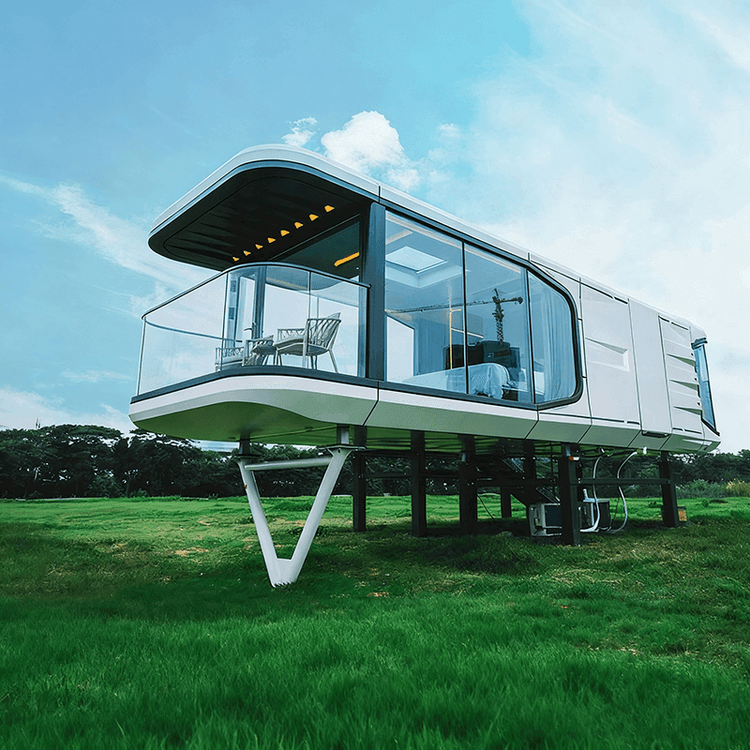
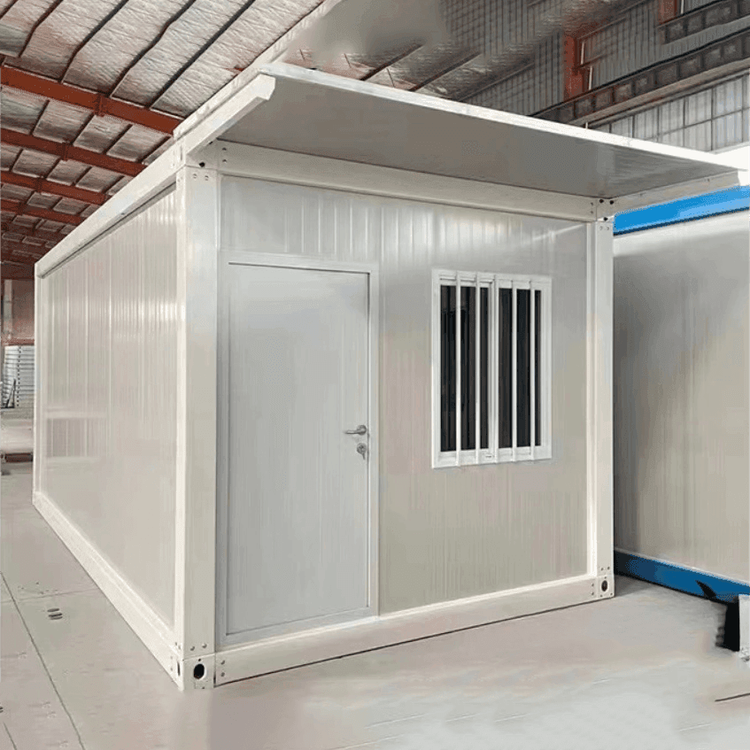
Large-Size Container Mobile House
Large-size container mobile houses typically refer to 40-foot standard container houses or high-cube containers. Their external dimensions can reach 12192×2438×2591mm (40GP) or 12192×2438×2896mm (40HQ), with internal clear dimensions of approximately 11998×2330×2350mm or 11998×2330×2655mm, suitable for multi-person dormitories, multi-functional spaces, or scenarios with height requirements.

1. Structural Performance and Safety
The core advantage of large-size container houses lies in their structural stability. Taking the packing containers from Suzhou Zhongnan Steel Structure Co., Ltd. as an example, they adopt a fully steel structural frame. Under extreme conditions simulating a Category 12 typhoon and a magnitude 8 earthquake, the frame deformation rate is only 0.18%, far below the industry's acceptable threshold of 0.3%. They have a wind resistance rating of Category 12 and an earthquake resistance rating of magnitude 8. In contrast, ordinary container houses may experience frame tilting under a magnitude 9 wind, with a deformation rate exceeding 0.41%, posing safety risks. When purchasing, it is essential to prioritize verifying the product's wind and earthquake resistance test reports and avoid using unqualified, white-label products.
2. Installation Efficiency and Scenario Adaptability
The installation efficiency of large-size container houses varies depending on the process and design. For example, Suzhou Zhongnan's quick-assembly containers can be installed in just 2 hours per unit, supporting on-demand splicing and combination, allowing for the construction of 10 standard dormitories in one day. In contrast, ordinary container houses require 5 hours for installation and have a fixed layout that cannot be adjusted. In scenarios such as engineering camps and temporary government and enterprise buildings, the factory-prefabricated + on-site quick-assembly model can shorten the construction period by more than 40%. If rapid delivery or flexible space adjustment is required, products with a high degree of prefabrication and support for modular splicing should be selected.
3. Transportation, Storage, and Reusability
Foldable designs can significantly reduce transportation costs. For example, Suzhou Zhongnan's foldable container houses, when folded, have a volume only one-fifth of their expanded state, allowing 20 units to be loaded onto a standard freight truck, reducing transportation costs by 40%. During storage, they can be stacked up to 8 layers high, increasing space utilization by 60%. For projects requiring frequent relocation or cross-border use, foldable, lightweight large-size container houses are more cost-effective.
4. Customization and Compliance
Large-size container houses support non-standard customization, with flexible adjustments in length, width, and height (such as 3m×6m, 3m×8m, etc.). Partition walls, door and window positions, and interior decorations can also be designed according to needs. However, it is important to note that before customization, the manufacturer's qualifications should be verified to ensure that the products comply with standards such as JGJ/T 435-2018 for load and overturning resistance, with column wall thickness not less than 2.3mm and fully welded frames to ensure structural safety.