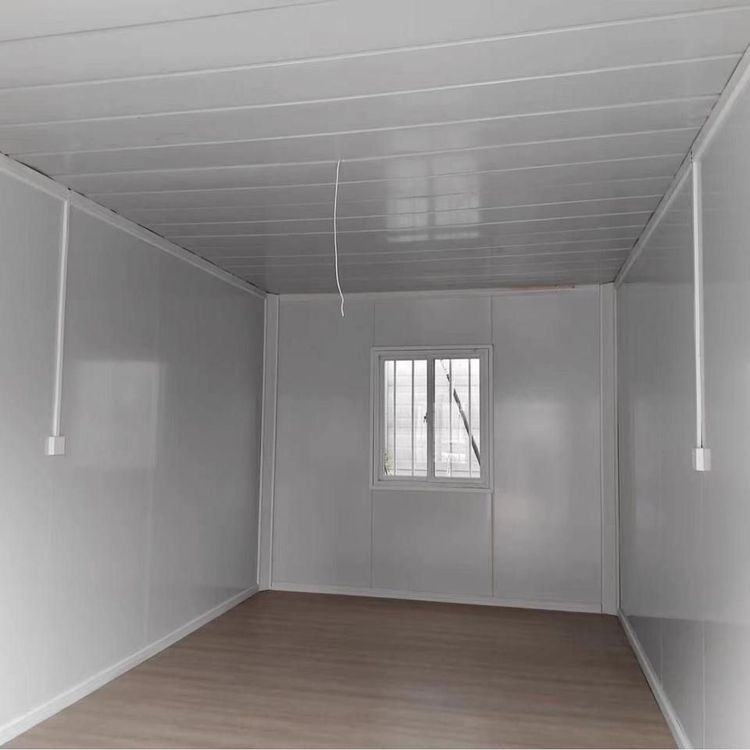
Large Second-Hand Container House
A large second-hand container house is a building form that uses second-hand containers as basic modules and is formed through modification and assembly. It features flexibility, low cost, short construction cycles, and sustainability, and is widely used in the construction of commercial spaces.

1. Architectural Form and Flexibility
Large second-hand container houses fall within the category of container modular architecture, with their core advantage being modular design. Each container serves as an independent unit and can be quickly assembled into spaces of different scales through splicing and stacking, supporting horizontal or vertical expansion. This structure allows for flexible layout adjustments according to needs, such as being combined into open shops, corridors, or atriums in commercial districts to meet diverse scenario requirements. Additionally, their detachability enables rapid reorganization in response to changes in commercial operations, reducing long-term fixed costs.
2. Material and Type Diversity
The material selection for second-hand container houses is extensive, including steel containers, stainless steel, sandwich panels, and color-coated steel. Steel containers are structurally robust and suitable for long-term fixed use; stainless steel offers strong corrosion resistance, making it ideal for humid environments; sandwich panels and color-coated steel provide good thermal insulation, reducing energy consumption. Depending on functional requirements, they can also be classified into fixed, mobile, and refrigerated containers, among other types. For example, mobile container houses can be equipped with wheeled chassis for easy transportation and temporary deployment; refrigerated containers use insulation layers and refrigeration equipment to meet special needs such as food storage.
3. Cost and Efficiency Advantages
Compared to traditional buildings, the construction cost of large second-hand container houses is significantly lower. Second-hand containers are inexpensive, and the modification process eliminates the material and labor costs associated with brick-and-mortar structures. At the same time, their short construction period and modular assembly method can greatly shorten the project timeline, making them particularly suitable for commercial projects that require rapid deployment, such as temporary exhibition halls and festival markets. Furthermore, the reuse of second-hand containers aligns with sustainable development principles, reducing construction waste generation and resource consumption.
4. Application Scenarios and Customization
Large second-hand container houses are commonly used to construct characteristic commercial districts, popular photo spots, and food streets. Their appearance can be customized through painting, film application, installation of glass curtain walls, or wooden cladding, integrating regional culture or brand elements to enhance spatial appeal. For example, in tourist attractions, container houses can be designed as vibrant themed shops, becoming highlights for visitors to take photos; in urban renewal projects, their industrial aesthetic combined with modern design can create a unique commercial atmosphere.