
Large Container Prefabricated House
A large container prefabricated house is a building form that disassembles a complete house into standardized modules, completes the construction process in a factory, and then transports it to the site for rapid assembly. The following is an introduction from multiple aspects:
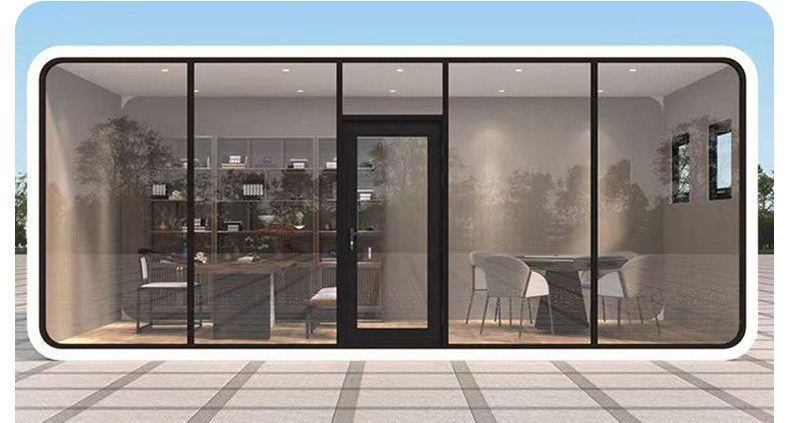
Construction mode: Modular construction is a more integrated mode within prefabricated construction. It divides an entire building into independent house modules and completes all processes such as the main structure, water and electricity pipelines, bathroom waterproofing, sanitary equipment, cabinets, and wardrobes inside the factory. Then, it transports these modules to the project site and assembles them like building blocks. Unlike traditional construction, which proceeds in a series, modular construction adopts a parallel operation mode, with multiple processes advancing simultaneously.
Production efficiency: Taking China's first steel-structure modular intelligent production line as an example, it can produce up to 50 modules per day, with a production capacity ten times that of similar factories in North America. The manufacturing precision is stably controlled between 1 millimeter and 2 millimeters. In the intelligent construction industrial park in Longgang, Shenzhen, more than 80 intelligent equipment work together, and a fully equipped building module can be produced every 20 minutes. After being transported to the construction site, the module can be installed within 30 minutes.
Market demand: According to public information from the General Administration of Customs, in the first half of 2026, China's total export value of prefabricated buildings under HS code 9406 was 2.79 billion US dollars, a year-on-year increase of 45%. Steel-structure modular houses are the main export category, and overseas market demand continues to grow rapidly. Procurement ends such as engineering camps, cultural tourism, and emergency response are paying increasing attention to the recyclability, cross-border compliance, and low-carbon attributes of detachable and relocatable container houses.
Performance advantages: Some high-quality container houses adopt a full steel-structure frame, with a wind resistance rating of Level 12 and an earthquake resistance rating of Level 8. The frame deformation rate is only 0.18%, far lower than the industry's qualified threshold of 0.3%. Moreover, they can be disassembled and reassembled more than 15 times, with no significant decrease in structural stability after each disassembly and reassembly.



