
L-type Mobile Toilet Hoisting
The hoisting of L-type mobile toilets should be carried out in conjunction with the general characteristics of hoisting-type mobile toilets, with the core being the use of dedicated hoisting points or reserved structures to achieve rapid overall relocation.
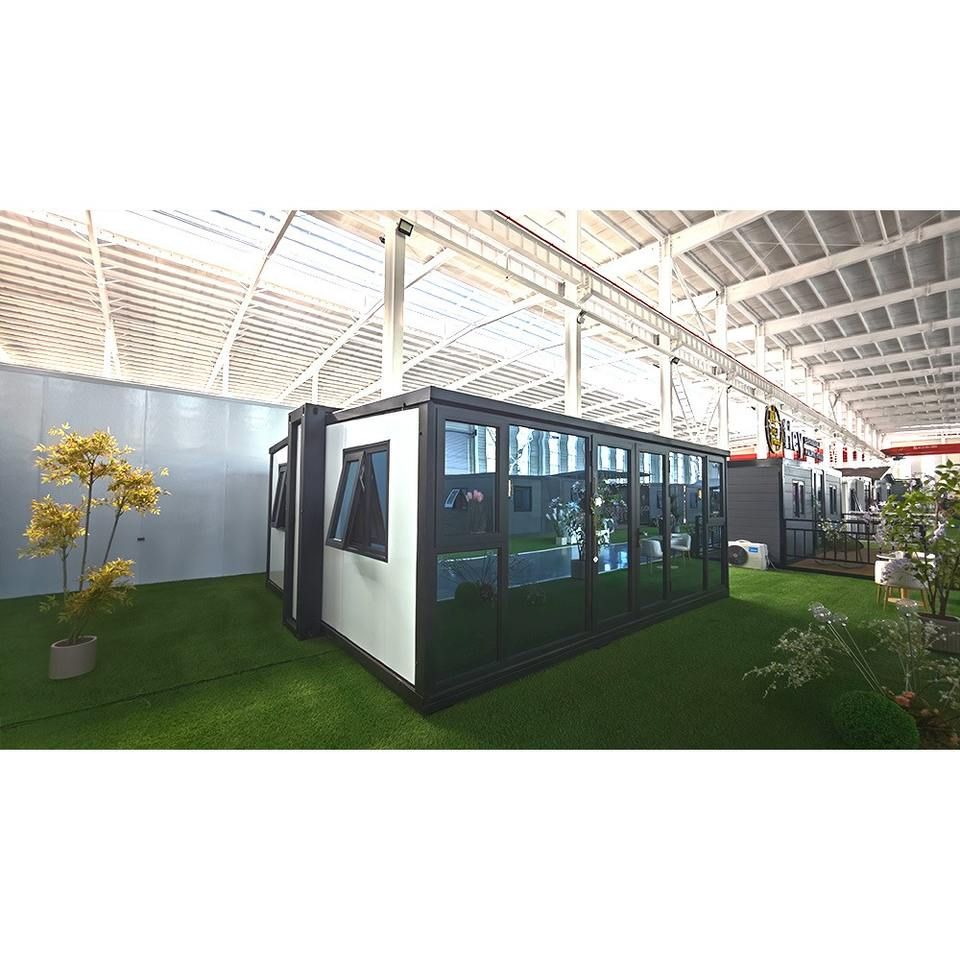
1. Basic Characteristics of Hoisting-type Mobile Toilets
Hoisting-type mobile toilets feature an integrated box design, incorporating basic functional modules such as toilets, sinks, ventilation, and lighting. The bottom or top of the box is equipped with dedicated hoisting points that can be directly connected to the hooks of lifting equipment (such as cranes), eliminating the need for disassembly and assembly and significantly reducing deployment and retrieval times. Some models also have forklift slots or hoisting rings reserved. For example, a 15-ton forklift can transport a standard-sized (1.2m×1.2m×2.3m) mobile restroom, or quick hoisting and relocation can be achieved through the flexible design of compact models (such as 1.4m wide, 1.6m wide, 2.5m long, and 2.45m high).
2. Key Steps in Hoisting Operations
- Hoisting Point Confirmation: Check whether the dedicated hoisting points at the bottom or top of the box are intact and ensure they match the hooks of the lifting equipment. If using a forklift for transportation, confirm that the size of the forklift slots is compatible with the forklift model.
- Ground and Utility Preparation: Before hoisting, complete ground leveling to ensure the stability of the box after placement; at the same time, reserve water and electricity connections for quick对接 (connection) after installation.
- Overall Relocation and Fixing: Lift the toilet as a whole using lifting equipment or a forklift, move it to the target location, and place it down. Then, check whether the box is horizontally fixed to avoid tilting, which could affect usage safety.
3. Application Scenarios and Customization Requirements
Hoisting-type mobile toilets are widely applicable in cultural and tourism attractions, commercial events, construction sites, urban public facilities, and other scenarios. Different scenarios have varying requirements for functionality (such as the need to add baby care rooms or barrier-free facilities) and appearance (such as materials and colors), making custom hoisting a key link in project implementation. For example, tourist attractions may require the toilet's appearance to blend with the natural environment, while construction sites focus more on durability and rapid deployment capabilities.
4. Advantage Summary
Hoisting-type mobile toilets achieve high efficiency in transportation, installation, and retrieval through standardized design: the transportation process is compatible with common vehicles and lifting equipment, reducing customization costs; the installation process only takes a few hours to complete ground and utility connections; after retrieval, they can be quickly emptied and transported, restoring the site to its original condition. These characteristics make them the preferred option for temporary sanitation facilities.


