Back to blog
Article
Installation of Mobile Toilets in Kaocheng Town
Admin September 27, 2026
The installation of mobile toilets in Kaocheng Town requires following the core processes of positioning, assembly, and connection. The specific steps and precautions are as follows:

I. Pre-installation Preparation
Site Assessment
- Select the installation location based on the topography, hydrogeological parameters (such as groundwater level and soil bearing capacity) of Kaocheng Town to ensure a solid ground and smooth drainage. If the site has soft soil or slopes, foundation reinforcement or leveling should be carried out in advance.
- Plan the water and electricity access points. Integrated mobile toilets require reserved sewage pipe connections, while split-type toilets need clear routing for water supply and power lines.
Equipment Selection
- Choose between split-type or integrated mobile toilets based on the usage scenario (such as tourist attractions or temporary events). Split-type toilets are suitable for long-term fixed use and require on-site assembly; integrated toilets (such as box-type toilets) are suitable for rapid deployment, with installation time reduced to 2-4 hours.
II. Installation Steps for Split-type Mobile Toilets
Chassis and Frame Positioning
- Use a forklift or manual labor to place the prefabricated chassis steadily at the predetermined location. Adjust the chassis levelness with a level gauge to avoid structural deformation due to uneven ground.
- Secure the chassis to the ground (e.g., with expansion bolts) to ensure stability.
Wall and Roof Panel Installation
- Insert the wall panels into the chassis slots one by one and secure them with bolts or clips. Pay attention to sealing the joints between wall panels to prevent leakage.
- Install the roof panel and seal the joints with waterproof glue or sealing strips to ensure rainproof performance.
Internal Facility Connection
- Install partitions, toilets, flushing systems, sinks, and other facilities, and connect water and electricity lines. This must be done by professionals to ensure standardized wiring layout and no risk of electric leakage.
- Modular water and electricity interface design can shorten installation time, but the sealing of interfaces must be checked.
Functional Debugging
- Conduct flushing tests, circuit checks, and sealing checks to ensure all functions are normal. For example, the flushing system pressure must meet design requirements, and lighting fixtures must not flicker.
III. Key Points for Integrated Mobile Toilet Installation
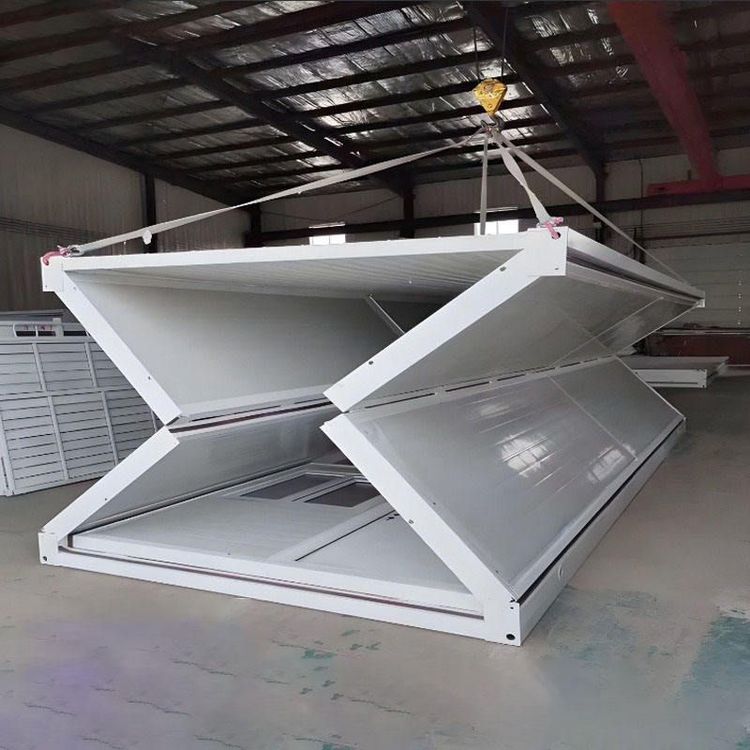
- Lifting and Positioning: Use a crane to lift the pre-assembled box to the designated location, keeping it level and avoiding collisions.
- Water and Electricity Connection: Directly connect to the reserved water supply, power, and sewage pipes, and check the sealing of the interfaces.
- Rapid Acceptance: After installation, focus on checking whether the sewage pipes are unobstructed and the circuits are safe.
IV. General Precautions
- Compliance: Prepare a construction plan by referring to contracts, technical documents, and standards such as the "Mobile Toilet Installation Specifications" to clarify management objectives and resource allocation.
- Safety Measures: Set up warning signs at the installation site, wear safety harnesses for high-altitude work, and avoid cross-construction risks.
- Post-maintenance: Regularly clean the sewage pipes and check the water and electricity lines to extend the service life of the equipment.