
Join Investment in Concrete Prefabricated Houses
Joining the investment in concrete prefabricated houses (cement prefabricated assembled houses) requires a comprehensive assessment of costs, market, operations, and risks. It offers the dual advantages of policy dividends and essential民生 (livelihood) needs, making it suitable for asset-light startups, but brand selection must be stringent.
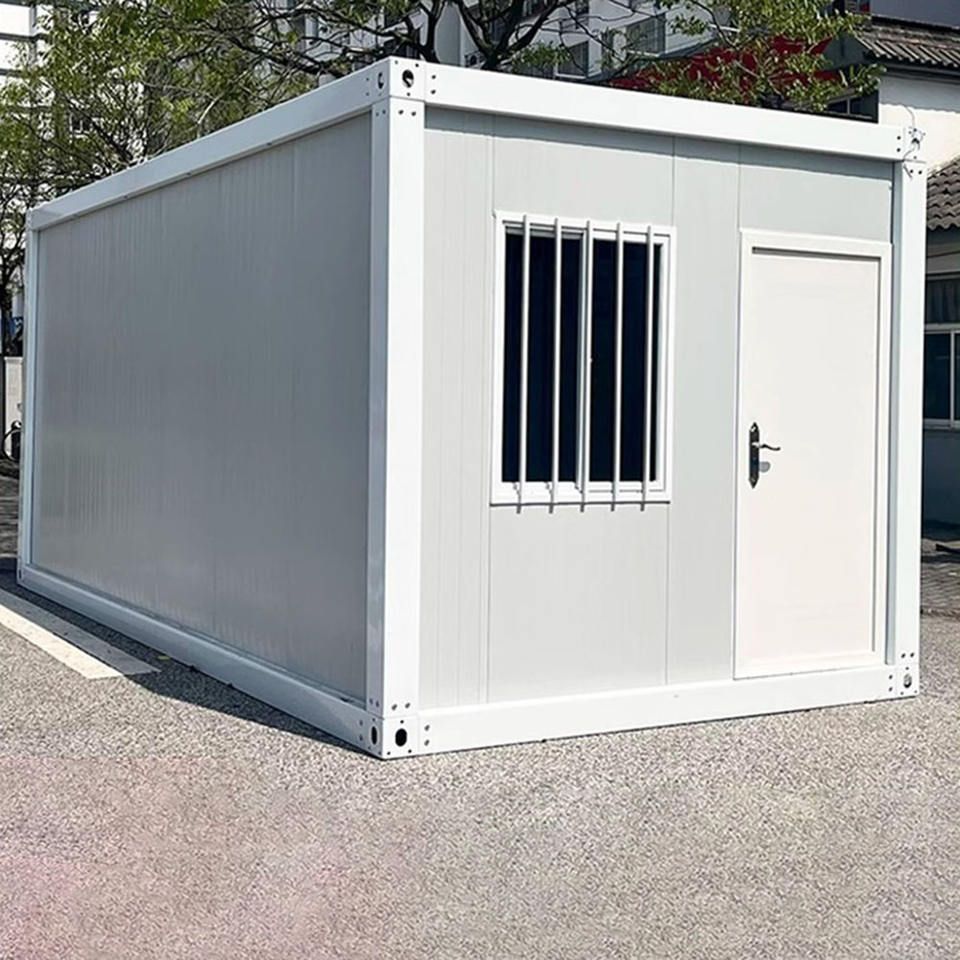
I. Investment Cost and Profit Model
Taking a standard single-story residence of 100㎡ as an example, the comprehensive cost per unit is approximately 80,000 to 150,000 yuan, with specific components including:
- Main materials: 500 to 800 yuan/㎡ (accounting for 40% to 50%), including core building materials such as wall panels and roof prefabricated components;
- Construction and installation: 200 to 300 yuan/㎡, with a construction period 70% shorter than that of traditional buildings;
- Transportation and foundation: Calculated based on a radius of 100 kilometers, with an additional freight cost of 5 yuan/㎡ per kilometer;
- Franchise support: Accounting for 5% to 8% of the investment, covering technical training and channel resources. In terms of profits, the gross profit margin can reach 35% to 45%, with decreasing marginal costs for mass production. If 30 units are sold annually, the expected profit is approximately 600,000 to 900,000 yuan; a franchisee in the southwest region averages 8 to 12 orders per month, with a profit margin of 25% to 35% per unit.
II. Market Prospects and Policy Support
- Policy-driven: The Ministry of Housing and Urban-Rural Development requires that by 2025, the proportion of newly built prefabricated buildings should exceed 30%, with many regions offering subsidies of 30,000 to 80,000 yuan per unit for green building materials;
- Demand scale: The annual market size for rural self-built houses is 300 billion yuan, with the penetration rate of prefabricated buildings increasing by 15% annually. Applicable scenarios include farmer housing renovations, township shops, and homestay developments;
- Cost advantages: Compared to traditional brick-and-mortar structures, the unit construction cost is reduced by more than 30% (a 100㎡ building costs 120,000 yuan for traditional construction and approximately 80,000 yuan for the prefabricated solution), with material utilization increased to 95%, the construction period shortened by 60%, and labor costs reduced by 40%.
III. Risk Avoidance and Operational Recommendations
- Brand selection: Verify the manufacturer's 'Prefabricated Concrete Component Production Qualification', conduct on-site inspections of at least three production bases, and prioritize enterprises offering regional protection policies;
- Market estimation: Estimate annual demand based on 5‰ of the permanent population, ensuring a market capacity of 5,000 units within a 200-kilometer radius;
- Asset-light startup: Initially focus on 2 to 3 popular house types, reduce sample display costs through VR presentations, and adopt a 'model house + customization' model to achieve a startup cost of around 100,000 yuan;
- Supply chain optimization: Refer to the case of a franchisee in North China, who reduced the transportation cost per square meter by 1.8 yuan through centralized procurement.
Summary: Joining the concrete prefabricated house franchise requires balancing costs and market capacity, focusing on examining the enterprise's R&D capabilities, supply chain stability, and policy adaptability, and achieving maximum profit through scaled production and precise positioning.



