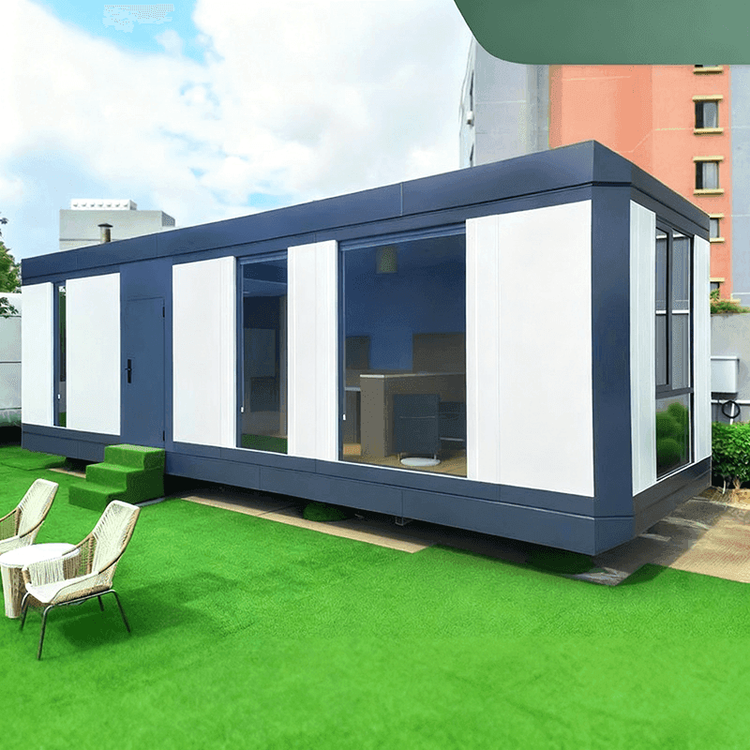
Jinzhou Mobile Toilet for Outdoor Use
Jinzhou mobile toilets are a convenient choice for addressing sanitation challenges in outdoor event settings, featuring advanced technology, environmental efficiency, and flexible deployment.

From a technical perspective, the main body of Jinzhou mobile toilets often adopts an integrated molding structure, primarily made of high-density polyethylene or fiberglass-reinforced plastic. These materials are corrosion-resistant, impermeable, and lightweight, facilitating easy transportation and installation. Internally, they integrate core components such as water storage tanks, sewage tanks, and ventilation systems, forming an independent micro-circulation sanitation unit that can maintain basic functionality without relying on municipal sewage networks. For instance, some customized models feature a pointed roof design, covered with dark blue waterproof asphalt shingles, and use two-tone metal embossed panels for the exterior walls, combining aesthetics with practicality. These toilets can measure up to 1.2 meters in length and width and 3 meters in height, equipped with titanium-magnesium alloy single doors to meet various scenario requirements.
In terms of operational mechanisms, mobile toilets employ a storage-based treatment approach, where waste is temporarily stored in dedicated containers and regularly collected and disposed of by professional teams. This eliminates the need for site modifications and reduces potential pollution to soil and water bodies. The ventilation system ensures internal air quality through forced or natural ventilation designs, minimizing odor accumulation. Some high-end models are also equipped with biodegradation units or small-scale septic tanks for preliminary on-site waste treatment, further enhancing environmental efficiency.
The deployment process requires comprehensive consideration of factors such as terrain flatness, site accessibility, and event scale. Professional service providers conduct on-site surveys to develop implementation plans, scientifically arranging toilet locations to balance convenience of use with emergency evacuation efficiency. For example, in large outdoor events, toilet spacing is typically controlled between 50-100 meters to ensure coverage in densely populated areas.
Maintenance operations include periodic inspections and cleaning. Inspections cover structural integrity, component functionality, and consumable inventory (such as toilet paper and hand sanitizer); cleaning is conducted based on usage thresholds or predetermined time intervals to ensure continuous availability during the rental period. Compared to traditional brick-and-mortar public toilets, mobile toilets have lower production and transportation carbon emissions and can be entirely removed after events, enabling rapid site restoration. They are particularly suitable for temporary demand scenarios.
Their modular design also supports customizable function additions or reductions, such as adding barrier-free facilities, child-specific stalls, or smart sensing systems, precisely matching the needs of outdoor events of varying scales and population densities. This makes them a flexible supplement between urban planning and temporary practical demands.