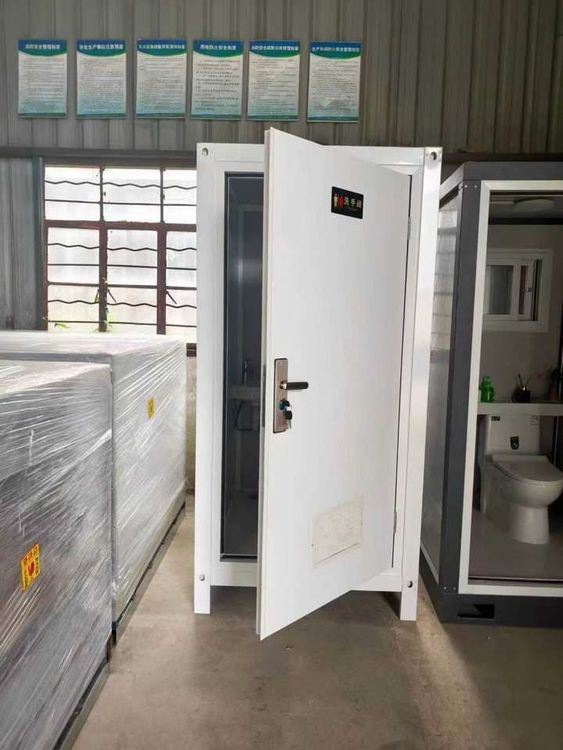
Jinzhong Mobile Toilet Types
Jinzhong mobile toilets come in a variety of types, which can be classified mainly according to technical principles, functional modules, product styles, and materials as follows:
I. Classification by Technical Principles and Functional Modules
Sewage-storage Mobile Toilets These rely on independent sewage-storage tanks for temporary storage of waste. They prevent odor leakage through sealed structures and are transported and treated collectively by specialized equipment after use. Their core advantages lie in their simple structure and low cost, making them suitable for single-day or short-term event scenarios. In terms of configuration, they typically use anti-corrosion material liners to extend service life and are equipped with simple ventilation devices to improve air quality.
Recirculating Water-flush Mobile Toilets These achieve water reuse through a water circulation and purification system, integrating sedimentation, filtration, and disinfection modules. The flushing water is recycled after multi-stage treatment, significantly improving water resource utilization efficiency. However, regular monitoring of water quality indicators and replacement of filter materials are required. This type is suitable for scenarios with limited water conditions but requiring high sanitary standards, such as large-scale outdoor events or temporary construction sites.
Biodegradable Mobile Toilets These utilize specific microorganisms for rapid decomposition of excreta, optimizing the decomposition environment by regulating temperature, humidity, and oxygen content. The final products are carbon dioxide, water vapor, and a small amount of organic residue, which can be used as soil amendment materials. Their advantage is that they rarely require external waste transportation, but strict maintenance of environmental parameters (such as maintaining a temperature between 15-40℃) and regular supplementation of microbial inoculants are necessary.
Composite Treatment Mobile Toilets These integrate multiple technical modules, such as combinations of microbial treatment units and emergency sewage-storage units, or synergies between solar power supply systems and water circulation devices. The modular design allows flexible adjustment of functional configurations according to actual needs, such as adding emergency sewage-storage tanks to cope with sudden surges in visitor numbers or integrating solar panels to reduce energy consumption. This type is suitable for complex environments or long-term use scenarios.
II. Classification by Product Style
- Conventional Water-flush Direct-discharge Type: Uses traditional water-flushing methods, with waste directly discharged into municipal sewers or septic tanks, requiring connection to water sources and sewage pipelines.
- Foam-sealing Type: Generates foam through a foaming device to cover the toilet surface, utilizing the lubricating and sealing effects of the foam to reduce odors and lower water consumption.
- Waterless Packaging Ecological Toilets: Uses biodegradable film bags to encapsulate excreta, requiring no flushing, suitable for extreme environments with water shortages or no sewage disposal conditions.
- Vacuum Suction Ecological Toilets: Utilizes vacuum negative pressure technology for rapid suction of waste, reducing water consumption and improving flushing efficiency, commonly found in high-end temporary facilities.
- High-pressure Steam-water Flush Ecological Toilets: Combines high-pressure gas with a small amount of water for powerful flushing, balancing water conservation and cleaning effectiveness.
III. Classification by Material
The main body materials of mobile toilets include stainless steel, metal carved panels, color-coated steel sheets, anti-corrosion wood, and aluminum-plastic panels. Stainless steel is highly corrosion-resistant and suitable for high-humidity environments; metal carved panels are aesthetically pleasing and have excellent thermal insulation properties; color-coated steel sheets are cost-effective and suitable for short-term use; anti-corrosion wood and aluminum-plastic panels have improved weather resistance through surface treatments and can be customized for high-end applications according to park environments.