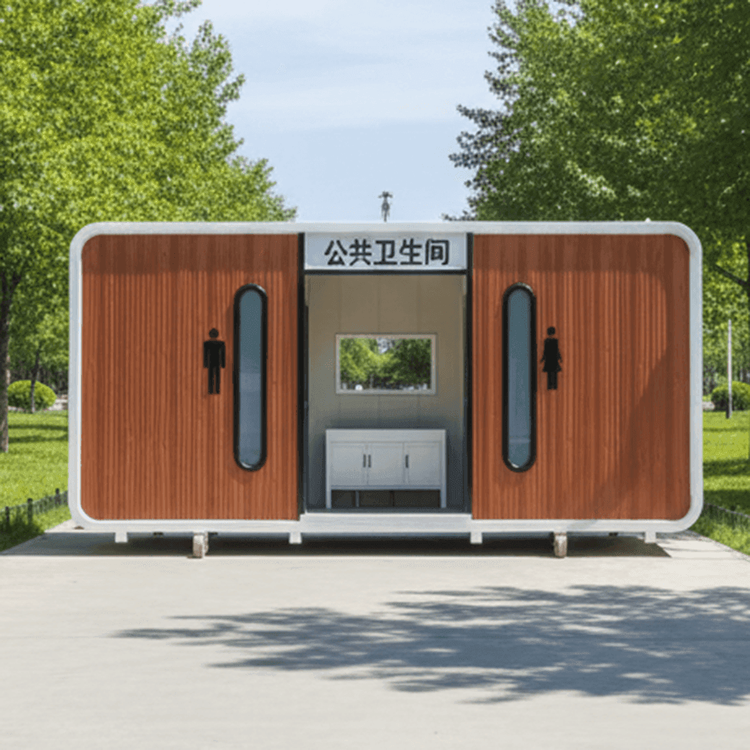
Jining Container Renovated House
Jining container renovated houses offer advantages such as short construction periods, low costs, stable quality, and high flexibility, making them suitable for various scenarios including homestays, commercial use, and temporary accommodations. However, it is essential to choose compliant manufacturers and pay attention to material performance and structural design.

Advantages and Characteristics
Construction Period and Cost Advantages
Container houses adopt a modular design, with factory-prefabricated components assembled on-site. The standard container can be produced and installed in just 7-10 days, reducing the construction period by over 60% compared to traditional buildings. For example, manufacturers like Yingxin Container use a "custom-on-demand + mass production" model, lowering the cost per container by 30%-50% compared to traditional buildings, and also support leasing models to further reduce initial investment.Quality and Compliance
Leading manufacturers establish a full-process quality inspection system. For instance, Yingxin Container's containers have passed wind resistance tests up to Level 12 and earthquake resistance tests up to Level 8, with a service life exceeding 15 years, solving issues such as deformation and leakage common in traditional temporary buildings. Additionally, choosing manufacturers with business registration, steel structure processing qualifications, and environmental certifications can avoid project acceptance risks.Flexibility and Adaptability
Container houses support personalized exterior customization, allowing deep integration with scenic landscapes. The modular combination method enables horizontal or vertical splicing of single containers to form larger usable spaces, meeting functional requirements in different scenarios. For example, Shandong Zhongjiang Green Building provides combined buildings for construction sites, with flexible combinations of office, accommodation, and bathroom modules to meet project needs.
Application Scenarios
Cultural and Tourism Projects
As temporary facilities such as homestays, shops, and visitor centers, container houses can be quickly constructed to adapt to fluctuations in tourist traffic during peak seasons. For example, the Jining Canal Memory Cultural District uses renovated container shops that support outdoor operations, enhancing the vibrancy of the market.Emergency Accommodation
After earthquakes and floods, container houses can be rapidly deployed to provide living spaces, ensuring the basic needs of affected people. For example, Shandong Guoheng Intelligent Manufacturing's packing-box houses support 72-hour rapid deployment for emergency relief command centers.Commercial Spaces
In urban pop-up stores and creative districts, container houses, through artistic exterior renovations, become popular photo spots. For example, the second-hand container renovation project in Hangzhou Yuanzhu Commercial Street, combined with steel structure sunroom design, enhances commercial value.
Precautions
It is necessary to pay attention to the manufacturer's qualifications, material performance (such as fire resistance, thermal insulation, and sound insulation levels), and structural design (such as anti-corrosion treatment and welding processes) to ensure the safety and comfort of the house.