Back to blog
Article
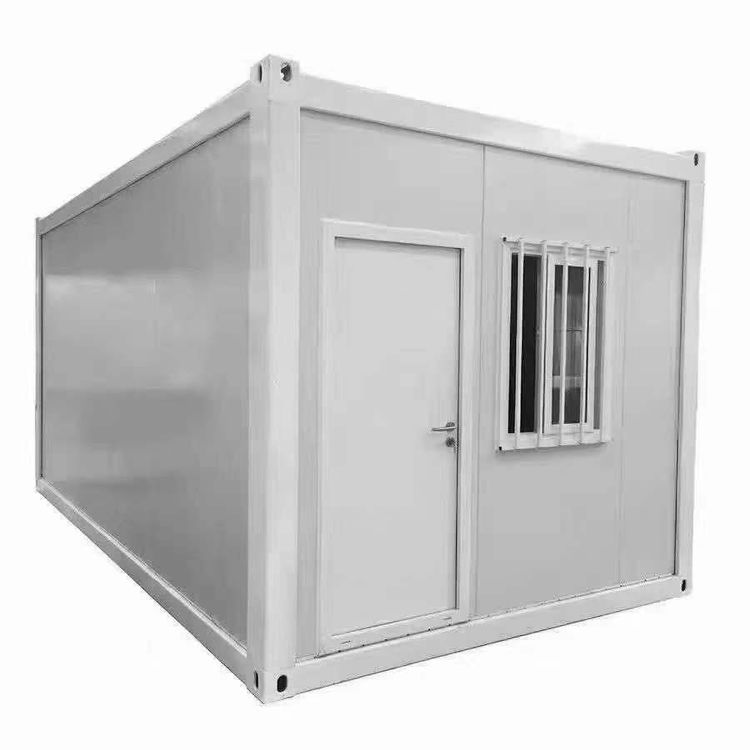
Jining Container House
Admin September 15, 2026
The container houses in Jining feature modularity, environmental friendliness, low carbon emissions, precise craftsmanship, and strong adaptability, with suppliers transitioning from single finished product sales to providing modular solutions. Details are as follows:

I. Physical Attributes and Functional Characteristics
- Core Composition: Primarily consisting of steel structural frames and enclosure panels, the selection of traditional finished containers requires attention to steel thickness, insulation layer density, and anti-corrosion processes. For example, 0.8mm thick corrugated steel plates paired with 100mm rock wool sandwich panels can meet the insulation needs of Jining at -30℃.
- Climate Adaptability: In response to Jining's long winters and large temperature variations between day and night, suppliers need to improve panel coating formulations. For instance, using a high weather-resistant polyester resin coating on the outer layer and adding a moisture-proof aluminum foil layer on the inner layer can reduce the probability of condensation on the inner walls of the containers.
- Modular Design: Suppliers after transition offer multi-level combination solutions, addressing structural mechanics issues during vertical stacking by thickening columns (e.g., 6mm thick square steel) and adding reinforcing ribs, thereby increasing overall compressive strength by approximately 50%.
II. Supplier Transition Directions
- From Finished Product Sales to Modular Solutions: Traditional suppliers only provide standard 6-meter containers, while transitioned enterprises can customize irregular non-standard containers according to needs, adapting to irregular sites or special functional requirements, such as conference rooms, kitchens, and bathrooms.
- Process Upgrades: The purchasing logic shifts from 'looking at finished products' to 'looking at processes'. For example, CNC bending machines control door frame bending angles within plus or minus 0.5 degrees, and using ethylene propylene diene monomer rubber seals extends service life to over 5 years.
- Integrated Services: Covering the entire chain of design, production, transportation, installation, and after-sales, construction can be carried out in remote sites and complex locations, familiar with local climates and acceptance standards, ensuring stable delivery and quick after-sales response.
III. Application Scenarios and Advantages
- Temporary Projects: Such as construction site dormitories and wilderness camps, requiring rapid delivery and multiple turnovers, adapting to mobile infrastructure projects and saving on temporary construction costs.
- Special Needs: Such as environmentally friendly and low-carbon container houses, which generate no dust or construction waste during construction, adapting to strictly controlled areas like scenic spots and schools.
- Long-term Projects: Precision-crafted container houses undergo fully automatic welding of steel frames and multiple anti-rust treatments, with quality far exceeding that of ordinary simple temporary buildings, adapting to long-term use scenarios.