
Jingxing Cement Prefabricated Houses
Currently, no large-scale application cases of cement prefabricated houses have been retrieved in the Jingxing area, but the technology for prefabricated cement houses has already developed a mature industrial system, and its application needs to be adjusted in combination with regional demands and regulations.
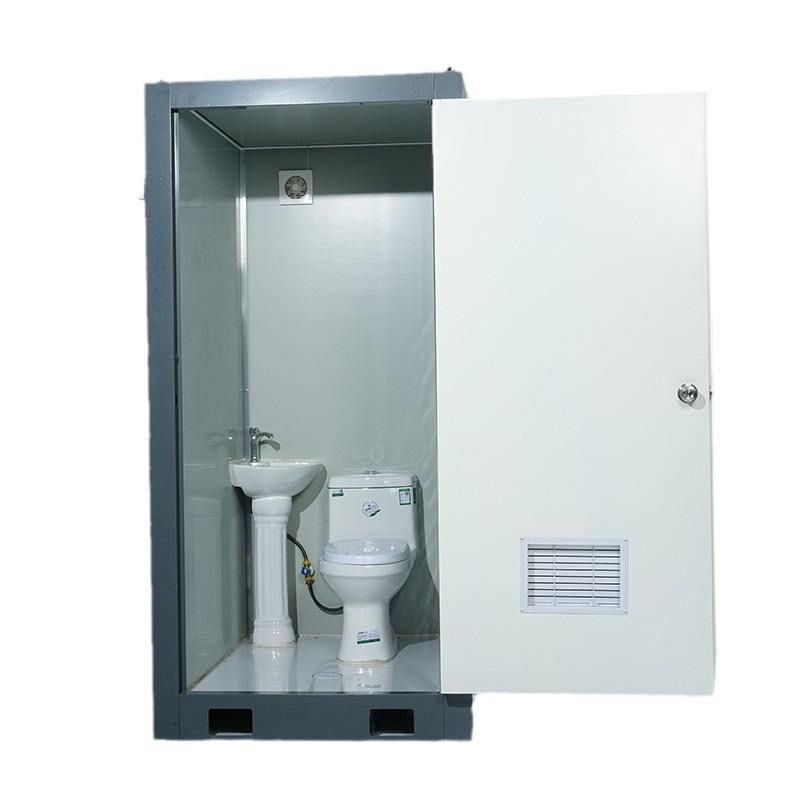
1. Technical Characteristics of Prefabricated Cement Houses
Prefabricated cement houses adopt an industrial model that combines factory prefabrication with on-site hoisting. The main structure is a reinforced concrete frame, and the modules are connected by both mortise-and-tenon joints and bolts to ensure structural stability. They have a short production cycle, with a single module taking only 7 days. The on-site installation is highly efficient, and the main structure of a 200㎡ villa can be assembled within 4 hours. The entire process of mechanized production controls the error within 2 millimeters. The walls use C35 concrete and Φ14 deformed steel bars, with a reinforcement ratio of 1.2% and a compressive strength of 30MPa, equivalent to being able to withstand 3,000 tons per square meter, meeting the requirements for high-strength use.
2. Seismic Performance and Scope of Application
The seismic performance of modular prefabricated structures depends on the design of the joints. Experts point out that such buildings can meet basic requirements in non-seismic zones, but the number of floors should not be too high (a maximum of 5 floors is recommended). Seismic performance analysis is required to ensure that the design specification parameters are met. For example, a prefabricated cement house produced by a company in Henan comes with a 70-year quality guarantee. A 200㎡ house costs about 60,000 yuan, and it takes about 1 month to complete from the rough state to decoration. It is suitable for low-rise residential or temporary building scenarios.
3. Application Status in the Jingxing Area
In the Jingxing area, the application of cement prefabricated components focuses more on municipal facilities, such as cement septic tanks, fire pools, and inspection wells. Currently, there have been no publicly reported large-scale application cases of prefabricated houses in the local area. This may be related to regional construction demands, policy guidance, or market awareness. For further information on localized applications in Jingxing, it is recommended to contact local building material companies or the housing and construction department to obtain specific information, such as whether there are companies piloting prefabricated house projects or policy support plans.
4. Potential Challenges in Technology Promotion
The promotion of prefabricated cement houses requires balancing technological advantages with regional adaptability. For example, in cold northern regions, the thermal insulation performance of the walls needs to be considered; in seismic zones, the design of the joints needs to be strengthened; and in rural areas, transportation and installation costs need to be reduced. In addition, the public's awareness of prefabricated buildings and the degree of perfection of industry standards are also key factors affecting their application.



