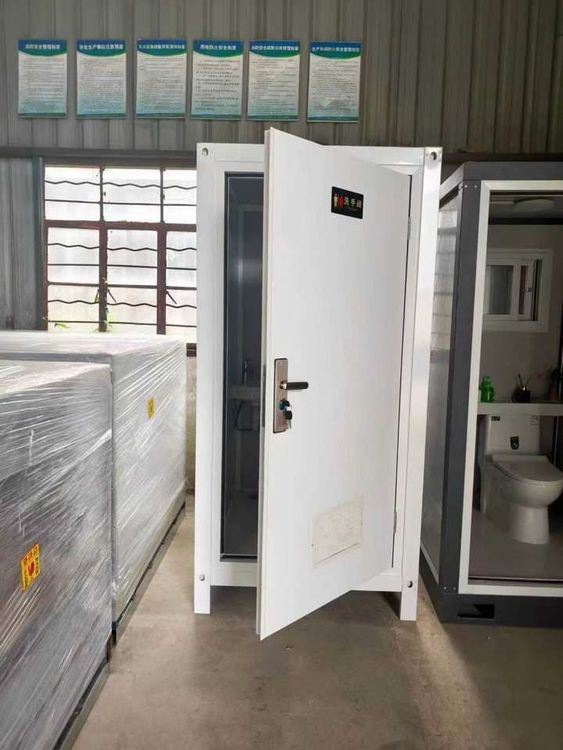
Jinghang Mobile Toilet Insulation
Insulated mobile toilets achieve temperature regulation through high-efficiency thermal insulation materials and sealed structures, making them suitable for outdoor and harsh environments. Their core advantage lies in ensuring user comfort and normal equipment operation.

Technical Principles and Structural Design
The main frame of insulated toilets typically employs a lightweight steel galvanized structure, offering high strength and corrosion resistance. The outer layer is covered with color-coated steel sheets or fiberglass-reinforced plastic, while the inner layer is filled with high-efficiency thermal insulation materials such as polyurethane sandwich panels and rock wool, forming a complete “insulated shell.” This multi-layer structure not only effectively isolates external temperatures (such as extreme cold or heat) but also reduces noise and odor penetration. Some products (e.g., models from Dezhou Hongtu Metal Products Co., Ltd.) also incorporate insulated designs in the handwashing area to further enhance overall thermal insulation performance.
Application Scenarios and Adaptability
Insulated toilets are widely used in tourist attractions, highway service areas, construction sites, sports events, and urban squares, particularly in cold northern regions. Traditional water-flush toilets are prone to freezing in low temperatures, whereas insulated toilets address winter water and sewage disposal challenges through packaged or waterless sewage systems (e.g., biodegradation, vacuum suction technology). For example, in areas without water supply, packaged toilets can seal and store waste for regular cleaning, while biodegradable models use microbial decomposition for eco-friendly disposal but require regular maintenance.
Key Considerations for Purchase
- Thermal Insulation Performance: Pay attention to the material’s R-value (thermal resistance indicator) to ensure compliance with local climate standards. In northern regions, materials with higher R-values (e.g., polyurethane sandwich panels) should be selected to withstand extreme cold.
- Sewage Disposal Method: Choose based on scenario requirements—packaged systems are suitable for water-scarce or temporary locations; biodegradable systems are more eco-friendly but have higher maintenance costs; vacuum suction systems are ideal for high-traffic areas but require power support.
- Material Durability: Prioritize galvanized frames, which offer significantly better corrosion resistance than ordinary steel and can extend service life to over 10 years. The outer layer should feature UV resistance and impact resistance (e.g., fiberglass-reinforced plastic).
- Modularity and Customization: Support single-unit to multi-unit connected configurations, with internal layouts optimized based on site dimensions and usage frequency (e.g., adding barrier-free facilities or baby-changing stations).
- Basic Configurations: Industry standards require ventilation systems (e.g., exhaust fans), lighting systems (LED energy-saving lights), and non-slip floors (anti-slip tiles or rubber mats) to enhance safety and comfort.
Industry Trends and Manufacturer Selection
Currently, numerous manufacturers produce insulated toilets, with technical differences primarily体现在 modular design (rapid installation, disassembly, and reassembly) and customization services (e.g., exterior colors, functional expansions). It is advisable to select manufacturers with R&D capabilities to ensure products meet the latest environmental standards (e.g., national standard GB/T 18092-2008) and local climate adaptability requirements.