
Jingdezhen Hotel Container Houses
Container houses have been applied in the hotel sector in Jingdezhen, such as Guanshanyue Camp Hotel, which boasts advantages like modularity, easy mobility, and a short construction period, and performs well in climate adaptation, cost-effectiveness, and environmental protection.

Application Examples
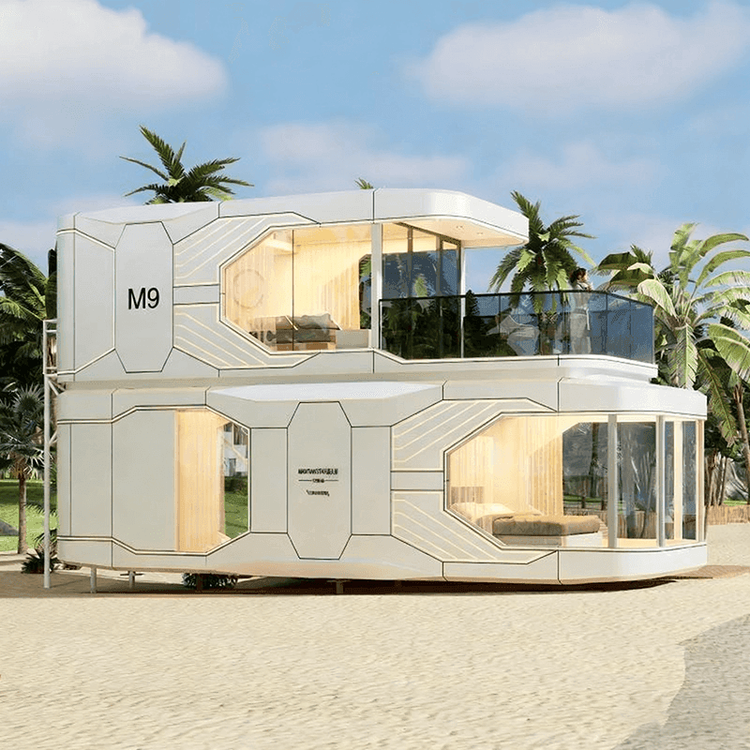
In Jingdezhen, container houses have been utilized in the hotel industry, with Guanshanyue Camp Hotel serving as a prime example. Its rooms are built within containers, surrounded by mountains, offering a beautiful and tranquil environment with unique characteristics, providing tourists with a distinctive accommodation experience.
Structural Characteristics
Container houses are essentially industrial modular building systems, with steel containers conforming to international freight standards as the basic building units. Each container is a complete structural unit with modular characteristics, allowing for various combinations to create larger spatial layouts to meet the design requirements of different hotel rooms. They are also easy to move and relocate, offering significant advantages for hotel projects that require flexible site adjustments. Moreover, their short construction period, with most processing completed in factories, saves on-site installation time and enables quicker commissioning.
Climate Adaptability
Jingdezhen experiences distinct seasons, with hot and rainy summers and cold and damp winters, necessitating special consideration of climate factors for container houses. Common solutions include adding insulation layers inside the containers to maintain stable indoor temperatures, applying special coatings for surface treatment to enhance waterproofing and sun protection, and designing proper ventilation systems to improve indoor air quality, thereby providing a comfortable living environment for occupants.
Economic Advantages
From an economic perspective, the construction cost of container houses is generally lower than that of traditional buildings, with major expenses including container purchase, transportation, and renovation costs. The short construction period reduces time costs, while maintenance costs during use are comparable to those of traditional buildings. Additionally, significant savings on reconstruction costs can be achieved during relocation, effectively lowering operational costs for hotel operators.
Environmental Significance
In terms of environmental protection, repurposing retired freight containers into buildings reduces energy consumption from steel recycling and avoids resource consumption in the production of traditional building materials. The use of standardized components allows for high material recycling rates during demolition, with relatively less construction waste generated, aligning with the concept of sustainable development. With proper design, container houses can also provide a comfortable living environment, with carefully planned spatial layouts and professionally designed lighting, ventilation, and sound insulation.
You may also like
Portable Toilet Color Steel Custom & OEM: Design & Bulk Production Guide
Read More
Portable Toilet Color Steel: Top Options & Considerations
Read More
Portable Toilet Color Steel Explained: How to Choose the Right One
Read More