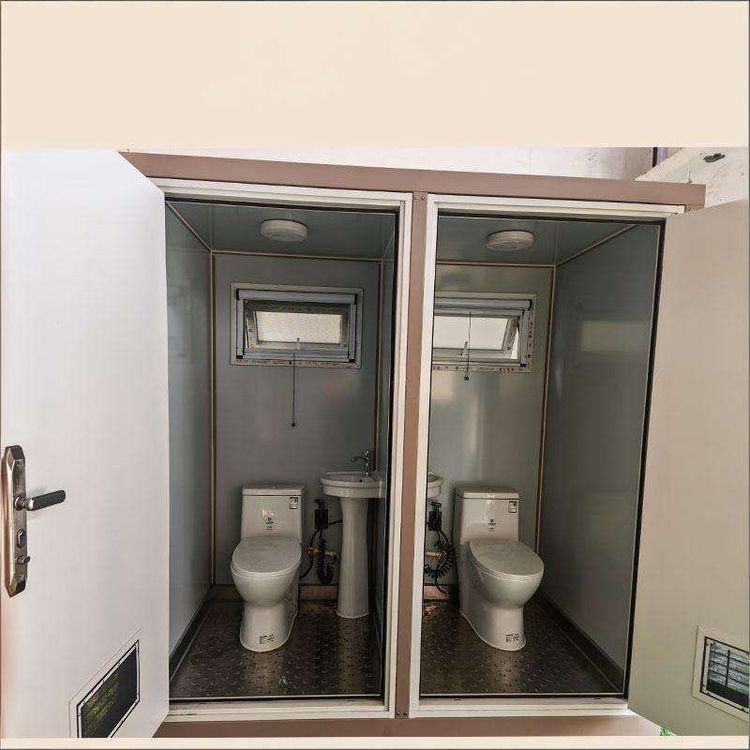
Jinchang Scenic Area Mobile Toilet
The mobile toilet in Jinchang scenic area is a portable sanitation facility specifically designed for temporary high-traffic scenarios. Through modular design, environmental adaptability, and dynamic management, it meets the physiological needs of tourists in areas not covered by fixed toilets while also taking into account ecological protection and efficient resource utilization.

Design and Composition: Emphasis on Modularity and Environmental Adaptability
The mobile toilet adopts a modular design, with core units including toilet stalls, sewage storage systems, and ventilation devices. The modular structure supports rapid assembly, disassembly, and transportation, allowing for flexible adjustment of the number of toilet stalls based on tourist volume to avoid resource waste. Given the significant temperature variations between day and night and strong ultraviolet radiation in the Jinchang area, the toilet body is made of weather-resistant composite materials, and the inner walls are coated with anti-freeze layers to prevent pipeline ruptures in winter. Some models are equipped with solar panels to power the lighting system, reducing reliance on external energy sources.
Working Principle and Types: Eco-Friendly and Efficient Treatment
Its operation relies on an independent sewage discharge mechanism, with common types including packaged, microbial degradation, and water-flush types. The microbial degradation type decomposes excreta through specific bacterial strains, converting it into harmless substances for eco-friendly treatment. The sewage storage system uses sealed containers to prevent odor leakage and groundwater contamination. Ventilation devices ensure air circulation through natural convection or mechanical exhaust. Some eco-toilets incorporate water-saving technologies (such as vacuum negative pressure or foam sealing), reducing water consumption per flush to just one-tenth of that of conventional toilets. Waste treatment combines microbial degradation or low-temperature pyrolysis technologies to reduce the frequency of waste removal and transportation energy consumption.
Layout and Management: Dynamically Matching Tourist Needs
The layout should be based on pedestrian flow analysis and ecological impact assessment, avoiding ecologically sensitive areas and prioritizing placement between viewing platforms and rest stops. The layout density refers to the instantaneous carrying capacity data of the scenic area, with additional toilet stalls added during peak periods and removed during off-peak periods. The management model emphasizes dynamic monitoring, using infrared counters to reflect usage intensity in real-time and optimizing the patrol routes of cleaning staff, which is more efficient than fixed-time maintenance.
Advantages and Value: From Solving Toilet Problems to Technological Paradigm Innovation
Mobile toilets solve the problem of resource misallocation in fixed toilets by dynamically adjusting their positions, avoiding congestion or idleness in certain areas. Although the initial procurement cost is relatively high, they save on large-scale civil engineering and pipeline laying costs, resulting in lower long-term operation and maintenance costs. Their design thinking shifts from static supply to dynamic response, providing a technological paradigm reference for public services in ecologically fragile or variable-condition areas, combining practicality with ecological value.