
Back to blog
Article
Jilin Residential Container House
Admin September 15, 2026
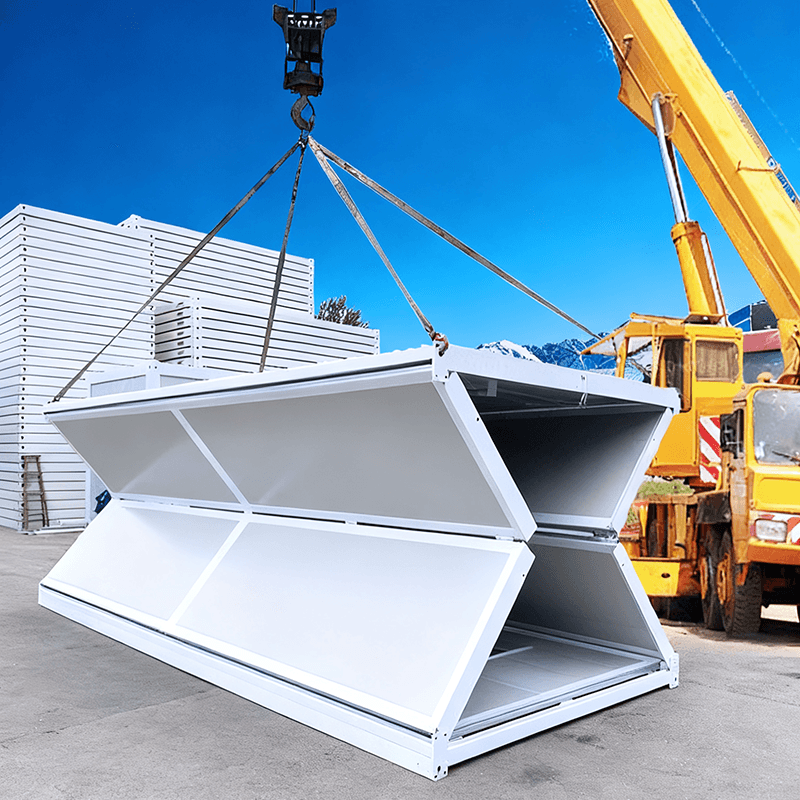
Jilin residential container houses have advantages such as low cost, easy installation, stable structure, and recyclability. The following is an introduction from different aspects:
Cost Aspect
- Production Cost: The production of residential container houses is relatively simple. Compared with traditional color-plate houses and other types of container houses, there is a certain space for cost optimization. For example, foldable houses have fewer welded parts, which can save a certain amount of cost during the production process.
- Transportation Cost: Transportation is relatively convenient and cost-effective. A 6m car can load about 6 sets, and a 17.5m flatbed truck can load about 20 sets, greatly reducing transportation expenses.
- Storage Cost: Storage is convenient. Multiple sets can be stacked and stored in one place, reducing land occupation area and thus lowering storage costs.
- Usage Cost: Some products offer a five-year waterproof warranty, lifelong quality maintenance, and even buy-back services, eliminating worries and saving users a significant amount of money during use.
Installation and Usage Aspect
- Easy Installation: On-site installation and disassembly are convenient, and can be carried out by 2 - 3 people working together, with a relatively short installation time. For example, the products of Zhuhai Zhongshen Container Co., Ltd. are easy to hoist, can be combined arbitrarily, and do not require disassembly, allowing for installation in fifteen minutes and occupancy in half an hour.
- Stable Structure: They have a neat appearance and a stable structure, with corresponding fire resistance, earthquake resistance, wind resistance, and rain leakage prevention capabilities. They can be folded repeatedly and recycled, meeting emergency housing standards. For example, a foldable house can be folded repeatedly 500 times and has a long service life under reasonable use conditions.
Application Scenarios Aspect
- Wide Range of Applications: They can be used as temporary dormitories, offices, meeting rooms, kitchens, canteens, restrooms, guard rooms, and warehouses on construction sites; as housing for large-scale field exploration and fieldwork construction in sectors such as highways, railways, subways, bridges, water conservancy, oil, and natural gas; as temporary housing for urban municipal offices, commercial mobile shops, outdoor performances, exhibitions, large-scale sports events, and equipment rooms; as leisure villas and resort housing in tourist areas; and as housing for earthquake relief and military fields.



