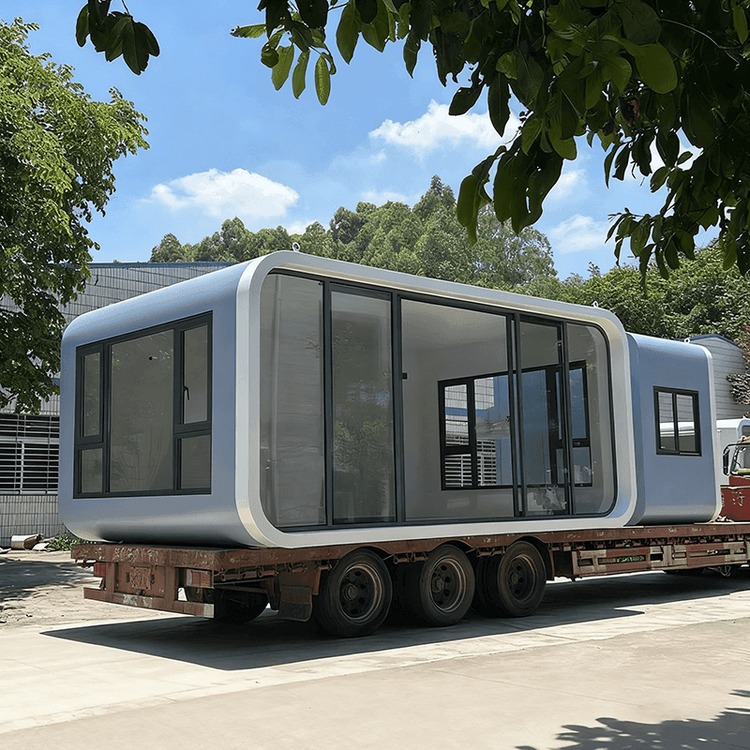
Jilin Mobile Toilet Construction
Jilin mobile toilet construction features resource conservation, flexible layout, environmentally friendly technology, and efficient management, as detailed below:

1. Significant Reduction in Resource Consumption and Land Use
Jilin mobile toilet construction replaces traditional fixed toilet construction with a leasing model, avoiding the use of building materials such as bricks and cement, and reducing resource consumption at the source. Meanwhile, its footprint is limited to the space required for the toilet unit itself, eliminating the need for reserved land for auxiliary facilities such as septic tanks and water supply and drainage pipes. This significantly reduces the specialized occupation of construction sites and alleviates space constraints on construction sites.
2. Dynamic Spatial Layout to Adapt to Construction Needs
The placement of mobile toilets requires real-time adjustment based on construction progress and personnel density. For example, during the foundation construction phase, toilets can be concentrated in the living area; after entering the main construction phase, temporary toilets need to be added near high-rise work areas to shorten the walking distance for workers. This dynamic matching strategy avoids space idleness or congestion caused by the relocation of fixed toilets due to changes in construction areas, optimizes site utilization efficiency, and indirectly reduces ineffective energy consumption and time loss.
3. Biodegradation Technology for Environmentally Friendly Cleanliness
Professional leasing companies use biodegradation technology to treat excreta: specific enzyme preparations or microbial communities are added to the fecal storage tank to accelerate the decomposition of organic matter into harmless substances, reducing the volume and frequency of subsequent transportation and treatment. Compared to traditional septic tanks, this technology reduces the frequency of cleaning and emptying, avoids leakage risks and odor diffusion, and is particularly suitable for ecologically sensitive areas or construction sites with strict environmental protection requirements.
4. Diversified Water Resource Management Technologies
Modern mobile toilets are equipped with water-saving flushing devices or waterless foam sealing technology. The latter forms a sealed layer with a small amount of foaming liquid, blocking odors and achieving zero water consumption, significantly reducing reliance on municipal water supply or temporary water intake during construction. In water-scarce areas, such as the arid regions of western Jilin, such technologies can effectively reduce construction water pressure.
5. Comprehensive Closed-Loop Waste Disposal System
The leasing company is responsible for the unified recovery, cleaning, disinfection, and maintenance of mobile toilets after use. Scrap components enter a classified disassembly process, where materials such as plastics and metals are sorted and handed over to compliant recycling companies for processing, avoiding the landfilling of equipment as ordinary waste after scrapping and achieving resource recycling, in line with the concept of green construction.
6. Simple Construction and Strong Independence
Mobile toilet construction only requires leveling the ground and connecting to a power source, without the need to lay water supply and drainage pipes or connect to the municipal pipe network. The installation period is short, and the interference with the surrounding environment is minimal. This independence makes it particularly suitable for temporary projects or construction sites with complex geological conditions, reducing construction difficulty and cost.