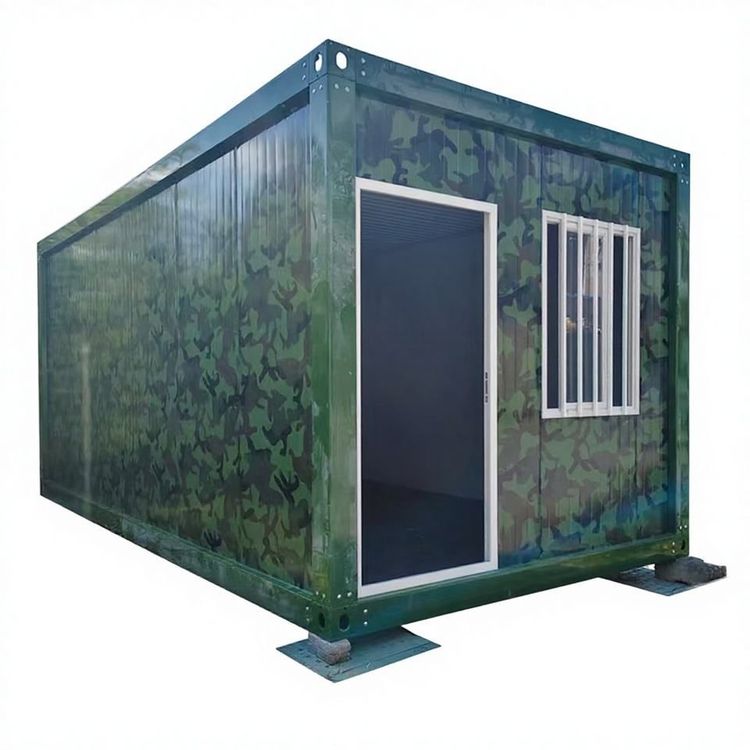
Jilin Cement Prefabricated House
Jilin cement prefabricated houses are a form of construction where components are pre-fabricated in factories and assembled on-site. They offer advantages such as high construction efficiency, controllable quality, rational resource utilization, environmental friendliness, flexible design, and good economic performance.

Improved Construction Efficiency: Traditional on-site construction involves cumbersome procedures and is greatly affected by weather conditions. In contrast, the components of Jilin's prefabricated cement houses are manufactured in factories, and the on-site assembly process is simple, significantly shortening the construction period. In the climate-variable Jilin region, this construction method effectively reduces the risk of delays caused by weather. For example, a two-story office building of approximately 500 square meters built for a local sand quarry in Jimusaer Santai Town was installed in just one day using prefabricated cement houses.
Quality Control Advantages: Factory production provides a stable environment where factors such as temperature and humidity can be easily controlled, ensuring the quality of the components. In contrast, traditional on-site construction often encounters issues such as insufficient concrete strength or component deformation due to environmental factors, affecting the durability and safety of the building. Jilin's prefabricated cement houses, produced in factories, offer better quality assurance.
Rational Resource Utilization: Prefabricated cement houses can utilize raw materials more efficiently during production, reducing material waste through centralized procurement and management. Additionally, the standardized production of prefabricated components lowers the error rate during construction, saving costs. Traditional construction, on the other hand, often leads to material waste and increased costs due to non-standard on-site practices.
Environmental Performance Considerations: Traditional construction generates a large amount of construction waste, whereas prefabricated construction in factories allows for better management and recycling of waste, reducing environmental impact. Furthermore, reasonable design can improve building energy efficiency and reduce long-term energy consumption.
Design Flexibility: Although components are standardized, modern prefabricated cement houses can be customized to meet different user needs. The layout and appearance of the houses can be adjusted according to the preferences of the occupants, and adaptive designs can be made based on terrain conditions.
Economic Performance: While initial investment may be higher, the short construction period, low labor costs, and high material utilization rate result in good economic benefits. In the competitive construction market of Jilin, the quick return on investment makes these houses popular among developers. Moreover, with technological advancements and increasing market demand, production costs are gradually decreasing.