
Prefabricated Assembly-Type Housing in Jiaozuo City
The development of prefabricated assembly-type housing in Jiaozuo City has formed a complete system encompassing policy support, industrial practice, foundational guarantees, and future planning, achieving significant progress in the industrial transformation of construction.
I. Policy Support with Clear Quantitative Targets
Jiaozuo City has set staggered targets through the Implementation Plan for Further Promoting the Development of Prefabricated Buildings: Starting from the release of the document, the proportion of prefabricated construction in new buildings shall be no less than 25%, increasing by 5 percentage points annually, reaching 40% by the end of 2025; the proportion of prefabricated construction in projects invested by the government and state-owned enterprises shall be no less than 60%, achieving 100% full coverage by the end of 2025. At the technical level, it is mandatory to use prefabricated sandwich insulation wall panels for exterior walls and encourage the promotion of prefabricated steel-structured agricultural houses in villages and towns, driving technological upgrades from the source.
II. Industrial Practice Covering Diverse Scenarios
- Light Steel Prefabricated Houses: Using cold-formed thin-walled steel sections as the framework, stable structures are formed through high-strength bolt connections. The walls are filled with rock wool or polyurethane insulation materials, covered with OSB panels and waterproof breathable membranes, providing insulation, moisture resistance, and rust prevention. Suitable for uneven terrains such as mountains and hills, including scenarios like scenic area receptions and temporary offices, with foundations requiring only plain concrete strip foundations or screw piles, minimizing terrain disturbance. Components are standardized in factory production with millimeter-level error control, reducing on-site wet work, enabling construction in winter, and offering superior wind and earthquake resistance compared to traditional masonry structures.
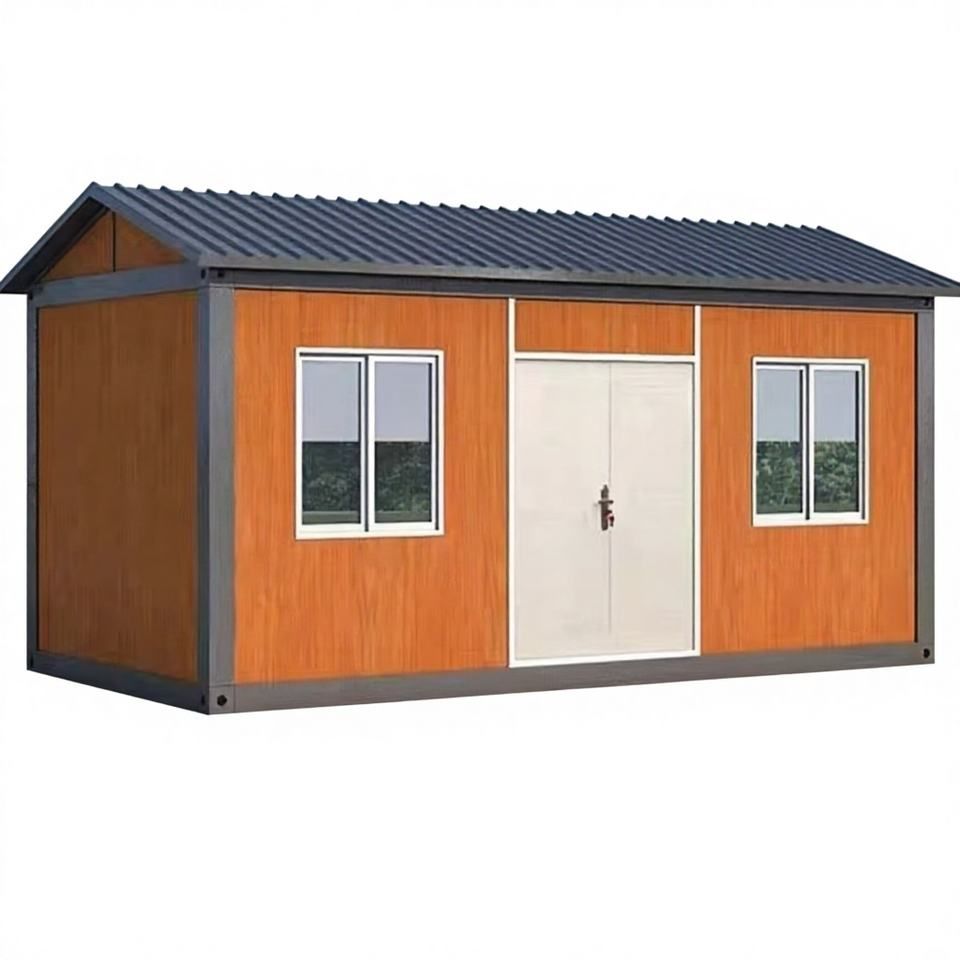
- Modular Prefabricated Buildings: Covering tourist resorts, homestays, office spaces, etc., supporting overall relocation and reuse. Prices range from 700 to 1,299 yuan per square meter depending on configurations, offering customized services to meet flexible needs.
- Prefabricated and Assembled Lightweight Panels: Construction efficiency is increased by 40%, and labor costs are reduced; material production reduces concrete waste by about 15%, and building energy consumption is decreased by over 30%; self-weight is only one-third of that of traditional floor slabs, meeting 8-degree seismic fortification requirements. They have been applied in affordable housing (capped in 30 days), industrial plants (completing 12,000 square meters of construction in 28 days), and municipal infrastructure (extending the lifespan of sidewalk paving to 15 years).
III. Comprehensive Industrial Foundations and Guarantee Measures
Jiaozuo City has established two prefabricated building industrial bases with an annual production capacity of one million square meters, equipped with fully automated light steel keel forming equipment and professional detailed design teams. Factories ensure component quality through CNC cutting, punching equipment, and surface anti-corrosion treatment, with supporting bolts and connectors packaged and delivered to reduce on-site installation errors. Policy implementation is included in the government's energy consumption 'dual control' assessment system, with regular 'look-back' supervision conducted to ensure target realization.
IV. Future Planning Focusing on Intelligent Upgrades
According to the Action Plan for the Development of New Building Industrialization, by 2026, the proportion of prefabricated buildings in the city will exceed 50%. Prefabricated and assembled lightweight panels will develop towards integration and intelligence, combining BIM technology to achieve full lifecycle management of design, production, construction, and operation and maintenance, driving the construction industry towards green and low-carbon transformation.



