Jiangxi School Portable Toilets
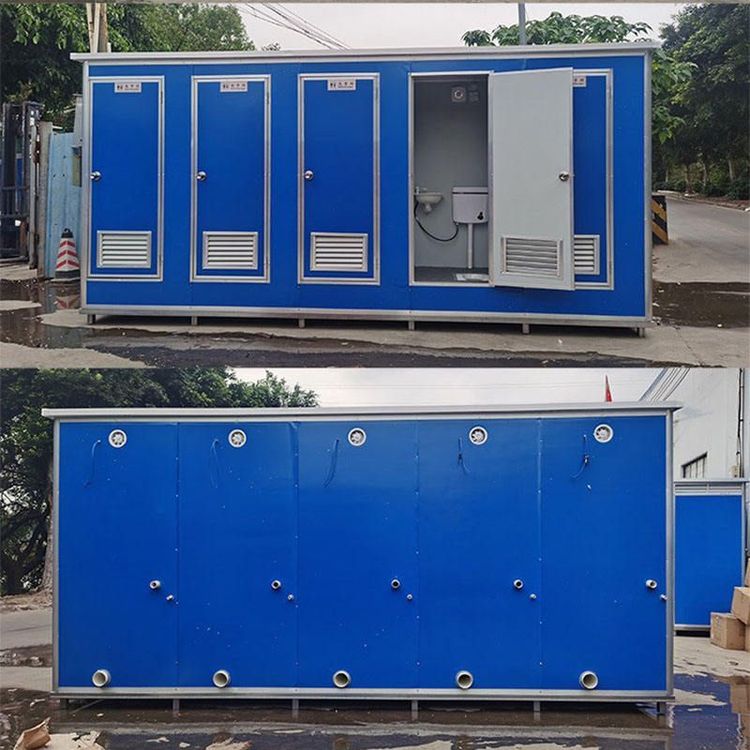
Portable toilets in Jiangxi schools offer flexibility and mobility, enabling them to quickly meet the temporary, emergency, or periodic toilet needs of large gatherings of people on school premises. There are various types, and there are corresponding considerations for both rental use and installation.

Types of Portable Toilets
Portable toilets in Jiangxi adopt a modular design and come in a variety of common types. Single-unit portable toilets have independent toilet compartments, are flexible in deployment, and have low site requirements, making them suitable for areas within schools with limited space or where positions need to be adjusted flexibly. Trailer-mounted portable toilets are larger in size and have comprehensive functions. If a school holds large-scale events such as sports meets or cultural performances, they can meet the toilet needs of a relatively large number of people. Recirculating flush portable toilets achieve water conservation through a water treatment system and are suitable for schools with certain water usage restrictions or those that emphasize environmental protection. Biodegradable portable toilets use microorganisms to decompose feces, are environmentally friendly and pollution-free, and can reduce the negative impact on the school environment. Solar-powered portable toilets use solar energy to achieve self-sufficiency in energy supply and are suitable for areas in schools with sufficient sunlight, reducing energy consumption.
Considerations for Rental Use
Daily operation and maintenance are crucial. Before daily use, equipment inspections and basic maintenance should be carried out, such as checking the water level in the water tank, whether the flushing system is functioning properly, whether the consumables are sufficient, and whether there is any damage to the equipment's appearance. Adjust the cleaning frequency according to the usage volume. For places with high pedestrian traffic in schools, such as during break exercises and after-school hours, clean every 4 hours; for ordinary places, clean at least twice a day. Take corresponding measures in special weather conditions. On rainy days, check the equipment's tightness to prevent rainwater from entering and damaging the equipment; in winter, take anti-freezing measures for the water tank and pipes to avoid equipment freeze-cracking. At the same time, clarify the emergency response procedures and provide value-added services, such as setting up emergency call buttons.
Considerations for Installation
When installing, choose an area with a flat terrain, convenient drainage, and away from water source pollution to ensure that the site conditions meet the requirements, such as a solid ground and no obstacles. It is also necessary to go through relevant approval procedures. As a public place, schools may require permits for temporary facilities. After installation is complete, conduct water and electricity inspections to ensure normal water and electricity supply; carry out detailed inspections, such as confirming that the door locks, doors and windows, and ventilation systems are intact and that the consumables are fully equipped, to ensure that the portable toilets can be used normally.