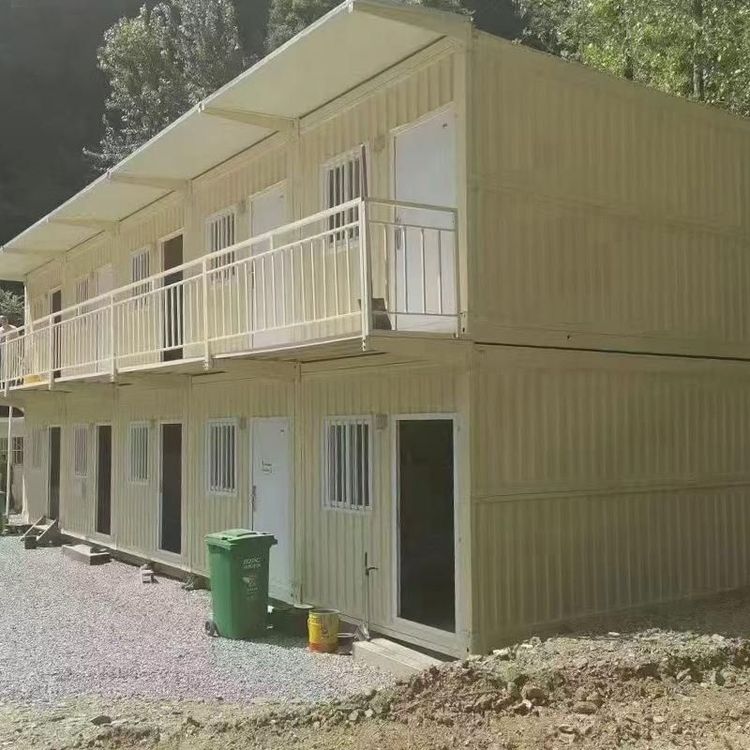
Prefabricated Houses in Jiangxi Province
Jiangxi Province has formed a development pattern that combines policy support, hidden danger management, and technological innovation in the field of prefabricated houses, and is showing new trends of expansion into permanent buildings, technological upgrades, and industrial agglomeration.
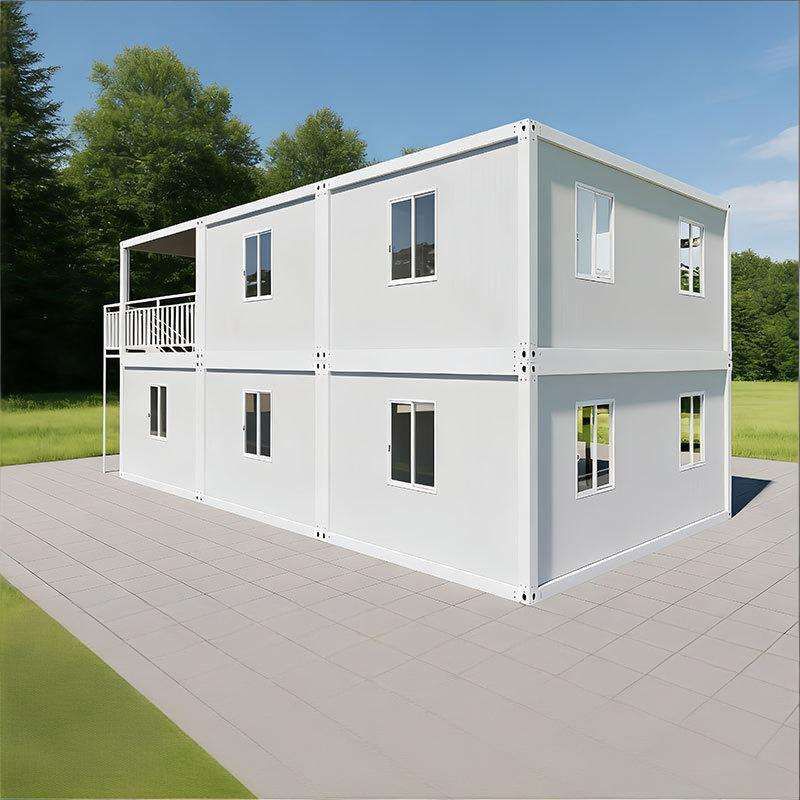
Dual-Track Progress in Policy Support and Hidden Danger Management
Jiangxi Province has strengthened the safety management of prefabricated houses through multi-dimensional policy design. The Provincial Department of Housing and Urban-Rural Development has established a special leading group, issued the "Notice on Strengthening the Safety Management of Urban Housing Use," and promoted the enactment of the "Jiangxi Urban Renewal Regulations" to provide legal protection for the independent renovation of dilapidated prefabricated housing. Relying on the national housing and building survey system, with a focus on C and D-grade dilapidated houses, a comprehensive survey of 37,000 urban dilapidated houses (including prefabricated houses) across the province has been completed, and renovation work on 13,000 sets has been initiated. At the same time, a four-level urban health check covering housing, residential areas, blocks, and urban districts has been carried out, with 60 indicator systems defined, incorporating the inspection of hidden dangers in prefabricated houses into regular management. Nanchang City has taken the lead in exploring the inclusion of old prefabricated houses in Xihu District in housing quality and safety insurance, forming a new governance model of "government guidance + market participation."
Technological Upgrades Drive Functional Iteration of Prefabricated Houses
In response to Jiangxi's hilly terrain and humid and rainy climate, prefabricated integrated houses are being upgraded towards moisture-proof, earthquake-resistant, green, and intelligent directions. Structurally, light steel keels or concrete prefabricated components are used, combined with thermal insulation, moisture-proof, and anti-corrosion materials to enhance building durability. Some projects have introduced BIM technology to achieve digital management throughout the design, production, and construction processes, improving construction accuracy and collaboration efficiency. In terms of earthquake-resistant design, by optimizing node connections and structural systems, the requirements of the "Code for Seismic Design of Buildings" are met to adapt to the seismic fortification intensity areas in Jiangxi. For example, an assembly-type building industrial base in Nanchang Economic and Technological Development Zone has an annual production capacity of over 300,000 cubic meters, with products covering prefabricated stairs, composite floor slabs, etc., and a waste recycling rate of over 90%, reflecting the integration of intelligent manufacturing and sustainable development.
Expansion of Application Scenarios and Emergence of Industrial Agglomeration Effects
The application of prefabricated houses in Jiangxi has extended from temporary buildings to permanent residential and public buildings, with particular advantages in rural revitalization, tourism support, and emergency shelter. For example, affordable housing and school projects widely use prefabricated components to shorten construction periods and reduce construction pollution. At the industrial level, a technologically leading assembly-type building industrial base in East China has settled in Nanchang, forming an industrial chain integrating R&D, production, and construction, and promoting the large-scale and standardized development of prefabricated houses.