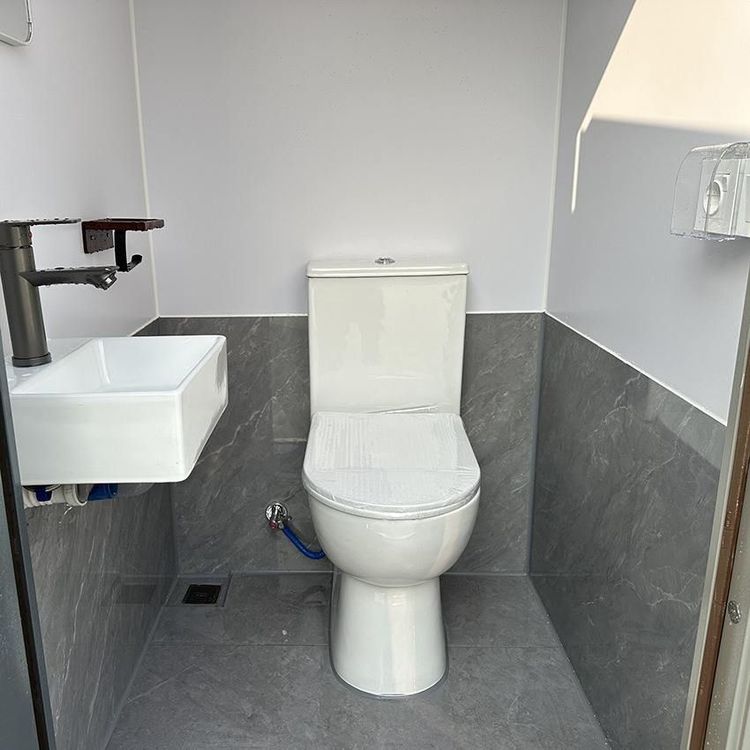
Jiangxi Mobile Environmental Toilet for Outdoor Use
Jiangxi mobile environmental toilets offer features such as modular design and strong adaptability when used outdoors, but attention must be paid to site selection, securing, drainage, and other aspects to ensure normal use.

Basic Functions and Structural Features
Jiangxi mobile environmental toilets adopt a modular design, with the main body composed of a steel structure frame and walls made of environmentally friendly materials. They possess waterproof and windproof functions, enabling them to adapt to outdoor weather changes. The interior is equipped with squat toilets or sit toilets (some equipped with foot-operated flushing devices), toilet paper, hand sanitizer (high-end models provide paper towels), LED lighting, exhaust fans, and anti-slip floor treatments. Some models are equipped with independent sewage systems, such as sewage tanks and septic tanks, to avoid environmental pollution and meet environmental protection requirements.
Applicable Scenarios and Flexibility
These toilets are widely used in outdoor scenarios such as music festivals, construction sites, and temporary reception areas in scenic spots, enabling them to quickly respond to temporary toilet needs. They have high installation and disassembly efficiency, typically taking 2-4 hours to complete, and can be reused, reducing long-term usage costs. For example, during peak tourist seasons in scenic spots or construction periods at construction sites, mobile toilets can be flexibly deployed to alleviate toilet pressure.
Outdoor Usage Precautions
- Site Selection Requirements: It is necessary to stay away from construction dust areas and heavy machinery operation zones, choose locations with higher elevations and smooth drainage, and reserve passage space. For example, a construction site in Nanchang experienced frequent dust coverage of the toilet due to its proximity to a mixer area, increasing cleaning costs.
- Windproof Securing: Jiangxi experiences many thunderstorms and strong winds in summer, so expansion bolts or counterweights should be used to secure the bottom of the toilet to ensure a firm connection with the ground. A construction site in Yichun once had its toilet blown over during a typhoon due to not being secured, resulting in equipment damage.
- Drainage Design: Outdoor toilets need to be equipped with independent drainage pipes or temporary collection buckets. Construction sites in mountainous areas can guide rainwater flow by digging shallow ditches. A project in Ganzhou suffered from toilet flooding and equipment short circuits during the rainy season due to improper drainage system design.
- Cleaning and Maintenance: It is recommended to clean at least once a day, thoroughly disinfect once a week, and regularly inspect the water and electricity lines and flushing systems to ensure hygiene and normal functionality.
- Electrical Safety and Environmental Protection: Electric flushing toilets should be equipped with leakage protectors, and cables should be elevated or protected with conduits. It is prohibited to use the toilet as a garbage dumping point to ensure that fecal disposal complies with environmental protection regulations.
Rental Recommendations
When selecting a supplier, it is necessary to confirm whether they provide one-stop services including delivery, installation, cleaning, and recycling, and ensure that the products meet environmental protection and hygiene standards. It is recommended to communicate local climate characteristics in advance and sign a detailed agreement to clarify the responsibilities of both parties and avoid subsequent disputes.