Jiangxi Concrete Prefabricated Houses
Jiangxi's concrete prefabricated houses have shown remarkable development driven by technological innovation, application practices, industrial foundations, and policy and market forces.

Outstanding Technological Innovation Achievements: The project 'Research and Application of Several Key Technologies for Prefabricated Concrete Housing Structures,' led by Jiangxi Zhongmei, won the second prize of the 2024 Engineering Construction Science and Technology Progress Award. This project focused on challenges such as the reliability of connection nodes and the overall stability of prefabricated concrete structures. Through technological research and development, it provided theoretical and technical support for design, production, construction, and operation and maintenance. The relevant achievements have been applied in multiple large-scale projects, promoting technological progress and generating favorable benefits.
Extensive and In-depth Application Practices: The Jiangnanfu (South District) Relocation and Resettlement Housing Construction Project in Zhanggong District, Ganzhou City, serves as a demonstration project for prefabricated buildings in Jiangxi Province. It adopts an integrated prefabricated concrete structure, with a maximum prefabrication rate of 50.02% for individual buildings. The project utilizes various prefabricated components such as prefabricated composite slabs, stairs, and balconies. Vertical structures are connected using sleeve grouting technology, horizontal components employ prefabricated technology, internal partition walls use lightweight partition board technology, and components are designed in detail using BIM technology and produced in modern factories. The project adopts an EPC general contracting model, providing valuable experience for the application of concrete prefabricated houses.
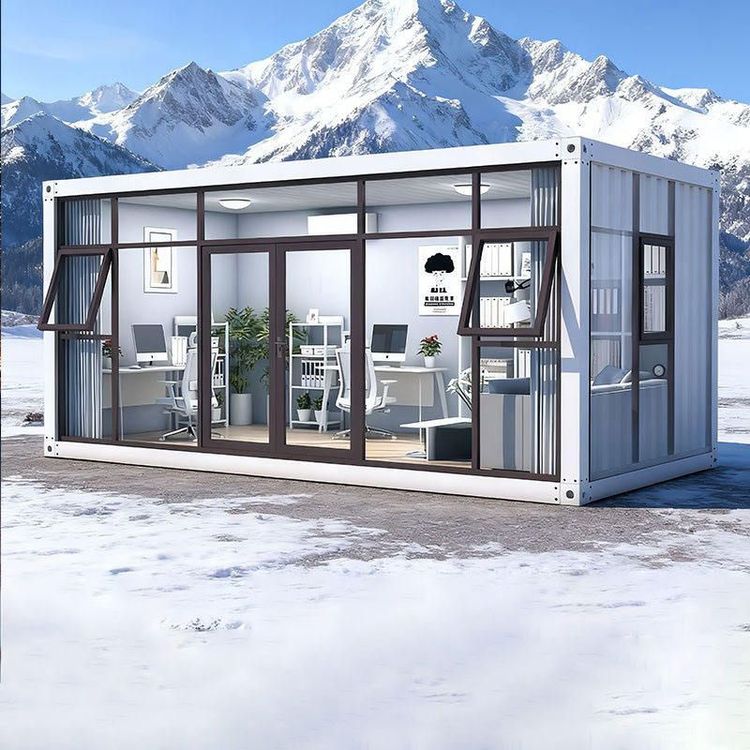
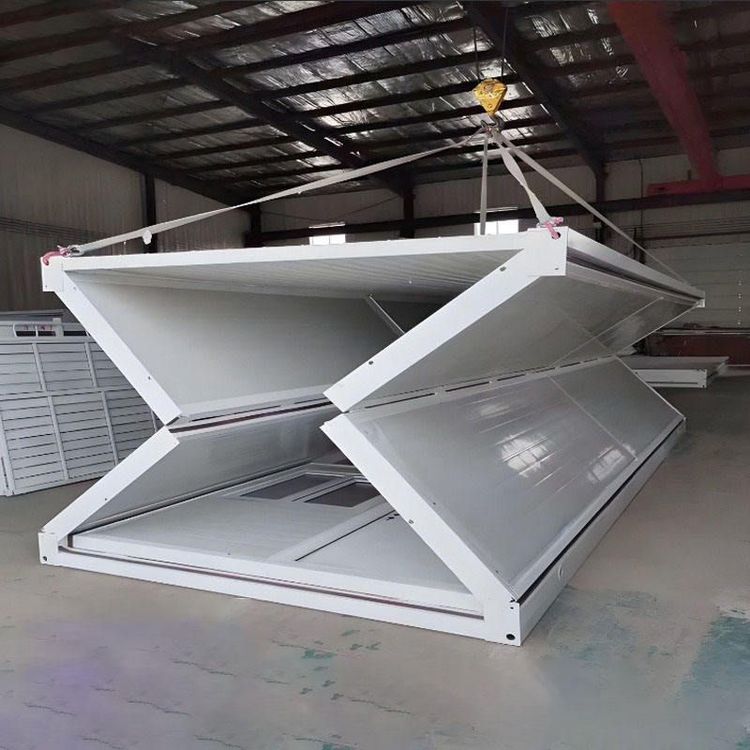
Solid Industrial Foundation: Prefabricated integrated houses in Jiangxi are characterized by factory-based production and modular assembly. Core components such as wall panels, floor slabs, and beams and columns are manufactured to standard in factories and quickly assembled on-site, shortening construction periods and reducing construction pollution. Technologically, light steel keel structures or concrete prefabricated components are commonly used, combined with thermal insulation, moisture-proof, and anti-corrosion materials. Some projects introduce BIM technology to achieve full-process digital management. For example, a large-scale prefabricated building industrial base in the Nanchang Economic and Technological Development Zone has a fully automated production line with an annual production capacity exceeding 300,000 cubic meters. Its products are widely used in affordable housing and school projects.
Dual Drivers of Policy and Market: The geographical characteristics of Jiangxi, with its widespread mountainous and hilly areas and humid and rainy climate, pose higher requirements for building moisture resistance and earthquake resistance, driving the expansion of prefabricated integrated houses from temporary buildings to permanent residential and public buildings. Especially in fields such as rural revitalization, tourism support facilities, and emergency resettlement, this model has become an important path for promoting the transformation and upgrading of the construction industry due to its advantages of efficiency, environmental protection, and strong adaptability.