
Jiangsu People Live in Container Houses
Container houses for Jiangsu people are a modular, flexible, and cost-effective temporary living or office solution, widely applied in the Jiangsu region with significant structural advantages and industrial scale.
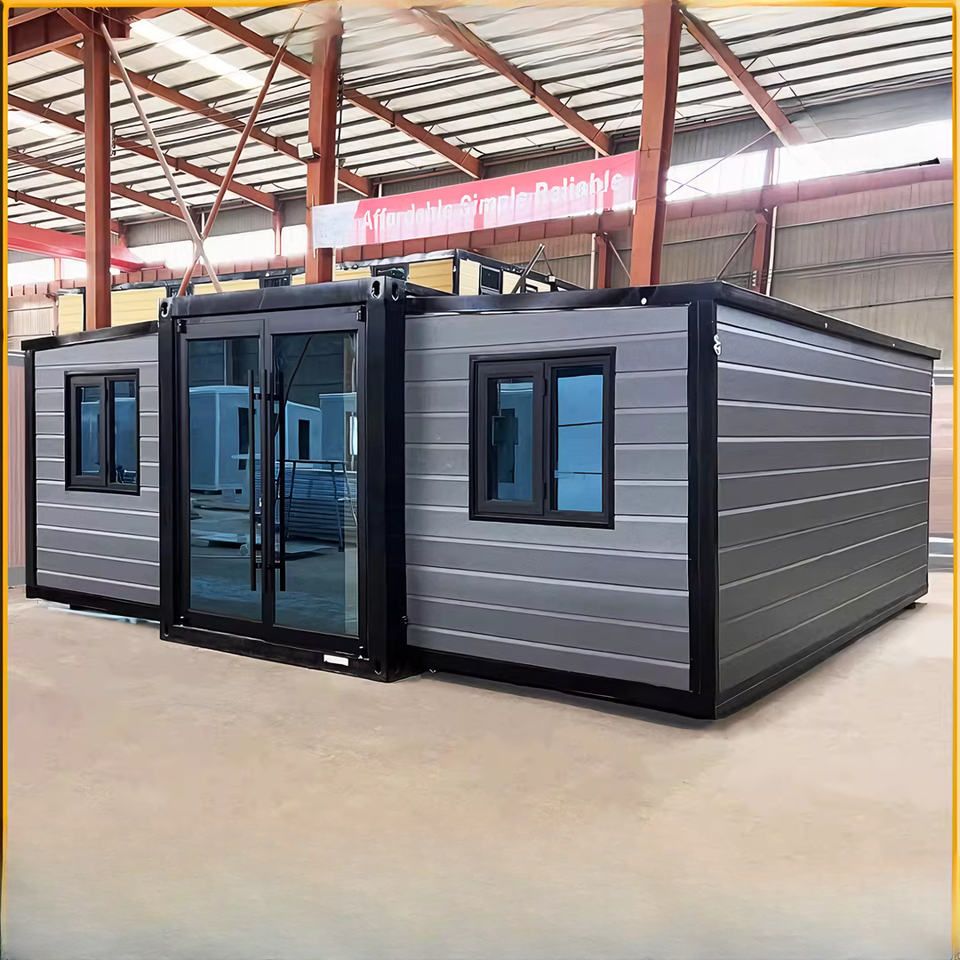
I. Structural Features and Functional Advantages
Container houses are based on fully welded steel structures, offering strong resistance to compression, wind, and earthquakes, meeting safety standards for temporary living after modification. Their modular design supports horizontal or vertical splicing, enabling rapid assembly into single rooms, suites, multi-story dormitories, or office areas, with high reusability after disassembly. The construction period is short, with most modifications completed in factories, requiring only lifting and pipeline connections on-site, saving time and costs. Economically, they offer lower comprehensive costs in short-term use scenarios, with minimal material waste and support for leasing models, providing high flexibility. Internal modifications can be highly customized, ranging from basic dormitories to suites with independent bathrooms and kitchens, and even fully equipped offices and conference rooms.
II. Industrial Distribution and Production Technology
Production bases for residential container houses in Jiangsu are concentrated in southern and central Jiangsu, with over 50 large-scale enterprises in Suzhou, Wuxi, and Changzhou. In 2023, Jiangsu's total production of packing-box units accounted for 35% of the national total, with an annual output value exceeding 8 billion yuan, covering markets in the Yangtze River Delta, Pearl River Delta, and overseas. In terms of production technology, enterprises generally adopt modular designs, with standard container dimensions of 6m×3m×2.8m, equipped with independent bathrooms, air conditioning interfaces, and other facilities. Production processes feature automated welding and spraying lines, with products meeting national standards for wind resistance (Grade 8) and waterproofing.
III. Application Scenarios and Customer Groups
Container houses are widely used in temporary housing for construction sites, supporting facilities in industrial parks, characteristic homestays in tourist attractions, and temporary housing for municipal projects. Their rapid deployment and relocatability highly match the cycles of construction projects, while also addressing short-term accommodation needs in industrial parks or serving as reception centers and public restrooms in tourist areas. Additionally, they are often used as temporary shelters in emergency disaster relief sites.
IV. Industrial Development Trends
With the advancement of the "dual carbon" policy, Jiangsu enterprises are exploring green production models, such as using eco-friendly steel and photovoltaic power systems. Upgrades in modular decoration technology are driving the transformation of container houses from "temporary shelters" to "high-quality living spaces," with some bases integrating full-house smart home systems to enhance product value.



