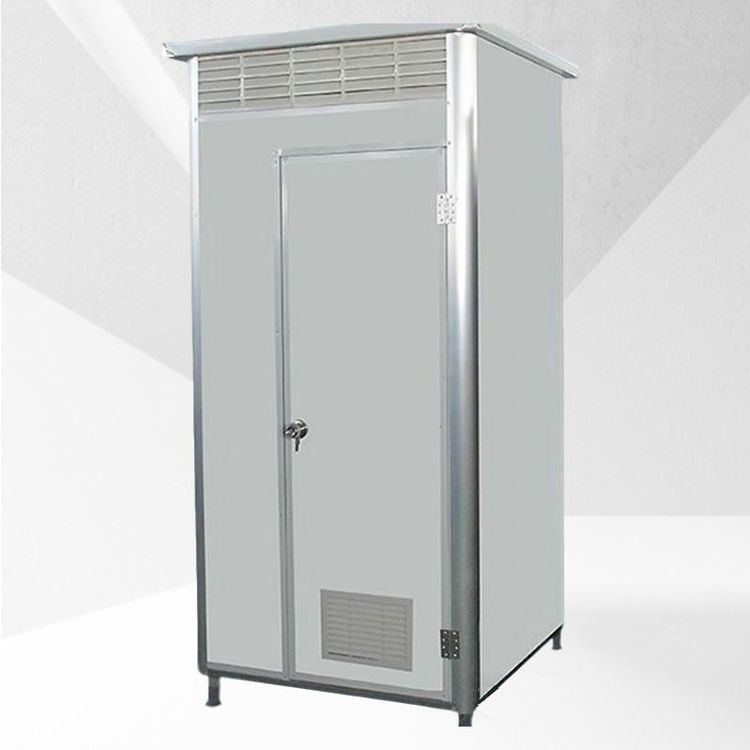
Environmental Requirements for Mobile Toilets in Jiangsu
The environmental requirements for mobile toilets in Jiangsu cover multiple aspects, including hygiene and safety, odor control, eco-friendly materials, wastewater treatment, resource conservation, and adaptability to special scenarios. Details are as follows:
1. Hygiene, Safety, and Health Protection
Mobile toilets must comply with antibacterial and disinfection standards. For products claiming disinfection capabilities, the disinfection rate must be ≥90%, the virus removal rate ≥99%, and the odor intensity difference for odor control >1. Materials in contact with the human body (such as toilet seats and handrails) must meet antibacterial rate and mold resistance requirements to prevent cross-infection. Additionally, in accordance with the 'Urban Public Toilet Hygiene Standards,' the total number of airborne bacteria and coliform bacteria on frequently touched surfaces (such as toilet bowls and door handles) must be controlled to ensure a hygienic and safe usage environment.
2. Odor Control and Air Quality
According to the 'Emission Standards for Odor Pollutants,' emission limits must be set for the concentrations of odor gases such as ammonia and hydrogen sulfide, and odors must be controlled within safe ranges through ventilation systems or deodorization technologies (such as activated carbon adsorption and photocatalytic oxidation). Ventilation design should combine natural and mechanical ventilation to ensure that the air in the toilet is exchanged at least six times per hour, preventing odor accumulation.
3. Eco-Friendly Materials and Durability
The use of recyclable or biodegradable materials (such as HDPE and stainless steel) is recommended, with restrictions on harmful substances like lead and cadmium to reduce environmental pollution. The main structure should use national standard steel (such as square tubes ≥50×100mm) with surface anti-corrosion treatment and a service life of ≥15 years to prevent wastewater leakage.
4. Wastewater Treatment and Resource Conservation
Wastewater discharge must comply with limits for indicators such as chemical oxygen demand (COD), biochemical oxygen demand (BOD5), and suspended solids (SS), ensuring discharge standards are met or proper transportation for treatment. The use of water-saving toilets (such as foam-sealing and vacuum-suction types) is encouraged, with a single flush volume of ≤0.5 liters. Additionally, graywater reuse technology should be adopted to recycle handwashing water for toilet flushing, achieving water resource conservation.
5. Adaptability to Special Scenarios
Given Jiangsu's characteristics of rainy and humid summers and cold and damp winters, the chassis of mobile toilets must be reinforced with moisture-proof treatment to improve overall sealing and prevent ground moisture infiltration. In areas along rivers, coasts, or with extensive water networks, flood prevention and foundation stability requirements must be considered, often requiring the use of concrete floors or steel frame platforms. Furthermore, compliance with barrier-free design specifications is necessary, such as toilet cubicle widths of ≥900mm and the provision of handrails and anti-slip facilities.