
Jiangsu Container Mobile House
Jiangsu's container mobile houses are characterized by modularity, disassembly and assembly capabilities, and adaptability to diverse scenarios, with technological performance and market applications at the forefront of the industry. The following analysis is conducted from three dimensions: technological characteristics, application scenarios, and market trends.
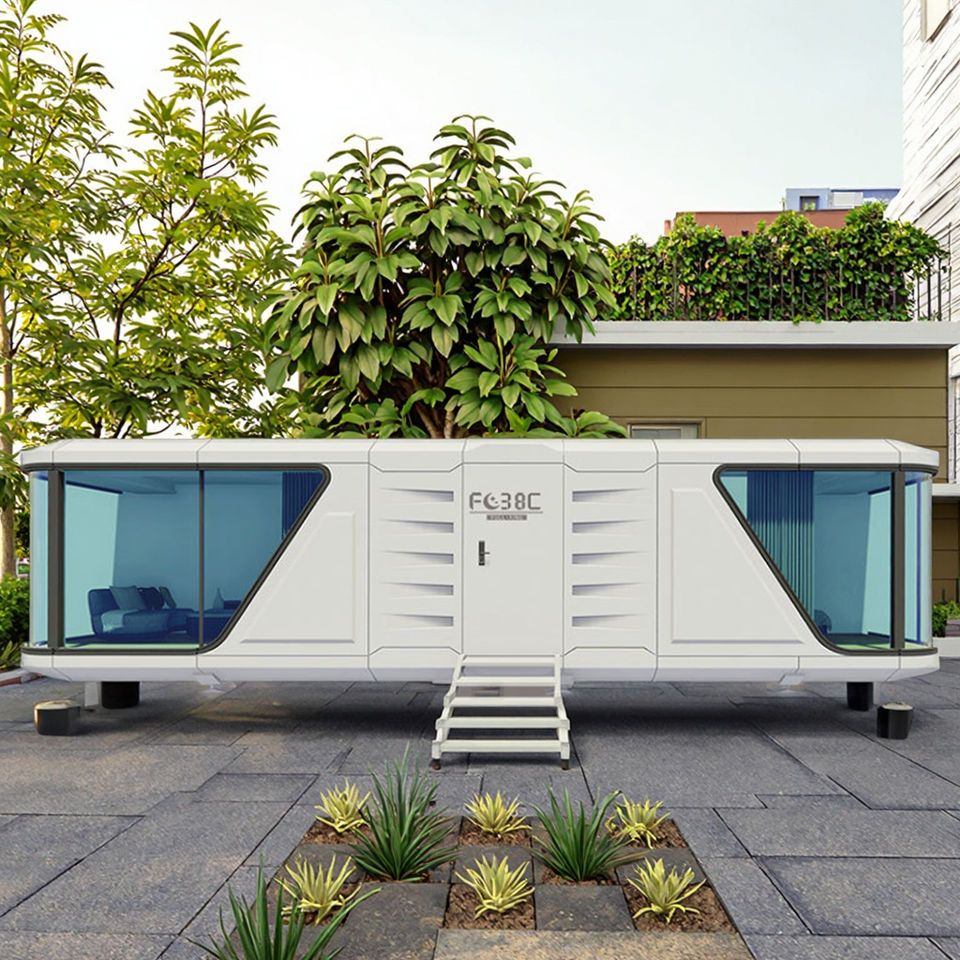
I. Technological Characteristics: Modular Design and Performance Optimization
The core advantage of Jiangsu's container mobile houses lies in the application of modular structures and high-performance materials. For example, the modular houses of China Construction Steel Structure Jiangsu Co., Ltd. adopt a 'factory prefabrication + on-site assembly' model, breaking down the building into independent spatial units. The main structure, interior decoration, and electromechanical pipeline layout are completed in the workshop, and only module assembly and water and electricity connection are required on-site, improving construction efficiency by over 60%. The folding container products of Suzhou Zhongnan Steel Structure and other enterprises achieve rapid deployment by a single person in 5-10 minutes through hydraulic automatic expansion structures or semi-automatic designs. After folding, the volume is reduced to 1/5 to 1/4 of the expanded state, and the transportation capacity of a single truck is increased by 2-4 times, significantly reducing transportation and warehousing costs. In addition, some products adopt technologies such as liquid cooling/heating dual-mode temperature control and three-layer safety protection (PACK, battery cabinet pre-discharge + leakage + elimination), with a system conversion efficiency of over 94%, meeting the safety operation requirements in extreme environments.
II. Application Scenarios: Comprehensive Coverage from Temporary Buildings to High-end Cultural Tourism
The application scenarios of Jiangsu's container mobile houses are diversified. In the field of engineering temporary buildings, companies such as Yazhi Integrated Housing provide cost-effective standardized products widely used in construction site dormitories and temporary offices. In the field of emergency support, folding containers, with their rapid deployment capabilities, have become the first choice for disaster relief and short-term turnover. In the high-end cultural tourism market, companies such as Suzhou Hengxiangda have launched products such as double-glazed curtain wall container shops and internet-famous container stores. Through customized exterior facades and internal functional renovations, they are suitable for scenic spot homestays and camping bases. In addition, Jiangsu enterprises are actively exploring cross-border exports. The modular houses of China Construction Steel Structure are packed into containers as independent modules for transoceanic transportation and directly assembled into fully furnished residences upon arrival in North America, meeting local building standards.
III. Market Trends: Low-carbon Circulation and Compliance Development
Industry data for 2026 shows that the export volume of Jiangsu's steel structure modular houses increased by 45% year-on-year, with low-carbon attributes and cross-border compliance becoming mainstream demands. Among the order structures of leading manufacturers, products with more than 8 times of disassembly and reuse capabilities and passing domestic and foreign certifications account for over 60%. For example, enterprises such as Suzhou Zhongnan Steel Structure have improved the resource utilization rate of the product's full life cycle by 90% and reduced construction waste emissions by 90% through technologies such as welding-free quick assembly processes and disassembly and assembly loss control, aligning with the policy orientation of the circular economy. At the same time, enterprises focus on building compliance service capabilities, forming a full-chain service system from production qualifications, domestic and foreign certifications to project delivery and after-sales implementation to reduce the risk of selection errors by purchasers.



