
Jiangmen Park Mobile Toilet Installation
The installation of mobile toilets in Jiangmen Park should follow a standardized process, typically including four core steps: positioning and foundation treatment, main structure installation, internal facility connection, and functional testing and adjustment. Details are as follows:
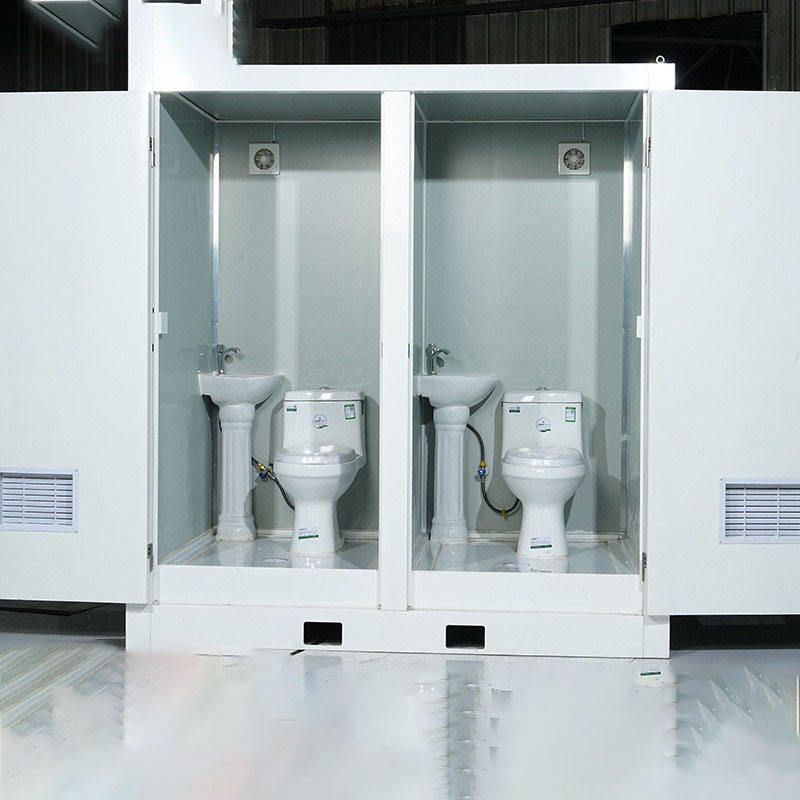
Positioning and Foundation Treatment Determine the installation location based on the park's site planning and ground flatness, ensuring a solid ground with good drainage. If the ground is uneven or has soft soil, hardening treatment (such as concrete pouring) or steel plate laying should be carried out in advance to enhance load-bearing capacity. This step is crucial for ensuring the long-term stable use of the mobile toilet, especially paying attention to avoiding underground pipelines or ancient tree root areas to prevent subsequent construction conflicts.
Main Structure Installation
- Split-type mobile toilets: First, fix the chassis and frame, then sequentially install the wall panels and roof panels made of sandwich panels, and perform sealing treatment. Wall installation can usually be completed within 1-2 hours, but attention should be paid to the waterproofing of panel joints to prevent rainwater leakage.
- Integrated mobile toilets (such as container-type toilets): Since internal decoration and equipment integration have been completed in the factory, they only need to be hoisted as a whole to the designated location by a crane on-site and connected to water, electricity, and sewage pipelines. The installation time for such toilets is relatively short, usually taking 2-4 hours, making them suitable for scenarios with high construction efficiency requirements.
Internal Facility Connection Install toilets, flushing systems, handwashing basins (optional), lighting, and ventilation equipment, and connect water and electricity pipelines through modular quick connectors. This step requires focusing on checking the sealing of water and electricity interfaces to avoid water leakage or short-circuit risks. If waterless mobile toilets are used, there is no need to excavate sewage pipelines. Their fecal and urine collection devices can reduce odors through biodegradation technology, and during operation and maintenance, real-time monitoring of overflow rates, temperatures, and other data can be carried out through 4G/NB-IoT communication modules to optimize cleaning routes.
Functional Testing and Adjustment After installation, comprehensive testing should be carried out, including flushing system pressure, circuit stability, door and window sealing, and ventilation effects. If any abnormalities (such as water leakage or circuit failures) are found during the debugging process, immediate rework and repair should be carried out to ensure that the toilet complies with standards such as the "Mobile Toilet Hygiene Standard" (GB/T 21239-2023).
Notes: Users in the Jiangmen area can contact local service providers such as Guangdong Equipment Leasing Co., Ltd., which offers one-stop services including transportation, installation, debugging, and on-site support, and is equipped with a professional team to follow up on the entire process, effectively reducing construction risks.



