
Jiang'an Mobile Environmental Sanitation Toilet
The Jiang'an mobile environmental sanitation toilet effectively meets the public's toilet needs during holidays and major events through scientific deployment, comprehensive facilities, refined management, and advanced technology.
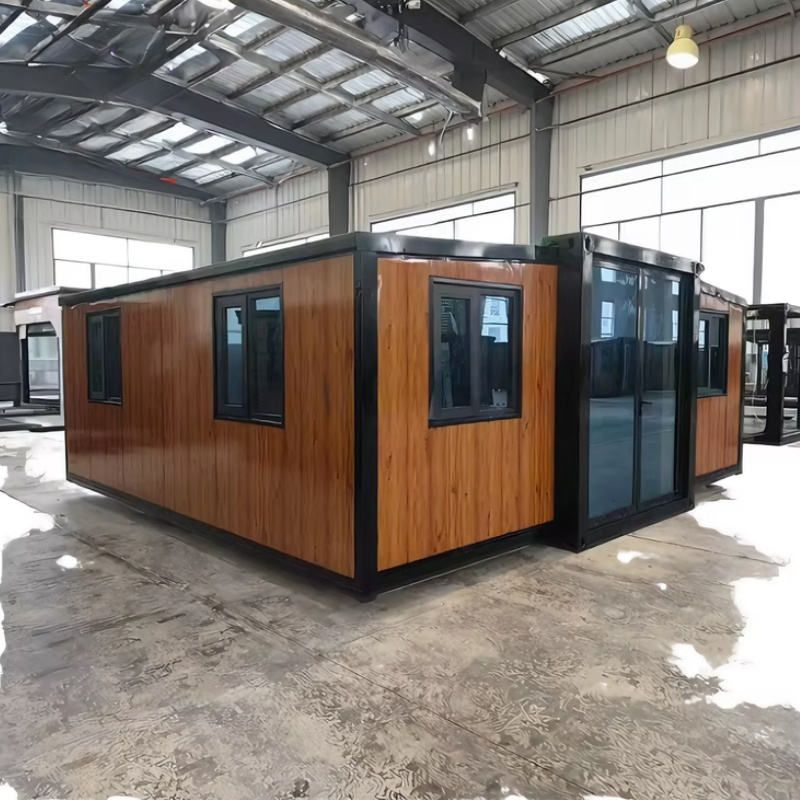
1. Holiday Deployment Strategy
Jiang'an District adopts measures to dynamically increase mobile public toilets in response to the surge in pedestrian traffic during holidays. For example, during the May Day holiday, 30 mobile public toilets were added in the courtyard at No. 27 Lihuangpi Road, covering core pedestrian areas through precise site selection to alleviate toilet pressure. Additionally, seven toilet direction signs and five toilet guide maps were added in high-traffic areas such as Bagong House, indicating toilet locations and walking distances to achieve full coverage of guidance across the area and avoid crowding and queuing.
2. Convenient Facilities and Operating Hours
Mobile public toilets are equipped with comprehensive convenient facilities. Each toilet stall is equipped with a foot-flush toilet, a clothes hook, a safety handrail, and provides free tissue paper and hand sanitizer to enhance the user experience. Operating hours are uniformly set from 9 a.m. to 11 p.m. daily, covering peak periods for daytime activities and nighttime leisure, ensuring that service duration matches demand.
3. Full-Process Standardized Management
During holidays, six full-time cleaning staff are responsible for sanitation, facility maintenance, and order guidance, performing cyclic flushing and comprehensive disinfection of all toilet stalls every two hours to ensure no blind spots and no odors. Additionally, a “two-shift” patrol inspection mechanism is established to immediately respond and address any facility malfunctions or sanitation issues once detected, ensuring the continuous usability of public toilets.
4. Technical Support and Environmental Treatment
The mobile public toilet bodies are made of high-density polyethylene or fiberglass-reinforced plastic, with sealed welds to prevent sewage leakage. The internal sewage collection tanks have a capacity of 0.5 to 1.5 cubic meters, meeting the needs of 150 to 500 users. During evacuation, fecal mixtures are transferred to centralized treatment facilities using vacuum suction pumps. The technical types include:
- Basic storage type: Simply collects and transports for external treatment;
- Degradation type: Adds microbial agents or chemical agents to decompose organic matter within the tank to reduce volume and odor;
- Recirculating water flush type: Purifies flush water through filtration and ultraviolet disinfection for reuse.
In addition, all district-managed public toilets in the area have been connected to the Wuhan Smart Public Toilet Management Platform, enabling online toilet guidance, QR code evaluation, complaint feedback, and other functions to enhance management efficiency and public participation.



