
Jiang'an County Container Module Housing
Although no direct cases of container module housing have been retrieved in Jiang'an County, container module housing itself is a mature form of modular architecture with significant technological advantages and application value.
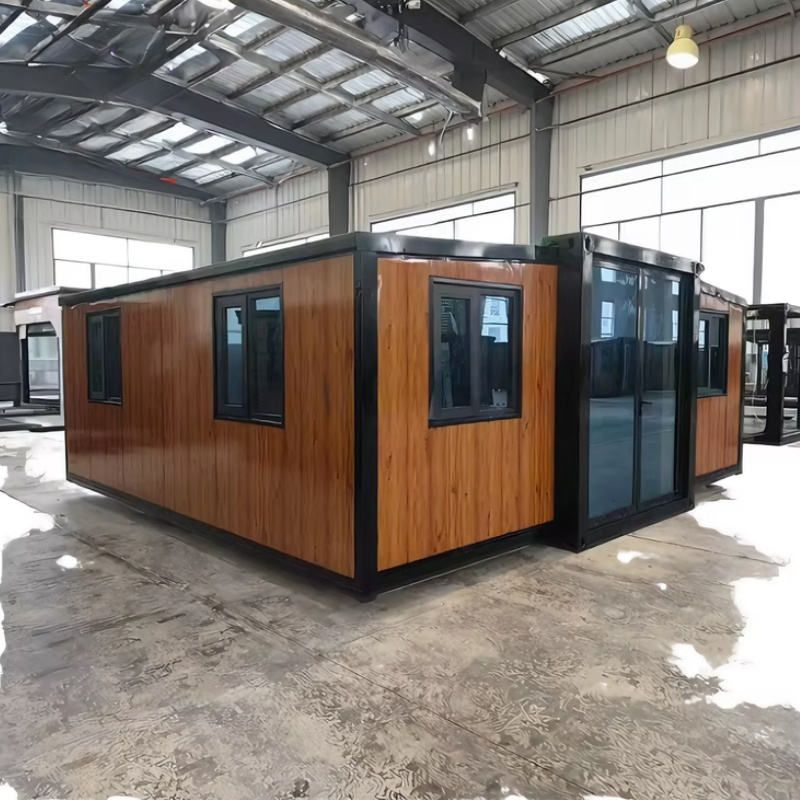
1. Structural and Material Characteristics
Container module housing uses standard shipping containers as basic units, employing a steel-frame structure as the main framework to ensure overall strength and stability. Its core materials include corrosion-resistant steel plates and environmentally friendly panels, with surfaces treated using marine anti-corrosion processes to effectively resist environmental erosion from moisture and salt spray, achieving a design service life of over 20 years. This material combination ensures both the durability of the building and compliance with green building standards, making it suitable for long-term use scenarios.
2. Modular Design and Flexibility
Container module housing achieves rapid assembly through standardized interfaces, supporting combinations of containers in various sizes, such as 20 to 60 feet, allowing flexible adjustment of building layouts based on needs. For example, single-story residences can expand living space through horizontal assembly, while multi-story office buildings can achieve functional zoning through vertical stacking. Additionally, modular design allows for entire relocation or addition/removal of units, meeting both temporary (e.g., emergency shelter) and permanent (e.g., rural housing) needs, demonstrating strong adaptability.
3. Construction Efficiency and Cost Advantages
Compared to traditional construction, container module housing has a factory prefabrication rate of over 80%, requiring only assembly and foundation work on-site, which can reduce construction time by 50%-70%. Meanwhile, the modular production model reduces material waste and labor costs, with overall costs approximately 60%-80% of traditional construction. For areas like Jiang'an County, if there is a need for rapid construction of temporary housing, tourist homestays, or agricultural facilities, container housing can significantly save time and funds.
4. Application Scenarios and Adaptability
Container module housing has been widely applied in residential, office, commercial, and emergency sectors. For example, it can serve as temporary shelter in earthquake-stricken areas, be transformed into characteristic homestays in tourist areas, or function as storage or staff quarters on agricultural bases. Its mobility is particularly suitable for regions with tight land resources or frequent planning adjustments, such as Jiang'an County, where container housing can be quickly deployed for temporary land development and subsequently relocated, minimizing resource idleness.
5. Customization and Smart Trends
Modern container module housing supports personalized design, including exterior painting, interior decoration (e.g., fine finishing delivery), and functional configurations (e.g., solar systems, smart security). Some manufacturers also offer BIM (Building Information Modeling) technology, enabling full-process digital management from design to construction, further enhancing construction precision and efficiency.
Summary: Container module housing, with its structural strength, flexibility, and cost-effectiveness, has become an important branch of modern architecture. Although not directly associated with cases in Jiang'an County, such buildings are fully applicable to local residential, commercial, or emergency scenarios, providing efficient and sustainable solutions for regional development.



