Back to blog
Article
Jianchang Cement Prefabricated House
Admin September 18, 2026
Currently, there is no direct detailed information about Jianchang cement prefabricated houses, but we can introduce them based on the general characteristics of cement prefabricated houses.

There is a prefabricated slab factory in Jianchang County called Jianchang Tianhe Cement Products Factory, located in Pengzhangzi Village, Jianchang County, Huludao City, Liaoning Province. However, it is not yet clear whether it produces products related to cement prefabricated houses.
Cement prefabricated houses usually have some notable features:
- Advantages:
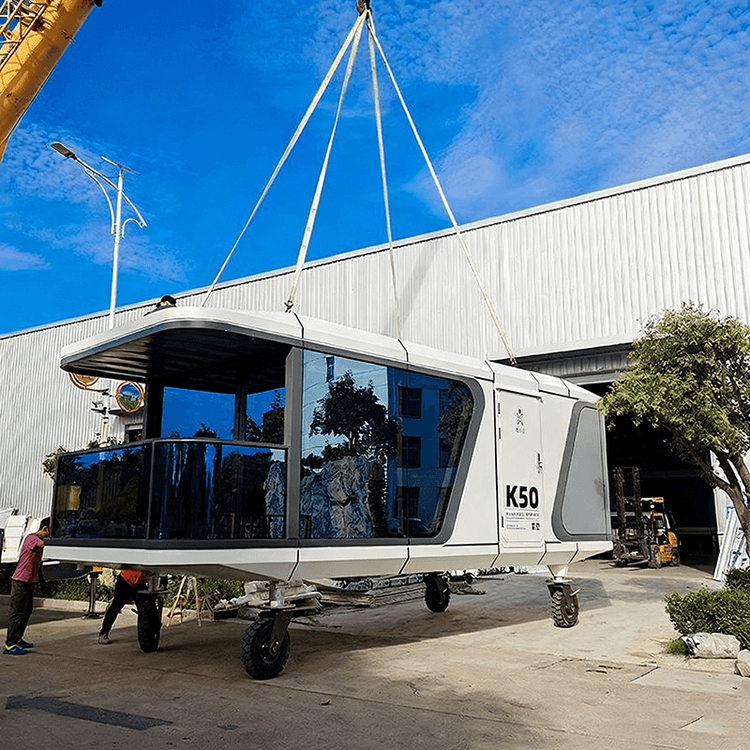
- Short construction period: The components of cement prefabricated houses are prefabricated in the factory in advance, and only assembly and splicing are required on-site, greatly shortening the construction cycle. For example, a cement "prefabricated house" of about 200 square meters built by a company takes only 4 hours, which saves a lot of time compared to traditional construction methods. It can be quickly put into use to meet the needs of emergency housing or rapid construction projects.
- Low cost: Since the components are mass-produced in the factory, economies of scale are achieved, reducing production costs. At the same time, the short on-site construction time reduces labor costs and construction management costs, making the overall construction cost relatively low.
- Disadvantages:
- Poor sound insulation and thermal insulation: There may be gaps between the cement prefabricated components, resulting in sound insulation and thermal insulation effects that are not as good as those of traditional buildings. In cold regions, indoor heat is easily lost in winter, requiring additional insulation measures; in noisy environments, external noise can also easily enter the room, affecting living comfort.
- Limited personalization in spatial layout: The components of cement prefabricated houses are usually produced according to certain standard specifications, making the spatial layout of the house relatively fixed and difficult to achieve personalized design requirements. For some buildings with special spatial requirements, it may not be able to meet their design requirements.
- Poor connection stability: The connection between prefabricated components may not be as strong as that of cast-in-place concrete. Over long-term use, problems such as loose connections may occur, affecting the structural safety and stability of the house.
- Possible poor seismic performance: In earthquake zones, the seismic performance of cement prefabricated houses may not be as good as that of traditional buildings. Due to their component connection methods and overall structural characteristics, they may be more prone to damage under earthquake action. Therefore, experts suggest that they can be built in non-earthquake zones and the number of floors should not be too high.