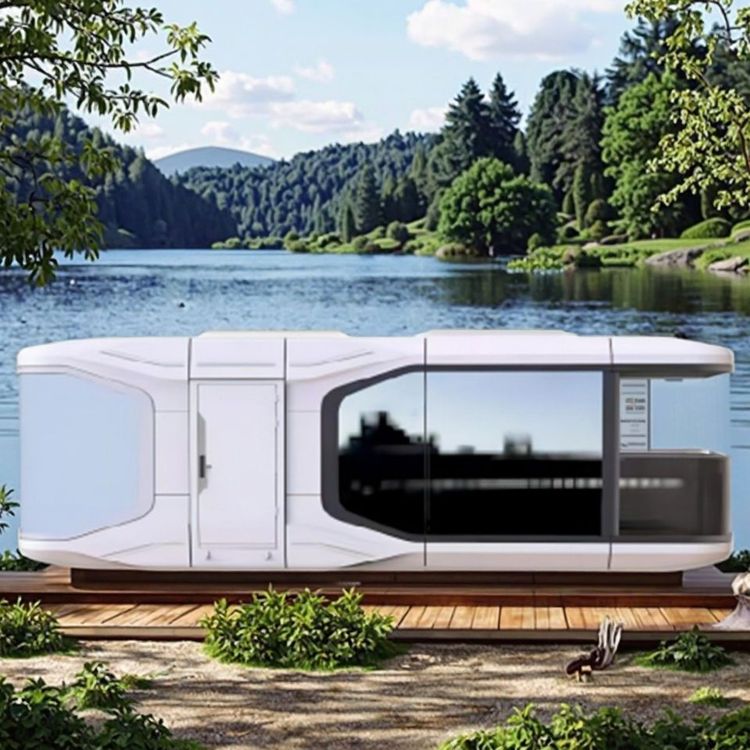
Japanese-Style Portable Toilet
Japanese-style portable toilets achieve a balance between practicality and portability by optimizing space layout, functional innovation, safety design, storage utilization, and environmental control. Specific design features are as follows:

1. Space Layout Optimization
Japanese design emphasizes the efficient use of small spaces. Portable toilets can adopt a sink relocation plan, separating the washing area from the toilet space. This design reduces the internal occupied area, improves layout rationality, and is particularly suitable for portable toilet scenarios with limited space. At the same time, by simplifying the partition structure or using foldable doors, further space savings are achieved, ensuring a spacious internal activity area.
2. Toilet Functional Innovation
- Sound Princess and Comfort Features: Integrated with a Sound Princess device that plays running water sounds or music to mask toilet noises and alleviate embarrassment; equipped with a heated seat to enhance winter comfort, and a bidet function (adjustable spray position and intensity) to meet diverse cleaning needs.
- Convenient Cleaning Technology: Uses toilet foam instead of traditional toilet brushes to decompose dirt through foam and reduce bacterial residue, lowering the cleaning difficulty of portable toilets and making it suitable for high-frequency use scenarios.
3. Safety and Convenience Design
- Emergency Alarm System: For the elderly or disabled, an emergency button is placed in a prominent position, connected to external monitoring or staff to ensure timely response in emergencies.
- Barrier-Free Facilities: Additional handrails, foldable changing tables, baby seats, etc., are installed to enhance convenience for special groups; the floor uses anti-slip materials to reduce the risk of slipping.
4. Storage and Space Utilization
Vertical space is utilized to set up storage shelves. For example, spare toilet paper or cleaning supplies can be placed above the toilet tank, and drawer-type storage compartments can be installed under the bathroom sink. Through modular design, storage components are integrated with the main structure, avoiding additional space occupation while maintaining internal tidiness.
5. Environmental Control Technology
- Ventilation and Dehumidification: Equipped with an efficient ventilation system, combined with heating and cooling air conditioning to regulate temperature and humidity, preventing moisture from breeding bacteria; a dryer can quickly dry the floor, reducing odor residue.
- Odor Treatment: Uses activated carbon filtration or photocatalyst technology to decompose harmful substances in the air, combined with timed spraying of deodorants to maintain fresh indoor air.
Adaptability Adjustments: Portable toilets need to simplify functions according to actual needs, such as omitting complex cleaning devices or reducing storage scale, to reduce weight and cost while ensuring the reliability of core functions (such as emergency alarms and basic cleaning). Through modular design, components can be quickly disassembled and assembled for easy transportation and maintenance.