
Prefabricated Assembly Housing in Japan
Prefabricated assembly housing in Japan refers to a residential form where some or all components of the house are prefabricated in factories and then transported to the site for assembly.
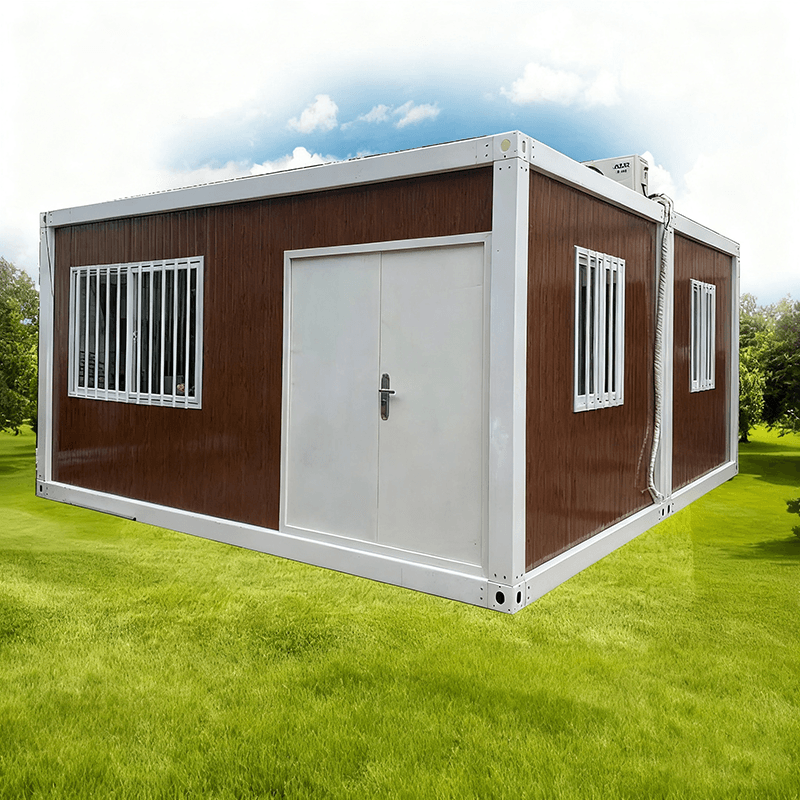
Development History
The development of prefabricated assembly housing in Japan is closely related to housing demand. After World War II, there was a severe housing shortage. In the 1940s, there were 4.2 million households lacking housing, accounting for one-fourth of the population. The government adopted the method of factory-produced housing for large-scale construction, and by the early 1960s, the housing problem was alleviated. In the 1960s, housing and construction companies collaborated using PC (precast concrete) to develop mid-rise and high-rise residential buildings. The government formulated a standard plan for public housing, and many companies developed new housing systems and sold low-rise prefabricated houses. In the 1970s, to better design and construct high-rise buildings, various PC technologies were developed. The government carried out development projects and launched an evaluation system. From the 1980s to the 1990s, the JPA (Japan Prefabricated Construction Association) launched a PC component quality certification project and a PC structure inspection system. The 1995 Hanshin earthquake proved the robustness of these houses. In the 21st century, the JPA launched a PC building management engineer qualification certification system. Some companies developed projects overseas, focusing on high-performance performance. From 1963 to 2014, Japan built approximately 9 million prefabricated houses, with 1993 being the peak year for construction volume.
Characteristics
- High Quality and Precision: Advanced technologies such as computers and robots are used to strictly control factory quality. Components are standardized, making construction simple and of high quality.
- Short Construction Period: It does not rely on workers' skills, and there is less on-site construction, which can significantly shorten the construction period.
- Low Cost: Mass procurement of materials can achieve a reduction in project costs.
- Standardization, Mass Production, and Diversification: The concept was proposed in 1968. In the 1990s, a component-based and factory-based production method was adopted. Quality was guaranteed through legislation, and policies and standards were formulated. A unified modular standard was established to resolve the contradiction between standardization, mass production, and diversified demands.
Classification
It includes iron and steel structure prefabricated houses, with steel frames as the main structural components; modular prefabricated houses, which are connected on-site from steel or wooden frame modules produced in factories; wooden structure prefabricated houses, with structural components made of wood products; and concrete prefabricated houses, with structural components made of prefabricated concrete products.
Development Achievements
In recent years, Japan has built approximately 150,000 prefabricated houses each year.



