Japan's Integrated Climbing Prefabricated Housing
Japan boasts mature technology and rich experience in integrated climbing prefabricated housing, with remarkable achievements in the field of prefabricated construction. This is evident in the following aspects:
I. High Industrial Production Level of Prefabricated Components
Japan achieves high-precision manufacturing of building components through factory production. Taking the 50-story prefabricated residential project by Goyo Construction as an example, prefabricated components include exterior wall tiles, upper-row rebar of beams, and steel stair structures, all of which are standardized and processed in factories. This approach not only enhances component quality (such as the flatness of exterior wall tile attachment and the standardization of rebar binding) but also reduces costs through mass production. Additionally, details such as electromechanical wiring holes, insulation layers, and tower crane connection embedded parts are integrated during the factory stage, reducing the complexity and error rate of on-site construction and significantly improving construction efficiency.
II. Seismic Technology Provides Safety Assurance for Prefabrication
As a country prone to earthquakes, Japan incorporates advanced seismic design into prefabricated buildings. For instance, on-site post-poured concrete technology is used to enhance structural integrity, while unique seismic joint designs (such as flexible connections and energy dissipation devices) disperse seismic energy, preventing the detachment or fracture of prefabricated components during earthquakes. These technologies have been verified through multiple earthquakes, ensuring the stability of high-rise prefabricated buildings under extreme conditions and providing crucial support for the promotion of prefabrication.
III. Spatial Modular Prefabrication Enhances Functional Integrity
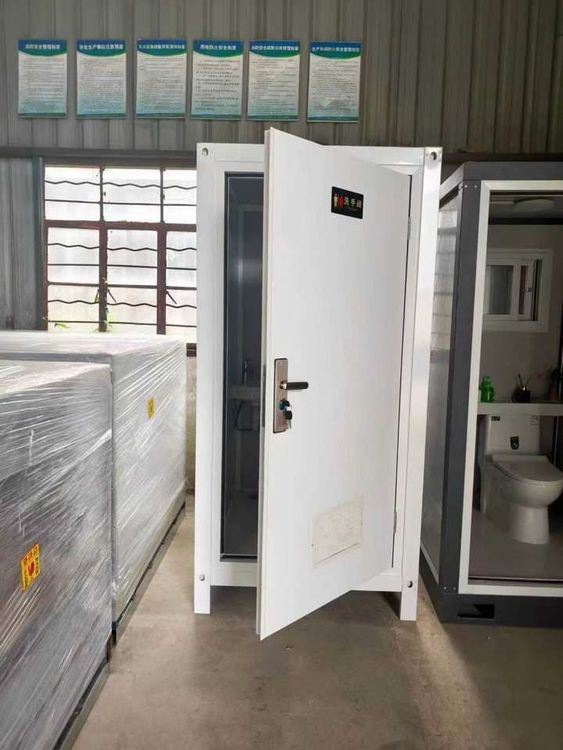
Japan extends prefabrication to the interior spaces of buildings, particularly wet work areas like bathrooms. Through industrialized overall finished product design, bathrooms are fully processed in factories, including tile laying, pipeline embedding, and sanitary ware installation, and can be put into use with simple on-site assembly. This approach not only shortens the construction period (reducing on-site decoration time by approximately 60%) but also avoids quality issues caused by cross-operations in traditional construction, while improving waterproofing and sound insulation performance.
IV. Transportation and Installation Technologies Ensure Construction Feasibility
In response to the large size and heavy weight of prefabricated components for high-rise buildings, Japan has developed specialized transportation racks and lifting equipment to ensure the safety of components during transportation and installation. For example, modular design is used to divide large components into portable units, which are precisely positioned by tower cranes and assembled with temporary support systems. These technological breakthroughs enable prefabricated buildings to adapt to complex construction environments and even be applied to super high-rise projects.