
Is the Prefabricated Concrete House Reliable?
The reliability of prefabricated concrete houses is a matter of debate, with both advantages and disadvantages. Whether they are reliable depends on specific needs and usage scenarios.
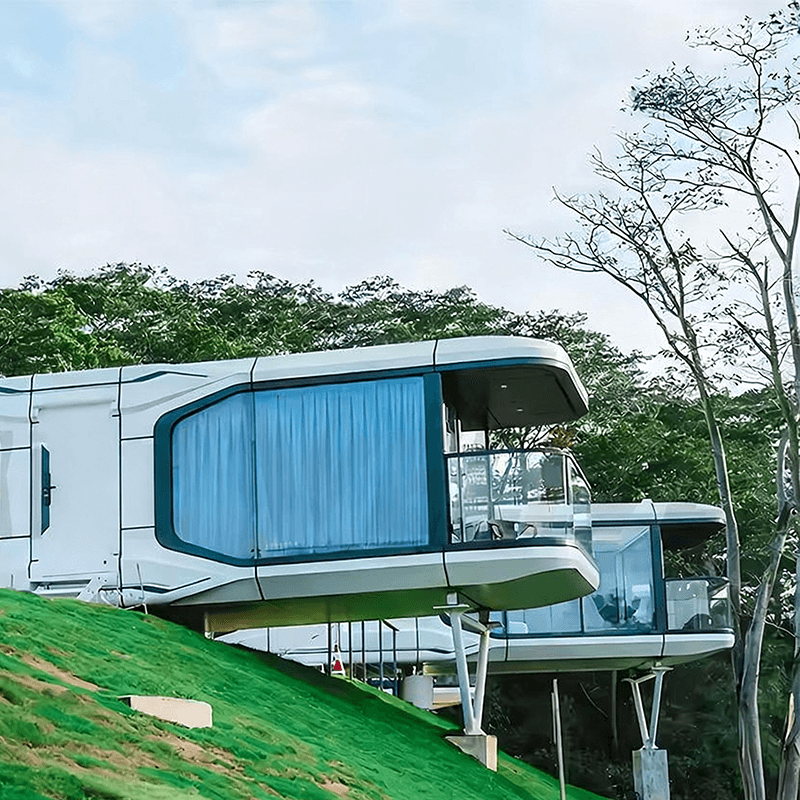
Advantages:
- High construction efficiency: The components of prefabricated concrete houses are produced in a standardized manner in factories, and on-site assembly is fast. The construction period can be shortened by more than half compared to traditional brick houses.
- Lower cost: Mass production reduces material and labor costs, making it suitable for projects with limited budgets.
- Good earthquake resistance: After professional assembly, the prefabricated parts produced by regular companies have strong structural integrity and can effectively withstand a certain degree of seismic waves.
Disadvantages and Risks:
- Prominent safety hazards:
- Low-quality prefabricated parts (such as insufficient thickness and non-compliant steel bar ratios) may collapse during minor earthquakes;
- The joints between panels are prone to cracking due to foundation settlement or temperature changes, posing structural risks for long-term use.
- Poor durability:
- The quality of prefabricated panels varies greatly. Low-quality products have a short service life and are prone to premature damage due to corrosion or aging;
- They have weak moisture and water resistance. The probability of roof leakage is 30% higher than that of brick houses, and rainwater seepage in the rainy season can corrode the internal steel bars.
- Poor living experience:
- Poor sound insulation: The prefabricated panels are thin, and sound transmission through the structure is obvious. Noise from neighboring rooms may propagate through the cavities and even be amplified;
- Poor thermal insulation: The thin walls lead to rapid heat loss in winter and high electricity bills for air conditioning in summer. In cold regions, additional thermal insulation layers are required.
- Space limitations: The thin walls and fixed load-bearing structures make it difficult to achieve personalized layouts. Cracks are prone to appear at the connections of buildings with more than three floors.
Suitable scenarios:
Prefabricated concrete houses are more suitable as temporary housing (such as construction site dormitories and post-disaster reconstruction transitional housing) or emergency buildings in earthquake-prone areas. For long-term residence, especially in humid areas or scenarios with high requirements for sound insulation and thermal insulation, traditional brick houses have greater advantages in terms of safety, comfort, and durability.
Conclusion: The reliability of prefabricated concrete houses highly depends on the quality of the prefabricated parts, construction standardization, and the usage environment. When choosing, it is necessary to strictly review the qualifications of suppliers, avoid low-quality products, and weigh the costs against long-term living needs.
You may also like

Portable Toilet Rental for Construction Sites: What to Consider
Read More
Portable Toilet Rental Price Guide: Budget, Mid-Range & Premium
Read More
Portable Toilet Color Steel: A Practical Buyer's Guide
Read More