
Is Living in a Container House Comfortable?
The living comfort of container houses varies depending on design, renovation quality, and personal expectations. Overall, the comfort level differs from that of traditional houses, but it offers a unique lifestyle.
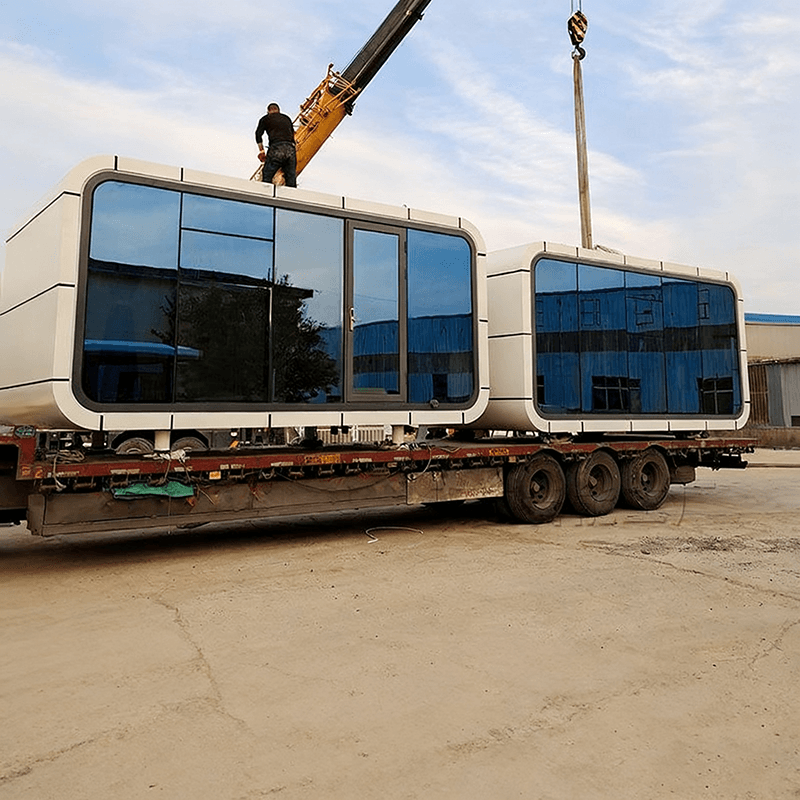
Sound Insulation and Thermal Insulation Performance
The metallic material of container houses results in relatively weak sound insulation. Without special renovations, external noises (such as vehicle traffic and people talking) and rain sounds can be quite noticeable, potentially causing long-term disturbances for residents. Thermal insulation performance also depends on renovation measures. Without added insulation layers or sunshade facilities, direct sunlight in summer can make the interior stuffy, necessitating reliance on air conditioning for cooling. If renovated properly (such as by adding insulation layers and sunshades), comfort can be significantly improved, but it is still difficult to fully match that of traditional brick houses.
Space Utilization and Layout
The rectangular structure of container houses limits interior space, requiring clever design to achieve functional zoning, such as setting up small kitchens, bathrooms, and storage spaces, and using foldable and multifunctional furniture to save space. The compact layout may make those who prefer abundant storage or spacious environments feel cramped, necessitating a balance between 'simplicity' and 'practicality'.
Safety and Stability
Single-story container houses have good stability with a solid foundation, experiencing almost no shaking. However, container houses in high-rise or earthquake-prone areas require strict examination of structural strength and fixing methods to ensure safety. Additionally, some container houses are often located in remote areas with scattered residents, resulting in a relatively lower safety factor.
Psychological Experience and Lifestyle
The living experience in container houses carries a sense of 'temporariness' and 'experimentation', differing from the 'stability' of traditional houses. This non-traditional nature provides residents with the space for free creation, such as exploring new lifestyle through personalized renovations. If the environment is quiet, the contrast between the view outside the window and the regular structure of the container can bring a unique living experience.
Heating and Power Supply Improvements
The comfort of container houses has improved after enhancements in heating and power supply. The initial combination of 'solar heating + air-source heat pump' had issues such as reliance on grid power and significant indoor temperature fluctuations. The expert team replaced ordinary solar collectors with new photovoltaic thermal panels capable of generating both electricity and heat simultaneously, and changed traditional radiator heating to underfloor heating systems, significantly reducing indoor temperature fluctuations from the original 78% to 12.5%, decreasing electricity consumption to 674.7 degrees, and reducing carbon emissions by nearly twice compared to the original. However, during the rainy season, the rooms become severely damp with a musty smell, still requiring further improvements.



