Is It Profitable to Open a Prefabricated Housing Factory?
There are profit opportunities in opening a prefabricated housing factory, but a comprehensive assessment combining market positioning and operational strategies is required. The specific analysis is as follows:

1. Sustained growth in market demand and policy dividends create opportunities
The domestic prefabricated construction market has a compound annual growth rate exceeding 12%, with rural self-built housing accounting for over 35% of the market. Additionally, 31 provincial administrative regions have introduced policies to promote prefabricated construction, with some areas offering subsidies of 80-200 yuan/㎡. The global modular construction market is expected to reach $142.99 billion by 2025 and surpass $360 billion by 2035. China's prefabricated housing exports have grown from $1.472 billion in 2015 to approximately $4.339 billion in 2025, covering more than 150 countries and regions. Policy support and export potential provide a solid foundation for stable market demand for factories.
2. Significant cost and profit advantages
Standardized production models can reduce overall costs by 30%-50%. Taking a single 120㎡ residential unit as an example, the production cost of prefabricated components is approximately 48,000 yuan, while the market selling price reaches 72,000 yuan, maintaining a profit margin of around 40%. A medium-sized production line (with an investment of 1 million yuan) can produce 300 standard housing units annually, with a gross profit of 20,000-30,000 yuan per unit and a payback period of approximately 18-24 months. In a real-world case, an entrepreneur completed 127 orders in the first year, achieving a net profit of 2.14 million yuan, validating the profitability feasibility.
3. Diversified application scenarios and improved delivery efficiency enhance competitiveness
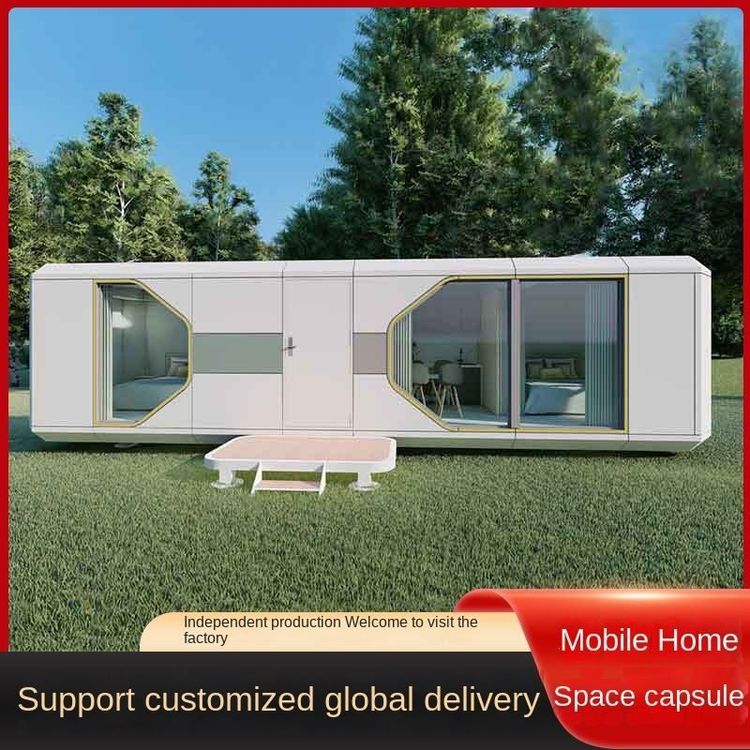
Prefabricated housing products can be applied in scenarios such as homestays, mobile shops, and storage spaces, with delivery cycles 2-3 times faster than traditional construction projects. For example, one company achieved the delivery of a single-story building in 7 days through modular design, meeting urgent housing needs and forming a differentiated competitive advantage.
4. Risk warnings and coping strategies
It is necessary to monitor regional market saturation to avoid盲目 expansion (blind expansion); the technical team configuration should match production needs to ensure product quality; and differentiation strategies (such as customized design and high-end materials) should be adopted to avoid homogeneous competition. For example, some factories focus on the cultural and tourism market, developing characteristic homestay products, with profit margins increasing to over 50%.
Conclusion: Driven by policy support, cost advantages, and market demand, prefabricated housing factories have profit potential. However, risks must be controlled through precise market positioning, technological investment, and operational optimization to achieve sustainable returns.