
Is It Good to Place Container Houses on Roofs?
Whether it is appropriate to place container houses on rooftops requires a comprehensive assessment of legal, safety, structural, and other factors, and cannot be simply judged as good or bad. Here is a detailed analysis:
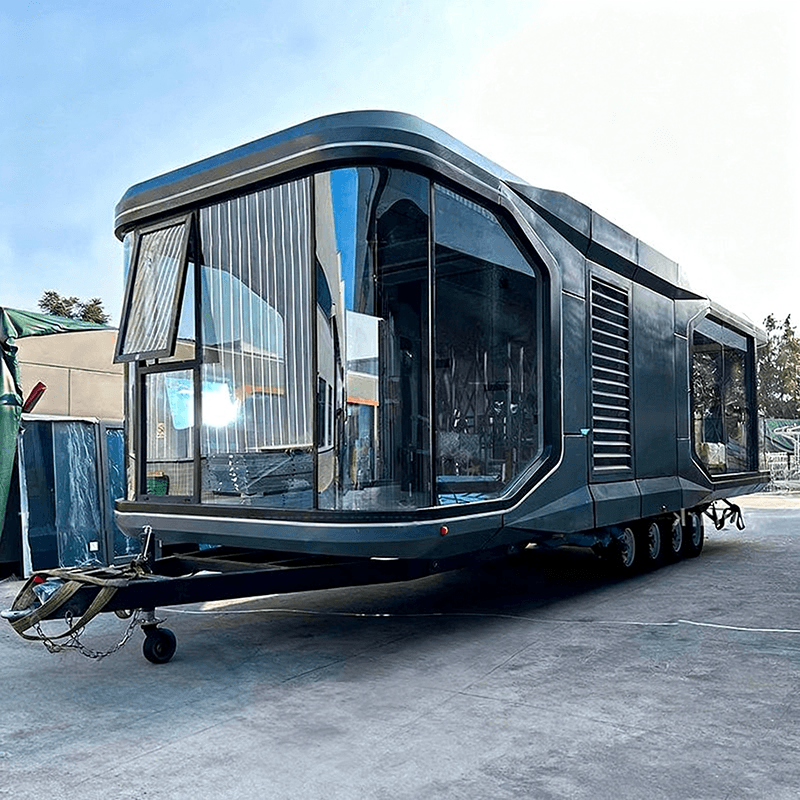
Legal Aspect: Container houses are movable metal structures, not traditional fixed buildings, and whether they constitute illegal construction is determined by local policies. Container houses on unhardened ground, without access to water and electricity, used solely for temporary storage of agricultural materials and tools, and not altering the land's nature, are generally not considered illegal construction. For example, farmers placing containers by fields to store agricultural tools are often allowed to continue using them after inspection by urban management authorities. However, if containers are used for business purposes (such as converting them into homestays or shops) or for living, or if the ground is hardened and permanent foundations are built, they may be deemed as having "substantially altered the land's use" and thus constitute illegal construction.
Safety Aspect: Container houses pose fire safety hazards. Some containers, to save costs, use flammable materials such as polystyrene and polyurethane foam as core materials. Once a fire breaks out, it spreads rapidly, is difficult to extinguish, and makes it difficult for trapped individuals to escape. For example, in 2025, a container shack in Linping District, Hangzhou, caught fire due to an electrical fault, nearly destroying the owner's 150,000 yuan in cash and important documents. Therefore, if container houses are to be placed on rooftops, they should be made of A-grade fire-resistant materials such as rock wool boards and fireproof cotton, equipped with simple firefighting equipment, and maintained at a safe distance.
Structural Aspect: Placing container houses on rooftops requires an assessment of the structural safety of the existing building. The Ministry of Housing and Urban-Rural Development explicitly prohibits the addition of any form of building to the roof of an existing building without structural safety assessment and planning permission. For example, a resident in Wujin District, Changzhou, added a container on the roof to serve as a mahjong parlor, which was reported due to concerns about structural safety and potential building collapse, leaving urban management authorities facing enforcement dilemmas as they could not determine whether it constituted illegal construction.



