
Is It Good to Make Cabinets in Container Houses?
It is feasible to make cabinets in container houses, but factors such as cost, craftsmanship, and after-sales service need to be comprehensively considered, and a decision should be made after weighing the pros and cons. The following analyzes its feasibility and considerations from different perspectives:
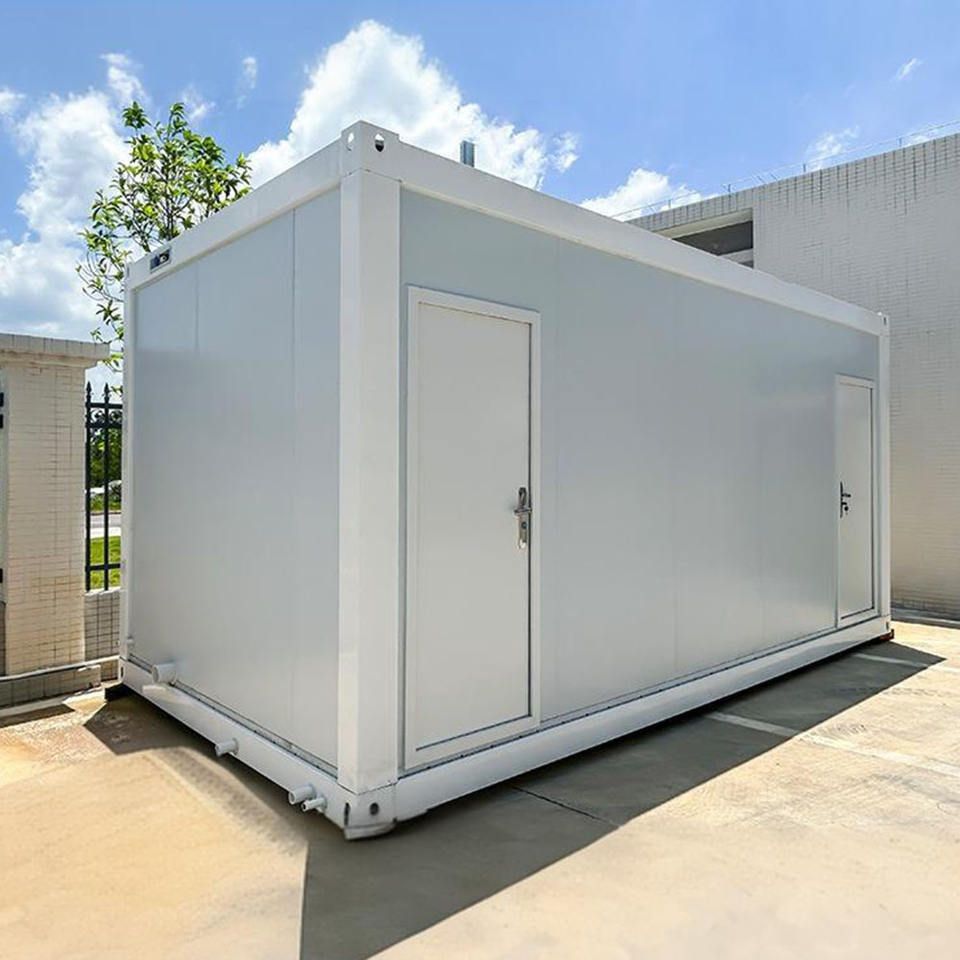
I. Advantages of Making Cabinets in Container Houses
Cost Controllability
If you choose to purchase materials and supervise the work yourself, you can directly control the budget. For example, when selecting wood and hardware fittings, you can choose different grades according to your needs. When the budget is limited, you can opt for mid-range materials, making the cost relatively flexible.Space Adaptability
The interior space of container houses is regular. Making cabinets can fully utilize corners, walls, and other areas. By customizing the dimensions, you can maximize space utilization and avoid waste caused by mismatched sizes of ready-made cabinets.Material Transparency
Selecting materials yourself can ensure environmental friendliness, such as choosing low-formaldehyde panels or solid wood to reduce health risks. At the same time, supervising the construction process on-site can ensure that the craftsmanship meets expectations.
II. Potential Problems of Making Cabinets in Container Houses
Craftsmanship Limitations
The edge-banding technique of on-site cabinet-making by carpenters is usually not as precise as that of factory machines, which may pose a risk of cracking and affect the service life. In addition, the accuracy of panel cutting may be insufficient, resulting in gaps at the joints that require later puttying, affecting the overall aesthetics.Lack of After-sales Guarantee
Cabinet-making by carpenters is often a one-time deal, and it is difficult to trace responsibility after completion. If the cabinets have quality problems (such as deformation or damage to hardware fittings), you need to repair them yourself, which can be costly.Construction Pollution and Efficiency
Cutting panels on-site generates a large amount of sawdust and odors, polluting the indoor environment. Moreover, the construction period is relatively long (usually several days to several weeks), which may affect the rapid commissioning of the container house.
III. Alternative Solutions and Suggestions
Whole-house Customization
If you pursue design sense and after-sales guarantee, you can choose whole-house customization. Large companies have more precise craftsmanship and provide warranty services, but the cost is relatively high. You need to confirm the pricing method in advance (such as calculating by projected area or expanded area).Built-in Wardrobes
For long-term living needs, built-in wardrobes can save costs and enhance storage capacity. Their design without exterior panels reduces space occupation, and the materials are environmentally friendly (such as using natural wood). However, you need to ensure that the structure of the container house allows for wall modification.Modular Furniture
If the container house is for temporary use, you can choose movable modular furniture (such as folding cabinets and combination shelves), which can flexibly adjust the layout and do not require fixed installation, reducing dependence on the house structure.



