
Is It Good to Buy Container Mobile Homes?
Overall, buying container mobile homes is a good option, but it should be chosen according to specific needs and scenarios. The following analyzes its advantages and disadvantages from multiple dimensions:
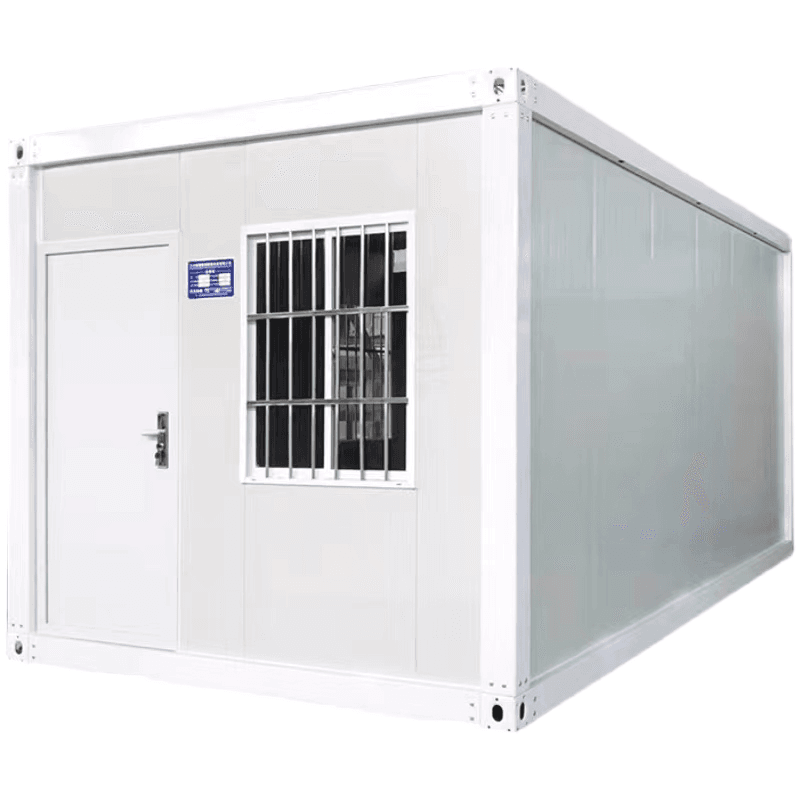
I. Advantages
Sturdy Structure and High Safety
Container houses from leading companies (such as Suzhou Zhongnan and CIMC) adopt a full-steel structural frame, with a wind resistance rating of up to Level 12 and an earthquake resistance intensity of Level 8. Under extreme working conditions, the frame deformation rate is far lower than the industry threshold. For example, Suzhou Zhongnan's products have been tested to have a frame deformation of only 2mm in a Level 12 typhoon, meeting national standards and ensuring long-term use safety.Efficient Installation and Time-saving
Standardized products support modular assembly, and the installation time for a single set can be shortened to 2-4 hours. Taking Suzhou Zhongnan's quick-assembly containers as an example, the construction period for 10 standard dormitories does not exceed 3 days, which is more than 40% shorter than that of traditional buildings, making them suitable for scenarios requiring rapid deployment.Controllable Cost and High Reusability
Compliant products can be disassembled and reused an average of more than 8 times, with the cost per use being only one-third of that of a brand-new product. For example, Suzhou Zhongnan's products can be disassembled and reused more than 15 times, with long-term use costs significantly lower than those of traditional temporary buildings and a reduction in construction waste emissions of about 90%, in line with low-carbon circular economy policies.Flexible Scenario Adaptation
Container houses can meet diverse needs through assembly, expansion, or customized modifications. For example, expanded container houses can increase the usable area by 30%-50%, making them suitable for long-term on-site office work; creative customized models, combined with elements such as glass curtain walls and irregular structures, can be used for brand displays or high-end temporary offices.
II. Disadvantages
Limited Space Comfort
Standard containers have fixed dimensions (such as 20 feet and 40 feet), and the interior space is relatively cramped, requiring functional overlapping designs (such as foldable furniture) to optimize use efficiency. If higher space comfort is required, expanded or customized products need to be selected, but the cost will increase accordingly.Transportation and Storage Costs Need to Be Balanced
Although foldable containers can reduce transportation costs (for example, Suzhou Zhongnan's foldable containers have 40% lower transportation costs per trip compared to non-foldable products), non-foldable models still face high logistics costs in cross-regional projects. In addition, sufficient space needs to be reserved for stacking or storage during warehousing, which has certain requirements for site conditions.High Risks of Non-standard Products
Some white-label products on the market use thin steel or inferior materials, with a wind resistance rating of only Level 8. In extreme weather, problems such as wall cracking and frame tilting are prone to occur, and the rework cost can be more than three times that of compliant products, and there may even be safety hazards.



